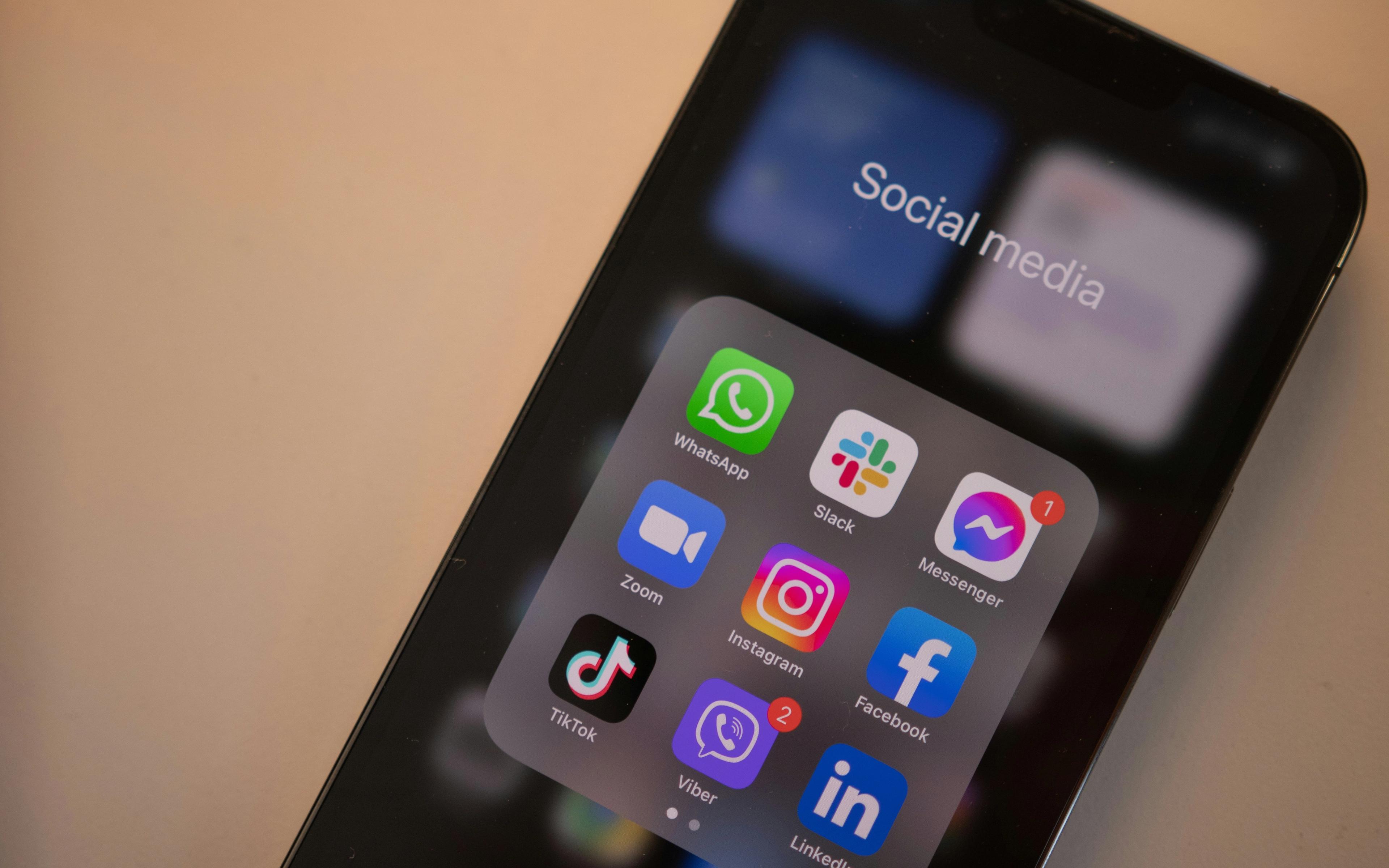
Many parents approach internet safety the same way they learned it: watch out for strangers, don't share your address, limit screen time. That advice still matters. But the internet has been quietly and dramatically rebuilt around systems that are far more sophisticated. In the previous article, I talked about how parents should moderate social media use with children, and here is something to start with.
1. Rage Bait
Clickbait once lured you in with curiosity. Rage bait is more effective: content engineered to make you furious spreads faster and wider than anything else. Algorithms and ads have learned that outrage keeps people scrolling. Children may constantly be exposed to unpleasant content, with their fight response constantly being triggered. A steady pattern of manufactured conflict replaces their sense of what normal conversation looks like.
2. Short Videos
Platforms built on 15-to-60-second videos are totally a new thing. They train the brain to expect constant novelty and immediate reward. Children who grow up on short-form content often find it harder to sit with a book, a film, or a complex problem. The system builds and rewards a neurological response to a system designed by some of the world's biggest companies to maximize time-on-screen (Yan et al., 2024).
3. “Cringe” Culture
The worst social judgment online is being labelled cringe. This fear pushes young people away from niche interests, unusual hobbies, and genuine self-expression. The result is a flattening of personality: everyone converges on the same references, the same humor, the same aesthetic, even the same content. Children who might have become passionate about something unusual quietly abandon it to avoid being ridiculed. Years ago, there were successful children hosting toy review channels, but fewer and fewer genuine moments of joy are presented online.
4. “Doomer” Content
Platforms profit from engagement due to economic incentives (Banerjee et al., 2024). A user who watches one mildly pessimistic video may find themselves, within a few recommendations, deep in “Doomer” content, hostile commentary, or outrage-driven drama. This escalation used to require effort. Today it happens automatically, powered by algorithms that have no interest in people’s mental health.
5. Streaming Scams
A growing scam combines YouTube live streams with Roblox to extract money from children. Streamers usually first loop a pre-recorded video to attract people (pull the fire alarm, modified crocodile toys, prank call 911, etc.), and then promise in-game currency or items in exchange for donations made through YouTube’s tipping system. The rewards never arrive. If your child has fallen for this, YouTube does offer a refund process, but the scam is widespread and ongoing. Children are being treated as targets by professional fraudsters.
6. AI-Generated Content
Artificially generated articles, images, and videos earn advertising revenue regardless of accuracy and quality. These AI-generated experts or crafters are convincing enough to hoax people into buying their products. Currently, a quick tell for AI-generated videos or images is to look at any text in the background — AI still struggles to render legible letters. Most search engines also provide AI functions, but these functions usually present incorrect answers with complete confidence. Teach children to cross-reference and to be skeptical of any source, even ones that look authoritative.
7. Overconsumption
Trends now expire in weeks. Advertising aimed at “trendy items” has multiplied dramatically over the past five years. Products like blind boxes — which are basically gambling — are specifically designed to exploit reward-seeking behaviour and can measurably alter spending habits, as do limited edition items. The constant sense of missing out and dopamine surge on the next thing is one of the most effective money-generating techniques (Banerjee et al., 2024).
The Conversation Worth Having
The conversation parents need to have is not simply “be careful online.” It is: here is how these systems actually work, here is what they want from you, and here is how to notice when something is designed to manipulate rather than inform. That is a harder conversation, but this method ensures children will be able to interact with the internet more safely.
Want to book a session with Yiming?
See Yiming's profile on Purple LotusWant to manage your anger? Talk to a therapist who gets it on Purple Lotus
Find a TherapistReferences
Banerjee, S., Pal, A., & Kapetanaki, A. B. (2024). Reviewing the Research Landscape of Online Scarcity Messages. In V. Jeseo & J. Allen (Eds.), Bringing the Soul Back to Marketing (pp. 11–19). Springer Nature Switzerland. https://doi.org/10.1007/978-3-031-53286-3_2
Costello, N., Sutton, R., Jones, M., Almassian, M., Raffoul, A., Ojumu, O., Salvia, M., Santoso, M., Kavanaugh, J. R., & Austin, S. B. (2023). ALGORITHMS, ADDICTION, AND ADOLESCENT MENTAL HEALTH: An Interdisciplinary Study to Inform State-level Policy Action to Protect Youth from the Dangers of Social Media. American Journal of Law & Medicine, 49(2–3), 135–172. https://doi.org/10.1017/amj.2023.25
Yan, T., Su, C., Xue, W., Hu, Y., & Zhou, H. (2024). Mobile phone short video use negatively impacts attention functions: An EEG study. Frontiers in Human Neuroscience, 18, 1383913. https://doi.org/10.3389/fnhum.2024.1383913

Written by
Yiming Zhu
Therapist
As a counseling psychology graduate student and mental health professional, I provide human-centered approach to supporting individuals navigating trauma, addiction, career transitions, and life's challenging moments. With a Master of Arts in Counseling Psychology from Yorkville University, a Graduate Certificate in Addiction Treatment from Georgian College, and dual bachelor's degrees in psychology and biology from Macalester College, my practice is grounded in both scientific understanding and compassionate care. I have worked across community mental health, career counseling, and peer support settings. Book Yiming on Purple Lotus