
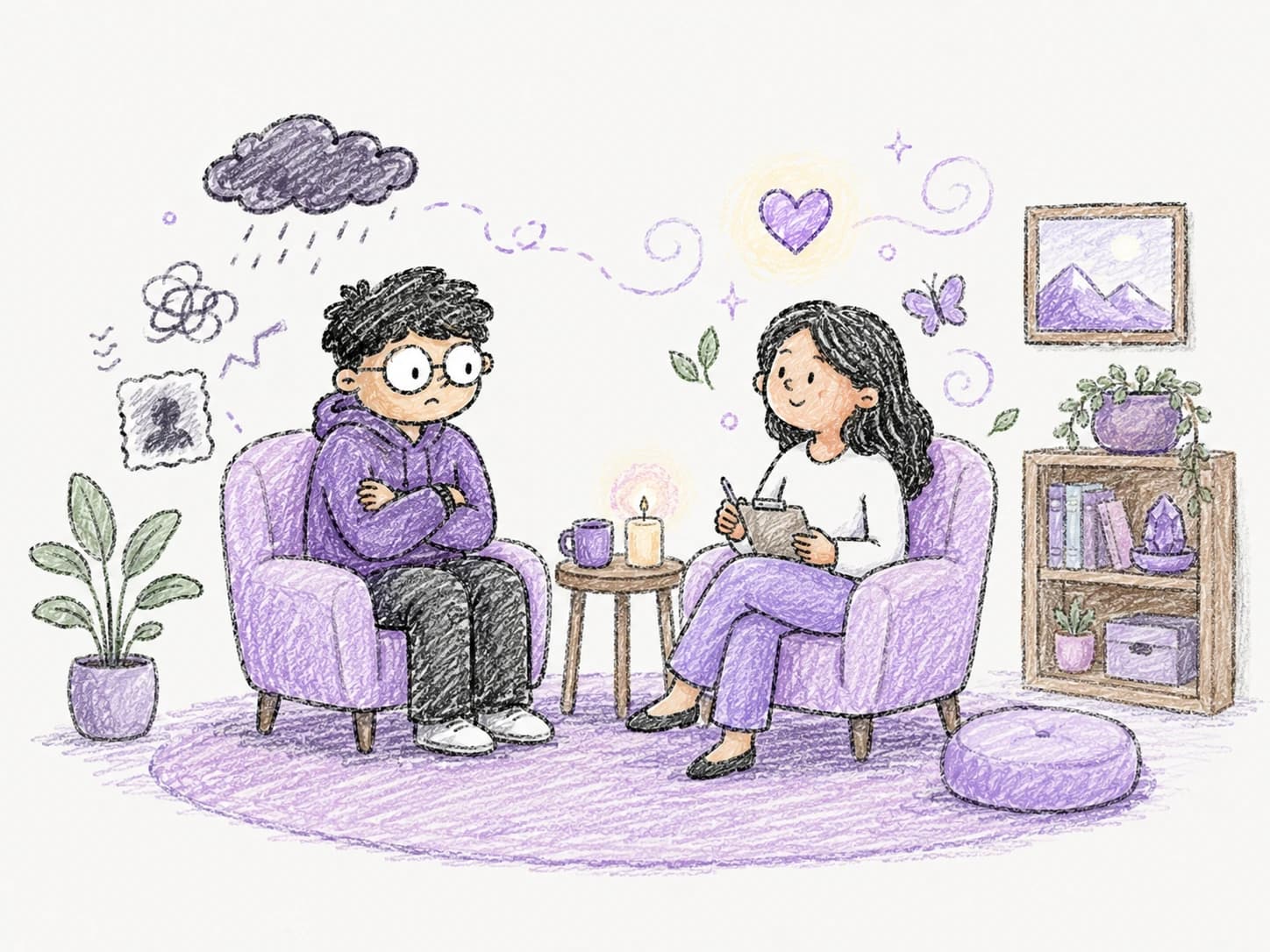
Trauma & PTSD Therapists in Canada
Post-Traumatic Stress Disorder (PTSD) and trauma-related difficulties can affect how you feel, think, and connect with others long after an experience has passed. Therapy can help you process what happened, reduce symptoms, and regain a sense of safety in your daily life.
What to look for in a Trauma & PTSD therapist on Purple Lotus
- Formal training in a trauma-specific protocol such as EMDR, CPT, or trauma-focused CBT
- Clear emphasis on safety, pacing, and stabilization before processing
- Experience with your type of trauma, including complex or developmental trauma if relevant
- Willingness to adjust the approach based on your tolerance and readiness
19 therapists for Trauma & PTSD in Canada
Browse 19 therapists specializing in Trauma & PTSD. Find the right counsellor or psychotherapist for your needs.

Christy Liu
Whether you’re struggling with stress, relationship issues, trauma, or burnout, therapy is a space where you can feel heard, validated, and empowered to make meaningful changes. My approach to therapy involves exploring all parts of your life and uncovering the hidden emotions and meanings. I believe therapy is a reflection of real life, where the challenges, patterns, and growth we experience in session often reflect our everyday experiences. Whether you’re struggling with stress, relationship issues, trauma, or burnout, therapy is a space where you can feel heard, validated, and empowered to make meaningful changes. My approach to therapy involves exploring all parts of your life and uncovering the hidden emotions and meanings. I believe therapy is a reflection of real life, where the challenges, patterns, and growth we experience in session often reflect our everyday experiences. I take an integrative approach, meaning I tailor therapy to your unique needs. Though I use a variety of therapeutic modalities, the most meaningful work happens when we co-create a personalized approach. That often means taking pieces from different methods and using your strengths to form a puzzle that fits your unique life story. You are the expert in your own life, and my role is to guide and support you. Let’s explore how we can work together toward meaningful discovery and growth! If you feel we are a good match, feel free to connect for a free 15-minute consult where we can discuss your goals and ways I can support!

Fiona Del Rio
I support individuals navigating a wide range of challenges, including anxiety, depression, ADHD, stress, grief, trauma, life transitions, and relationship concerns. No matter what brings you to therapy, I aim to help you deepen self-awareness and develop practical strategies that help build resilience and promote healing. As a therapist, my approach is rooted in compassion, collaboration, and a deep respect for your lived experience. I offer client-centered care that draws from strengths-based and trauma-informed modalities, working with you to build a therapy plan that reflects your values, goals, and vision of wellness. My priority is to foster a space where you feel safe, seen, and empowered to be your authentic self. My educational background includes a Masters in Counselling Psychology, Masters in Anthropology, and Bachelors in Psychology and Cinema. I possess additional training in several evidence-based and trauma-focused therapeutic modalities. Together, we will design an approach that is tailored to your unique needs and preferences, and one that delivers meaningful results. I worked in public, private, and creative sectors before transitioning to counselling, where I gained experience as a crisis responder and in employment and career advising. My diverse professional experiences along with my own mental wellness journey help me to provide well-rounded support that is grounded in continuous self-reflection.

Diana Ben
Hi, I’m Diana! As a first‑generation African Canadian, I understand the complexity of navigating cultural identity, family expectations, people‑pleasing, autonomy, and the stigma surrounding mental health. Many clients come to therapy feeling overwhelmed by unprocessed trauma, anxiety, and the pressure to hold everything together. They often feel alone in their experiences, struggle with confidence, and second‑guess their decisions and experiences. My goal is to offer a non-judgmental, compassionate, culturally sensitive space where you feel heard, respected, and supported. I help you understand the roots of your thoughts, emotions, and patterns so you can shift them with intention. My work focuses on identity, self‑awareness, and healing from trauma and anxiety in a space that feels grounding and supportive. My approach blends insight, compassion, and practical tools to help you create real, sustainable change! Therapy with me is about understanding yourself more deeply so you can move through life with clarity and confidence. I believe insight is a powerful tool for healing; it helps us break old cycles and create new possibilities by moving beyond the feeling of “I don’t know why.” If you’re ready to explore your inner world with support, I’m here to help!

Ramona Saeedi
If you landed on this page, you took the first step. As humans we have the capacity to adapt and discover more meaning & joy in life as we face and overcome obstacles in life. To me, happiness is the process of solving problems and developing more adaptive ways of being. I am excited to help you overcome challenges and achieve your wellness goals. Hi, my name is Ramona and welcome to my page! As a therapist, I take you seriously. Not just what you say, but what you’re bringing with you. My clients often tell me they feel genuinely understood, because I notice the weight you’re carrying, the patterns you’ve been sitting with, and the parts of your story that actually matter. I’m curious about who you are in the context of everything that shaped you: your culture, your relationships, your upbringing. I connect those threads with what’s happening with you now. I see individuals and couples across a wide range of experiences: mood disorders like depression and anxiety, identity work, ADHD, grief, and trauma. I’m equally comfortable supporting someone navigating a single difficult season or working through patterns that have persisted for years. I have particular experience with adolescents and young adults, as well as adults in midlife transitions. Whether you’re coming in with a specific crisis or just a sense that something needs to shift, I meet you where you are. Over my 10+ years as a therapist, I’ve developed an integrative approach. I draw on CBT, DBT, Solution-Focused therapy, Narrative therapy, and EFT for couples. For trauma, I use EMDR, inner child work, and attachment-based approaches. I trained in nervous system work and trauma-informed yoga in Indonesia. I understand how trauma lives in the body, not just the mind. More than the techniques, what ties them together is that I believe you already have the answers within you. My job is to create the conditions where those answers surface. Real trust and empathy. The safety to explore. The space to discover what change actually looks like for you. I’m a member of the College of Registered Psychotherapists of Ontario (CRPO) and specialize in relational therapy. I work from a multicultural, anti-oppressive perspective, which means I’m attuned to the systems and contexts that shape your experience. With me, you get access to therapy from the comfort of your space!

Daniel Kirzner-Priest
Do you have a story you feel you need to share with someone? Maybe it’s your first time opening up, or maybe you tried before, but just never quite felt heard. If there’s something inside of you that needs telling, I’m here to hear you out. I often work with clients who suffer from depression, trauma, anxiety and relationship issues. I can also be particularly helpful to clients who’ve felt they haven’t gone deep enough in therapy, who tend towards dissociation or intellectualization, or who find themselves between cultures—immigrants, children of immigrants, people from interfaith families, and "third culture kids." I practice psychodynamic psychotherapy, which is based on the premise that the more we understand about ourselves, the more freedom we have to make new choices. If you’ve ever felt stuck without knowing exactly why, or even if you understand why but can’t quite seem to change things, psychodynamic psychotherapy can be immensely helpful. Life can be deeply painful, but it can also be joyous. I aim to be witness to all of you without judgment, so that you can come to know yourself more fully, and therefore have all the more freedom to choose not only how to respond to what life throws at you, but also what life it is you want to live.

Natalie McMullen
Top Specialities: trauma, anxiety, attachment issues I believe our life events shape us into who we are today. We weren’t BORN with an inner critic, perfectionism, or people-pleasing tendencies! Something happened in our lives that taught us those behaviours. Maybe we learned that it’s less painful to avoid confrontation than to risk rejection or failure. Maybe we learned that to ensure safety, we must be hypervigilant, constantly looking out for threats. Those behaviours likely helped you survive at one time, but now, they might be causing chronic anxiety, difficulties in your relationships, and low self-esteem. I will help you understand your emotions and unlearn beliefs and coping behaviours that are no longer serving you. We’ll learn how your past and present experiences are contributing to the issues you want to let go of, and carve a path forward. Therapy can help you process your experiences and develop coping skills to manage your reactions and emotions. I have experience helping with anxiety/stress/burnout, trauma, relationship/attachment issues, self-esteem, depression, emotion regulation, and borderline personality disorder. I’m especially passionate about treating developmental/attachment trauma to improve self-esteem, foster safety and security, and move towards secure attachment patterns. My Approach/Style As a therapist, I have a friendly, authentic, and warm demeanour. I believe a strong connection with your therapist is of crucial importance, so I take extra care to ensure I’m understanding your needs and perspective. (This doesn’t mean I’ll never challenge you!). I’m also happy to share appropriate information about my own life if helpful and relevant. I believe everyone has inner wisdom and resilience. I respect your autonomy, so I will always support you in coming to your own conclusions and finding your own solutions. But I also don’t shy away from sharing different insights and perspectives, or giving guidance and advice if needed. Types of Therapy After spending some time getting to know you, I’ll apply the therapy techniques that best suit your concerns. I use techniques informed by schema therapy, inner child work, IFS, ACT, CBT, DBT, EFT, mindfulness, and attachment theory. I am also trained in EMDR (eye movement desensitization and reprocessing) therapy, which is an evidence-based and WHO-recommended treatment for trauma and PTSD. If you’d like to learn more, please reach out for a free consultation! *Please note, I am located in Toronto, and my working hours are as follows: Tuesday and Wednesday: 11am-7pm Eastern Time Thursday: 1pm-7pm Eastern time Friday: 10am-5pm Eastern Time

Lauren Kalvari PhD, MSW, RSW
Welcome to my page! You may be living with the effects of trauma, coercive control, emotional or spiritual harm, or a long period of feeling overwhelmed, anxious, or disconnected from yourself. Perhaps relationships have felt unsafe or confusing, your sense of identity has been shaken, or daily life feels heavier than it should. You may be searching for clarity, stability, and relief from patterns that no longer feel manageable. Many people who reach out are not only looking to cope, but to understand what has happened to them, to restore a sense of dignity and self-trust, and to feel hope and meaning again. Over more than 30 years of working with anxiety, pain, and trauma, I am continually moved by the resilience people carry, even in the aftermath of profound difficulty. My work is trauma-informed and paced with care, supporting both the need for greater stability in daily life and a deeper understanding of lived experience, relationships, and a sense of self. I am open-minded, authentic, and warm. I use an integrative approach that is most suited to your personality type, current situation and specific needs. My role is to offer a steady, compassionate presence where difficult feelings and memories can be approached safely, without pressure or judgement.

Mary Hugessen
Hi, I’m Mary — a Registered Social Worker with nearly a decade of experience supporting individuals with developmental disabilities and mental health challenges. I specialize in working with neurodivergent folks who are navigating life’s complexities and looking for a path forward that truly fits them. My approach to therapy is eclectic and person-centered — meaning we’ll work together to identify what matters most to you and explore the steps that feel right for where you’re at. Whether you're seeking support with daily stressors, big transitions, or simply need a space where you can be your full self, I'm here to walk alongside you with compassion, curiosity, and care.

Samantha Lee
Are you feeling overwhelmed by anxiety, stress, or struggling to balance different parts of yourself? Maybe you’ve felt misunderstood or like your needs aren’t being fully seen. You might also be dealing with relationship challenges or difficult emotions. Trying to meet the expectations of family, society, culture, work, and your own inner standards can add extra pressure. Holding multiple identities can make this even more complex. As a queer woman of colour, I can relate to how challenging this can be. I’m passionate about supporting LGBTQ+ and racialized individuals, as well as folks from all walks of life. Together, we’ll work to create a space where you can feel heard and supported as you navigate life’s challenges. Whether you’re seeking understanding, practical tools, or a safe space to process difficult emotions, we’ll go at your pace to find what feels most helpful for you. Life can be tough, but you don’t have to navigate it alone. If this resonates with you, let's connect for a free 15-minute consultation to see if we might be a good fit.

Jessica Charles
I specialize in helping young adults with CPTSD symptoms like low self-worth, depression, substance misuse, and neglect. Honestly – everybody needs to be empathetically challenged. To see if we’re a fit, email me for a free 15-min consultation :).

Lia Marks
Lia is a Registered Social Worker, Psychotherapist who supports individuals facing anxiety/depression, life transitions, parenting challenges, trauma and attachment difficulties. Whether you’re having trouble managing stress, understanding your emotions and behaviours, or want to develop coping skills, it is helpful to have a sounding board to support you. She provides a non-judgemental space to explore how your past experiences have influenced your current ways of coping. Through this process, she can assist you in developing new strategies to manage complex thoughts and feelings. Lia works from a trauma-informed, collaborative perspective to help you make the changes you want to make in your life

Amelia Jones
Do you struggle with anxiety, people pleasing or feelings of overwhelm? Do you have a difficult relationship with your parents or get easily triggered? Maybe you have ADHD (or think you do) and feel like you can't do life "right"? If you experience any of these, I can help! You likely need to uncover unhelpful patterns, heal the past wounds holding you back, and develop actionable tools to help you return to a more grounded, regulated state. I'll help you process AND keep you accountable (warmly and compassionately of course). I'm trained in both Talk and Art Therapy. You can try both or choose whatever one feels best for you. Why try art therapy? Because sometimes our thoughts and feelings are hard to express with words alone. Creativity can provide another avenue of expression to dig in deeper. Heads up: No art skills are needed and we'll still use talk therapy approaches too! My style is warm, curious and collaborative. That involves both listening AND supporting you shift out of patterns no longer serving you. Together, we'll build on sessions over time with intention and direction. Let's get you thriving, not just surviving! To book a free consult, email or visit my site for the online booking link.

Marc-Anthony Racco
Are you struggling to maintain relationships? Maybe you feel disconnected, unable to get through the day without negative thought patterns. As a psychotherapist, I work with both teens and adults, specializing in relational and childhood trauma. However, I also work with individuals who have faced various life challenges, such as anxiety, depression, and attachment difficulties. Holding a queer identity and a crisis counselling background, my therapeutic space is highlighted in inclusivity, incorporating anti-oppressive and strength-based frameworks to create a safe, non-judgmental space for you to express your thoughts freely. My sessions often take a client-centred approach, building a collaborative process of unlearning damaging self-beliefs, practicing healthy coping skills, and reclaiming your life through newly formed self-awareness. This is your journey, and I will work closely with you to develop a treatment plan specific to your unique needs and goals. I view trauma as a relational experience. Not only is it often experienced in relationships with others, but it is also a new development of healthy relationships that can assist in healing.

Kinza Jat
Have you ever felt caught between who you are and who others expect you to be? Perhaps you’re navigating cultural pressures, identity-related challenges, or a lingering sense of never fully belonging. As a second-generation Canadian raised by immigrant parents, I understand how isolating it can feel to exist between different worlds and expectations. Drawing from my lived experiences with marginalized identities, I strive to create a warm and inviting space where you can slow down, reflect, and reconnect with yourself on your own terms. I am currently a Registered Psychotherapist (Qualifying) completing my Master’s in Counselling Psychology. In my practicum, I provide queer-affirming, pay-what-you-can psychotherapy to individuals aged 14 and older, while welcoming clients of all identities, orientations, and backgrounds. My work is client-centered and trauma-informed, aimed at fostering deeper understanding by revealing unconscious patterns, emotions, and experiences that may be shaping your current challenges. Together, we move at a pace that feels grounded for you, co-creating a treatment plan that reflects your needs, intentions, and goals. Much like a flower that blooms when given the right conditions, I believe meaningful growth unfolds when we are supported in the ways we need most. My goal is to help cultivate those conditions, tailoring our work together to support your growth in a way that feels authentic to you. If this resonates, I invite you to reach out for a free 20-minute consultation. Book Here.

Christine Peddle
Hello : ) Are you intellectualizing your pain? Since 2016 I've been practicing therapy to help you uncover now defunct, but once life saving defense mechanisms. I dedicate myself to providing safe, understanding, and nonjudgmental care that reconnects you to you. I have countless trauma trainings, plus DBT, CBT, DDP, EFFT, Psychodrama for Traumatic Stress, and exposure to Gestalt Therapy. I participate in psychoanalysis and am a true believer in the healing relational aspect of therapy. I know the importance of an intersectional approach to personal growth and I seek to help you discover your wholeness versus the elusive permanent wellness.

Tori Lewis
Hello and welcome. I’m Tori, a Registered Social Worker and therapist who provides a compassionate and collaborative space for healing and growth. Many of the people I work with feel overwhelmed, misunderstood, or like they have spent much of their lives trying to adapt themselves to fit expectations around them. You may be navigating ADHD, autism or other neurodivergent experiences, processing trauma, coping with anxiety or depression, experiencing relationship challenges, or moving through difficult life transitions. Sometimes people come to therapy feeling exhausted from carrying so much on their own and unsure where to begin. My approach is trauma-informed, relational, and client-centered. I draw from a variety of therapeutic approaches including CBT, mindfulness-based strategies, attachment-informed perspectives, and other integrative tools to support your unique needs. Rather than taking a one-size-fits-all approach, I believe therapy should feel collaborative. We work together to understand your experiences, identify meaningful goals, and develop tools that feel realistic and authentic for you. I strive to create a space where you can show up exactly as you are without judgment or pressure to have everything figured out. Healing is not always linear, and therapy is not about fixing who you are. It is about building understanding, self-compassion, resilience, and creating meaningful change at your own pace. I offer virtual counselling sessions across Ontario and would be happy to connect through a complimentary consultation to see whether we may be a good fit.

Melissa Baldry
Some wounds don’t show on the surface but shape everything underneath. I support individuals exploring identity, relationships, and the lasting effects of painful or complex family dynamics. For many, this can include the impact of cultural or generational histories, immigration, or early experiences that continue to influence how we relate, cope, and make decisions today. As an international, transracial adoptee, I bring both lived experience and clinical grounding, offering space to slow down, reflect, and begin with compassion and collaboration. As a Registered Psychotherapist (Qualifying), I adopt a trauma-informed, client-centred approach. Together, we’ll identify patterns, challenge limiting beliefs with compassion, build emotional awareness, and develop a treatment plan that reflects your needs and lived experience.

Hastee Vasavada
Hello and welcome. My name is Hastee and I am currently pursuing my master’s in counselling psychology at Yorkville University. I achieved my bachelor’s in psychology and literature from York University. I am a South Asian immigrant to Canada and am well-versed in dealing with acculturation issues such as anxiety and depression. Moving to Canada as a pre-teen helped open my eyes to a wider world and shaped how I approach and view the world around me with acceptance and kindness. This also guides how I approach therapy and how I build our therapeutic relationship. I welcome clients with open arms who are dealing with issues such as adverse trauma and addiction. I am also experienced in providing perinatal and postpartum care for individuals. Moreover, I possess advanced training in treating couples. There are many modalities that we study in this field, and they all have their own strengths that are supported by detailed research. I foremost believe in taking an integrative, human-centred, and trauma-focused approach. Moreover, I believe every human has the capacity for incredible resilience and growth, and that comes from unconditional acceptance of oneself, as we are. When I am not working, you will find me spending some quality time with my boys (my husband and 2 dogs), exploring new nature trails (even in the winter, yes!), and always reading something. Ask me what I’m reading for suggestions or interest. Starting therapy can feel overwhelming, so please reach out with questions. I look forward to supporting you on this journey.

Julianna Servello
I work with children, teens, adults, couples, and families who may be feeling overwhelmed, stuck, disconnected, or unsure of how to move forward. My goal is to create a warm, supportive space where you can feel comfortable being yourself while working toward meaningful and lasting change. I bring a strong clinical background to my private practice, with experience working in hospital and community settings with individuals and families navigating a wide range of mental health, emotional, relational, and life challenges. My hospital experience has given me the opportunity to work with people during some of the most difficult and uncertain periods of their lives, supporting clients and families through complex circumstances, significant transitions, illness, trauma, crisis, grief, and changes in functioning. This experience has shaped the way I practice today: with compassion, clinical thoughtfulness, and an understanding that every person’s circumstances and needs are different. My clinical work includes supporting individuals experiencing anxiety, ADHD, OCD, emotional regulation difficulties, relationship and family concerns, grief, trauma, burnout, self-esteem concerns, and major life transitions. I also support clients through prenatal and postpartum challenges and the emotional impact of motor vehicle accidents and other traumatic experiences. I work with clients across the lifespan and tailor therapy to their individual goals, strengths, personality, and circumstances. OCD is a particular area of clinical interest and expertise for me. I have extensive training and experience supporting clients with OCD and related anxiety concerns, and I understand how consuming and disruptive intrusive thoughts, uncertainty, compulsions, and avoidance can become. My approach is compassionate, collaborative, and evidence-informed, with the goal of helping clients better understand their experiences and develop greater confidence in responding to difficult thoughts, feelings, and sensations. I also provide OCD-focused clinical supervision and consultation to other clinicians looking to strengthen their knowledge and confidence in this area. I also have a strong interest in ADHD and emotional regulation. For clients with ADHD, I recognize that challenges can extend far beyond attention and organization and may affect relationships, self-esteem, emotional regulation, work, school, and day-to-day functioning. Therapy can provide a space to better understand these patterns, develop strategies that are realistic for your life, and move away from shame or self-criticism toward greater self-understanding. My approach is integrative and individualized. I draw from Cognitive Behavioural Therapy (CBT), Dialectical Behaviour Therapy (DBT), Acceptance and Commitment Therapy (ACT), trauma-informed practice, narrative therapy, and strengths-based approaches. Rather than using a one-size-fits-all model, I consider what you are experiencing, what has or has not worked for you in the past, and what you hope to change. Together, we can identify practical strategies while also exploring the deeper patterns, experiences, and relationships that may be contributing to what you are experiencing. I believe therapy should be both clinically meaningful and genuinely human. You do not need to have everything figured out before coming to therapy, and you do not need to know exactly what you need. Sometimes people simply know that something is not feeling right, that they are exhausted from trying to manage everything on their own, or that they keep finding themselves caught in the same patterns. Therapy can provide an opportunity to slow down, make sense of what is happening, and develop a clearer path forward. Whether you are navigating anxiety, OCD, ADHD, grief, trauma, relationship difficulties, burnout, a major life transition, or simply feeling stuck, I aim to meet you where you are. My role is not to tell you who you should be or how you should live, but to work alongside you to better understand yourself, build on your existing strengths, and develop meaningful changes that fit your life. I welcome the opportunity to work collaboratively with clients and, when appropriate, with families and other healthcare professionals involved in their care. My hospital background has reinforced for me the value of collaboration and continuity of care, and I believe that connecting clients with the right supports can make an important difference in their overall wellbeing. Above all, I want therapy to feel like a space where you can be honest, understood, and supported without judgment. Whether you are coming to therapy for the first time or have been in therapy before, we can start wherever you are and work together from there.
What is Trauma & PTSD?
Traumatic experiences can leave lasting marks on how your mind and body respond to the world. You might find yourself startled easily, avoiding reminders of what happened, struggling with intrusive memories or nightmares, or feeling emotionally numb or cut off from the people around you. These are not signs of weakness or failure to move on. They are ways the nervous system tries to protect itself after something overwhelming. PTSD is a recognized condition that develops in some people following exposure to a traumatic event, and it responds well to specific therapeutic approaches.
Trauma therapy works differently from general talk therapy. Rather than simply discussing what happened, effective trauma treatment focuses first on building safety and stability, then gently working with the memories or patterns that continue to cause distress. The pacing matters: moving too quickly can feel retraumatizing, while skilled trauma therapy creates the conditions for processing at a manageable rate.
Several evidence-based approaches have strong research support for PTSD, including EMDR (Eye Movement Desensitization and Reprocessing), Cognitive Processing Therapy (CPT), and Prolonged Exposure (PE). Somatic approaches and trauma-informed therapy are also widely used, particularly for complex or developmental trauma. The right fit depends on your history, preferences, and what you are ready to explore.
Who this approach may help
Single-incident trauma
People who experienced a specific traumatic event, such as an accident, assault, natural disaster, or medical emergency, and continue to be affected by intrusive memories, hypervigilance, or avoidance.
Childhood abuse or neglect
People whose early experiences included physical, emotional, or sexual abuse, neglect, or witnessing violence, and who find these experiences affecting relationships, self-worth, or emotional regulation in adult life.
Complex or repeated trauma
People who experienced prolonged or repeated traumatic events, such as domestic violence, ongoing abuse, or living in unsafe conditions over time. This is sometimes called Complex PTSD (C-PTSD) and may involve additional challenges with identity, affect regulation, and relationships.
First responders and military personnel
People in roles with repeated exposure to traumatic events, including paramedics, police, firefighters, and veterans, who may have accumulated trauma over time and find it hard to seek support.
Medical or birth trauma
People whose traumatic experience involved a difficult medical event, a frightening diagnosis, a surgical procedure, or a traumatic birth, and who have ongoing anxiety, avoidance, or distress connected to those experiences.
Grief with traumatic elements
People who have lost someone suddenly, violently, or unexpectedly, and whose grief is complicated by traumatic distress, shock, or intrusive images of what happened.
What happens in a session?
- 1
Assessment and goal setting
The therapist gathers a picture of your current symptoms, history, and what you are hoping to address. This includes understanding how your daily life is affected and what you feel ready to work on.
- 2
Building safety and stability
Before any deeper processing begins, sessions focus on developing coping strategies, grounding techniques, and emotional regulation tools that help you manage distress between appointments.
- 3
Understanding your trauma responses
You explore how past experiences are connected to current symptoms, triggers, and patterns. This builds a shared understanding between you and your therapist without requiring you to relive everything in detail.
- 4
Processing traumatic memories
Using structured approaches such as EMDR, CPT, or exposure work, you gradually work through the memories or beliefs connected to the trauma. The pace is adjusted to what you can manage safely.
- 5
Integration and reconnection
As symptoms reduce, sessions shift toward reconnecting with daily life, relationships, and your sense of self. The goal is not just symptom reduction but rebuilding a life that feels grounded and meaningful.
How it compares to other approaches
EMDR
EMDR is a specific trauma-focused protocol that uses bilateral stimulation to reprocess traumatic memories. It is one of several evidence-based approaches used within trauma therapy, rather than a separate alternative. Some therapists specialize in EMDR specifically, while others use it alongside other methods.
Cognitive Processing Therapy (CPT)
CPT focuses on identifying and shifting unhelpful beliefs that formed as a result of the trauma, such as self-blame or a sense of permanent danger. It is structured and skills-based, with written exercises between sessions. It is effective for PTSD and tends to be shorter-term.
Somatic Therapy
Somatic therapy works with trauma through the body, focusing on physical sensation, posture, and nervous system regulation rather than memory processing alone. It is often used when trauma is held physically or when talk-based approaches have felt too activating.
Emotion Awareness and Expression Therapy (EAET)
EAET targets suppressed emotions that contribute to physical and psychological symptoms. It overlaps with trauma work when emotional avoidance and stress-related physical symptoms are present, but is distinct in its focus on emotional expression rather than memory reprocessing.
General or supportive therapy
General talk therapy can provide important support and help you process difficult experiences. However, PTSD often responds better to structured, trauma-specific protocols. If trauma is a central concern, seeking a therapist with specific trauma training is usually more effective than general counselling alone.
How to choose a Trauma & PTSD therapist
Questions to ask before booking:
- 1
Ask directly about their training in trauma-specific approaches. Look for therapists who have completed formal training in EMDR, CPT, trauma-focused CBT, or similar protocols, rather than those who describe themselves as trauma-informed without additional specialization.
- 2
Ask how they approach the early phase of therapy. A trauma-trained therapist should explain how they build safety and coping skills before moving into processing. Be cautious of approaches that move quickly into detailed trauma recall without this foundation.
- 3
Ask whether they have experience with your specific type of trauma. Complex trauma from childhood, military trauma, and single-incident trauma each have distinct patterns, and therapists may have more experience in one area than another.
- 4
Ask about pacing and how they handle it when sessions become too activating. The ability to slow down, adjust, and respond flexibly to your nervous system is a marker of skilled trauma work.
- 5
Ask what a typical treatment course looks like and what signs they use to know the approach is working. Trauma therapy has clear benchmarks, and a good therapist can describe what progress tends to look like over time.
When this may not be the right fit
If you are currently in acute crisis, actively suicidal, or managing a psychiatric emergency, stabilization support should come first. Most trauma-processing approaches are not designed for use during active crisis and require a foundation of safety to be effective.
Active substance use that is not being addressed can interfere with trauma processing. Many therapists will recommend working with an addiction specialist concurrently or in sequence, as substances are often used to manage trauma symptoms and the two concerns are closely linked.
If you have very recently experienced a traumatic event, some degree of distress is a normal response. Not everyone who goes through a traumatic experience develops PTSD, and in the early weeks, supportive care and monitoring may be more appropriate than formal trauma-processing treatment.
If you find that detailed trauma discussions feel inaccessible or destabilizing, a stabilization-focused approach or somatic therapy may be a better starting point. The right approach depends on your readiness, nervous system tolerance, and what you are currently able to engage with.
Related specialties
Frequently asked questions
What is PTSD and how is it diagnosed?
PTSD is a mental health condition that can develop after exposure to a traumatic event. It is characterized by intrusive memories or flashbacks, avoidance of reminders, changes in mood and thinking, and heightened reactivity. Diagnosis is made by a qualified mental health professional based on your symptoms and history.
What is the difference between trauma and PTSD?
Trauma refers to the psychological impact of a distressing experience. PTSD is a specific condition that develops when trauma symptoms are severe, persist beyond a month, and significantly affect daily functioning. Many people are affected by trauma without meeting full criteria for PTSD, and both situations can benefit from professional support.
What therapy approaches are most effective for PTSD?
Several approaches have strong research support for PTSD, including EMDR, Cognitive Processing Therapy, and Prolonged Exposure. Somatic therapies and trauma-informed approaches are also widely used. The most effective approach depends on your history, preferences, and the nature of your trauma.
Do I have to relive the trauma in therapy?
Not necessarily. Modern trauma therapy does not require you to recount every detail of what happened. Many approaches focus first on building coping skills and safety before gently working with traumatic material at a pace you can manage. Your therapist should explain their approach and adjust based on what you are ready for.
How long does trauma therapy take?
Treatment length varies depending on the nature and complexity of the trauma. Single-incident PTSD may respond well within a shorter course of treatment. Complex or developmental trauma often requires longer, more gradual work. A trauma therapist can give you a clearer estimate after an initial assessment.
What is Complex PTSD?
Complex PTSD (C-PTSD) can develop after prolonged or repeated trauma, such as ongoing abuse, neglect, or living in unsafe conditions over an extended period. In addition to PTSD symptoms, it may involve difficulties with emotional regulation, self-perception, and relationships. It requires trauma-informed therapy that addresses these additional layers.
Can PTSD improve without therapy?
Some people see a natural reduction in symptoms over time, but PTSD often persists or fluctuates without treatment. Evidence-based therapy significantly improves outcomes for most people. If symptoms are affecting your daily life or relationships, professional support is worth exploring.
Is online therapy effective for trauma and PTSD?
Yes. Research supports the effectiveness of online trauma therapy for PTSD, including EMDR and CPT delivered via video. Many people find that working from a familiar environment feels safer, which can support the therapeutic process. Check each therapist profile for available session formats.
Looking for a Trauma & PTSD therapist?
Browse therapists in Canada who specialize in trauma & ptsd. Filter by location, fee, and session format to find the right fit.