
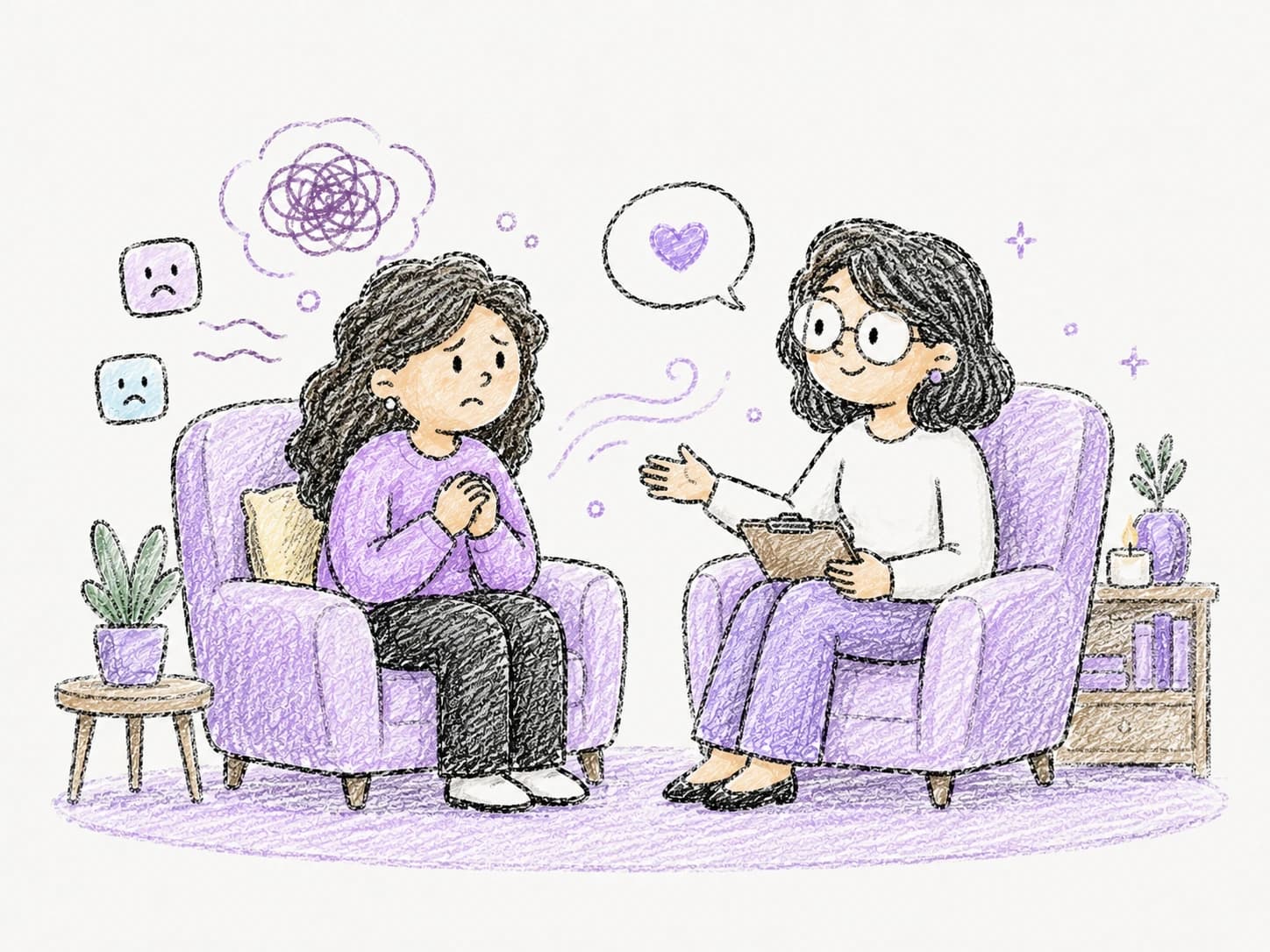
Somatic Experiencing Therapists in Canada
A body-oriented approach to healing trauma and stress by working with the nervous system rather than focusing primarily on memory or thought.
What to look for in a Somatic Experiencing therapist on Purple Lotus
- Certification as an SE Practitioner (SEP) through Somatic Experiencing International
- Experience with your specific trauma history or presenting concerns
- Skill with titration and slow pacing for nervous system regulation
- Comfort integrating SE with other modalities if needed
10 therapists for Somatic Experiencing in Canada
Browse 10 therapists offering Somatic Experiencing. Find the right counsellor or psychotherapist for your needs.

Julie Chang
Julie has Master’s Degrees in Clinical Psychology and Clinical Counselling and is currently finishing her doctorate’s degree in clinical psychology. In addition to professional training and experiences in psychotherapy and treatment, clinical counselling, behavioural intervention, and neuropsychological assessments, Julie also has a background in psychological research at the doctoral level and uses the empirical insights gained from previous studies to supplement her current clinical practice, making her unique as a practitioner of both clinical-scientist and scientist-practitioner models. Julie has worked with BC Society for Male Survivors of Sexual Abuse (BCSMSSA), Family Services of Greater Vancouver (FSGV), Chimo Community Services, and local medical clinics and healthcare centres. She has provided individual and couple/family therapy, treatments, and assessments to individuals for disorders and issues including depressive disorders, anxiety disorders, feeding and eating disorders, trauma- and stressor-related disorders, neurocognitive disorders, affect management, self-regulation, stress management, sexual/physical abuse and violence, crisis intervention and stabilization, couple/marital/parenting conflicts, academic/work stress, identity crisis/exploration, self-introspective needs, loneliness, and relationship difficulties. She identifies as a cisgender female who is open to clients belonging to the LGBTQIA2S+ communities. Julie applies an integrated theoretical framework informed by trauma theory, understanding of behavioral and neuropsychology, and multicultural sensitivity to her eclectic therapeutic approach. As an advocate of positive psychology who understands that mental health is more than the absence of illness, she focuses on building success and helping clients flourish rather than merely reducing distress. Her clinical repertoire includes Cognitive-Behavioral Therapy (CBT), CASE Approach for Risk/Suicide Assessment, Emotionally-Focused Therapy (EFT), Eye Movement Desensitization & Reprocessing (EMDR), Motivational Interviewing, Somatic Experiencing/Body Awareness Therapy, Mindfulness-Based Cognitive Therapy (MBCT), and Clinical Hypnosis. Owning to her mixed ethnic heritage, she is a native speaker of English, Mandarin, and Hokkien, and has conversational-level skills in Japanese and Cantonese.

Nicole Neufeld
Hi, I'm Nicole (she/they). You might wonder what therapy can offer you, and that is a fair question. I used to ask the same thing and I remember my first therapy session as a client, I was so nervous I got in a car accident on my way to the appointment. Being vulnerable and sharing a piece of yourself can be so intimidating. It makes sense to feel nervous. Reaching out for support is challenging, and can also be empowering, I commend you for considering it. I am committed to providing as safe a space as is possible to those who would choose to trust me with their story. Part of that includes an understanding of how systemic power and inequity impacts us all. I navigate the world as a white, settler woman. I also have lived experience with chronic illness, and a late-in-life ADHD diagnosis. These, among other pieces of my identity, impact my lived experiences of the world as your identity impacts yours. Because of this, I use an intersectional, systemic approach in my work, leaning on Feminist Theory and utilize AEDP (Accelerated Experiential Dynamic Psychotherapy) and Narrative techniques. I believe you have resources and answers within yourself, and I am honoured to support you as you discover and grow in your own strength. I take a collaborative approach, meaning you get to play an active role in deciding how our time together is spent. Ultimately, I am committed to your healing and will use all of the tools at my disposal to support you on your journey. My hope for you is that you flourish in your life, and are able to feel all of the joy and delight that comes from that.

Lauren Little
Hi, I’m Lauren (she/her). Sometimes life can be hard, and we can struggle to navigate our current challenges. I know that taking the step into therapy can feel overwhelming, however, remember that you are not alone in this and you and you are capable of doing hard things. Together we can create a safe space where you feel comfortable to share, explore and begin your healing journey. I encourage you to bring all parts of yourself - the hurt, the messy, the unseen - into this process. Honouring each client’s unique story, I work closely with them to meet their specific needs and goals to ensure clients feel validated, understood, and supported. As someone who has lived experience of anxiety and divorce, I understand the importance of practical self-support strategies and the value of a non-judgmental space to discuss vulnerable issues. I believe establishing a positive, empathetic and compassionate environment is essential for fostering personal growth. I guide clients in reconnecting to themselves, rediscovering their authentic self, and living a life that feels genuinely aligned with who they are. I draw on various therapeutic modalities including Cognitive Behavioural Therapy (CBT), nervous system regulation, body practices, mindfulness, family systems, attachment and nature-based practices. I have experience supporting individuals, youth, and families in navigating various challenges including anxiety, depression, divorce/separation, grief/loss, self-esteem, relationship challenges, dating and new relationships, deepening intuition, personal growth/emotional awareness, and life transitions. At the moment, I provide online sessions using the secure video platform Jane and offer supports to individuals located in beautiful British Columbia. I have availability Monday - Fridays (day/evenings). I offer a discounted rate to students. I look forward to connecting with you and hearing your story!

Gabriel Roy-Wright
I grew up in Saskatchewan but was called to the mountains and relocated to the Canadian Rockies at the age of eighteen. Since then I have lived abroad, on the coast, and now call Rossland, BC my permanent home. My upbringing instilled in me a strong desire to contribute meaningfully to my community and society. I am at my best when I am able to help others. My drive to contribute coupled with an interest in human decision-making led me to counselling. On my journey to becoming a counsellor I completed a number of experiences that sharpened my ability to understand, listen, and empathize with others: getting an undergraduate degree in psychology, working as a research assistant, volunteering to teach underserved youth snowboarding, working on a crisis line, and lastly, as a support worker– integrating adults with autism into their community in Trail, BC. I completed my practicum at Child and Youth Mental Health services (CYMH) under the guidance and supervision of Sean Larsen. It was under Sean’s expert guidance that I found my passion for helping children and youth. My time at CYMH assisted me in understanding how I can help families struggling with interpersonal and mental health concerns. As my practice has grown, I realized the distress many parents were experiencing in their romantic relationships. I took Gottman Method Couples Therapy training to provide couples counselling to our community and help struggling couples create better communication and understanding. I honour confidentiality, openness, connection, and engagement.

Cordelia Mejin
Hi, I’m Cordelia and I’m honoured that you are here. I desire to provide gentle and compassionate care, empathy and a safe place as I believe that we as humans have longings to feel seen, heard, known, understood, felt, accepted, and cared for, especially in difficult moments. The one thing that remained constant throughout my life is that I have always found meaning in connecting with others on an authentic, deep, heart level and in making meaningful impact in the lives of others. A longing to lead a life in alignment with who I am at the core of my being led me to pursue counselling not just as a profession, but as a calling and passion. I love what I do and am honoured that I get to hold space for my clients and see transformation happen in their lives. It makes my heart full to know that I am making a daily difference, one person at a time. I consider it an honour to walk alongside you and to meet you where you are at – be it a time when you are navigating everyday difficulties, a time when you feel lost, a time of grief, loss and transitions, a time when hope feels out of reach, or a time when you find that you are desiring growth and change within yourself and in your relationships. Although I am experienced in my work a generalist, I have specialized training and extensive experience in the area of grief and loss. Additionally, I have special training and extensive experience in various areas of concern. My personal experience of grief and painful loss of my family member’s death led to my deep devotion and passion to people who are grieving a death and/or non-death losses. Through my own journey of integrating grief into my life story, I developed a strong desire to support others in carrying their grief, remembering their person and integrating their grief into their life story. As one who grew up in a multicultural community, I have strong cultural awareness and strive to provide culturally sensitive therapy from a place of cultural humility. I value holding space for your story to be told and acknowledged in a supportive space where your experiences are validated, honoured, processed and integrated into your life story in a way that is fitting for you. In sharing your stories and allowing them to be witnessed in the presence and safety of a therapeutic relationship, it is my hope that what may have once felt unbearable becomes less heavy and eventually more bearable. On A Personal Note As one who is nearing my mid-30s, I have navigated various challenges, including life transitions, chronic pain, endometriosis and grief of all kinds (death and non-death losses). I cherish beautiful moments that unfold in life while also seeing the value of holding space for feelings that emerge from the difficult places of life. It is from my lived experiences and my own human-ness that I draw my compassion for each person I encounter in the therapy room. I live in beautiful British Columbia with my husband whom I have been married to for almost a decade. I treasure spending quality time with my family and friends. I am an avid reader, and am most fulfilled when I am outdoors in nature. I enjoy hiking, biking, playing the piano, listening to music and visiting new places around the world. I look forward to getting to know you and to connecting with you. It is my honour to meet you. Warmly, Cordelia

Maitri Gupta
Starting therapy is daunting. Existing in this world is not easy! There is much uncertainty and hurt. I congratulate you for taking the initial steps to find the right fit for you. I believe that everyone has the right to healing and community. We heal in community. The work I do with my clients in essence is relational. The work you will do in therapy is a radical act of self-advocacy in a world that often demands from us productivity and perfectionism. As a social justice activist, yogi, and post-modernist my approach to healing work is holistic. I aspire to go beyond the medical model and do not conform to what the norm demands from us. As your therapist, I engage with you curiously to go deeper, exploring many aspects as you unpack the layers of your narratives. Healing can only begin when we separate who we are from our problems. Coming from a bi-cultural background, I believe the narratives we have to speak to our individualistic and collective experience of events. It is vital to look within and around the communities to which we belong. I can provide services in Hindi, Punjabi, and English. My goal as a therapist is to facilitate mindful exploration of your trauma in a safe, collaborative, and open space. I want to hear your stories. Revisiting painful, challenging, and stressful stories can be a complex process. You are not alone! We work at your pace to restore your agency so that you can reclaim the narratives that serve your interpersonal growth and well-being. Through a trauma-informed lens, together, we can unpack: Anxiety and Low Moods Addictions Abuse Sexuality Social Anxiety Self-esteem and self-worth Burnout Challenges around social justice advocacy and activism Fear and hopelessness Body Image Self-Care Chronic Illness Ableism Navigating bi-cultural reality and expectations Relationships Perfectionism ADHD Feelings of isolation My approach is multi-faceted, and I will be combining traditional talk therapy with somatic psychology practices. I believe movement is essential for our healing and self-regulation. With virtual sessions, I want us to acknowledge that we are present with each other in our whole bodies and not just our floating heads. Therefore, I invite you to get in touch with your senses and body through practices such as tapping exercises or body scans. I will also lean on my mindfulness philosophy to help guide a process through which you can access inner wisdom, be present in the here and now, to release your traumas, and narratives which no longer serve you. My mental health work background is grounded in traditional Vedic-Yoga practices, Buddhist psychology, and Western psychology. Over the last decade, I have strived to do collective healing work through my activism and mental health aid for community members. I am committed to supporting you on your healing journey with great compassion. At this time, I can only see clients that are currently residing in Canada. I wish to express gratitude, and acknowledgment that I currently live, work and play in the ancestral, traditional and unceded territory of the xʷməθkwəy̓əm (Musqueam), Skwxwú7mesh (Squamish), and Tsleil-waututh Nations.

Larissa Mowat
Hi, I’m Larissa (she/her). I navigate the world as a queer, cis woman with mixed ancestry. My mom’s side being settlers from Europe and my dad’s family being Coast Salish from Sq’ewqétl (Skowkale) First Nation. That in-between space shapes how I understand identity belonging, and the complexity of people’s experiences. My counselling approach is flexible and relational, drawing from person-centered, Acceptance and Commitment Therapy (ACT), strengths based, and mindfulness and rooted in anti-oppressive, trauma-informed care. I recognize that many of the struggles we carry are shaped not just internally, but by the systems and environments we exist in. I work with young adults and adults, including women and folx who identify as queer and LGBTQIA+, and aim to create a space where all parts of you are welcome, even and especially the messy or uncertain ones. Outside of counselling, I enjoy slowing down through arts and crafts (most recently diamond art and junk journaling) and spending time with my therapy cat (who often likes to sit in on work-from-home sessions). I also love exploring new places, whether that’s close to home or another country. I hold a Masters Degree in Counselling Psychology from Adler University, and I am a Registered Clinical Counsellor (RCC) with the British Columbia Association of Clinical Counsellors (BCACC).

Diana Ben
Hi, I’m Diana! As a first‑generation African Canadian, I understand the complexity of navigating cultural identity, family expectations, people‑pleasing, autonomy, and the stigma surrounding mental health. Many clients come to therapy feeling overwhelmed by unprocessed trauma, anxiety, and the pressure to hold everything together. They often feel alone in their experiences, struggle with confidence, and second‑guess their decisions and experiences. My goal is to offer a non-judgmental, compassionate, culturally sensitive space where you feel heard, respected, and supported. I help you understand the roots of your thoughts, emotions, and patterns so you can shift them with intention. My work focuses on identity, self‑awareness, and healing from trauma and anxiety in a space that feels grounding and supportive. My approach blends insight, compassion, and practical tools to help you create real, sustainable change! Therapy with me is about understanding yourself more deeply so you can move through life with clarity and confidence. I believe insight is a powerful tool for healing; it helps us break old cycles and create new possibilities by moving beyond the feeling of “I don’t know why.” If you’re ready to explore your inner world with support, I’m here to help!
What is Somatic Experiencing?
Somatic Experiencing (SE) is a body-based approach to trauma therapy developed by Dr. Peter Levine in the 1970s and 1980s. Levine observed that animals in the wild regularly face life-threatening situations yet rarely develop lasting trauma symptoms the way humans do. He theorized this is because animals instinctively discharge the survival energy that gets activated during a threat, often through trembling or shaking. In humans, that energy can become trapped in the nervous system, showing up later as anxiety, numbness, chronic tension, or post-traumatic stress.
SE works by helping people pay attention to physical sensations rather than focusing primarily on the story or narrative of what happened. A therapist trained in SE guides you through gradual awareness of how stress and trauma live in the body, with the goal of allowing the nervous system to complete the survival responses that were interrupted. This process is called discharge and can bring a sense of settling, relief, or physical release. Sessions often feel exploratory and slow-paced by design, since moving too quickly can overwhelm the nervous system rather than support it.
SE draws on neuroscience, developmental psychology, and ethology. It is used for a wide range of trauma presentations, including single-incident trauma, complex developmental trauma, and stress-related physical symptoms. It is not a talk therapy in the traditional sense. While words are used, the work centers on bodily experience and nervous system awareness.
Who this approach may help
PTSD and trauma survivors
People who experienced accidents, assaults, disasters, or other threatening events and continue to feel on edge, shut down, or unable to fully return to daily life.
Developmental or childhood trauma
People whose early experiences included neglect, instability, or repeated stress, and who find that standard talk therapy does not reach the patterns they are trying to shift.
Chronic stress and nervous system dysregulation
People who feel chronically activated, exhausted, or emotionally reactive in ways that do not seem proportionate to current circumstances.
Stress-related physical symptoms
People experiencing chronic tension, pain, fatigue, or digestive issues that have been medically investigated without a clear explanation, and who suspect stress or trauma may be a factor.
Anxiety with a strong physical component
People whose anxiety shows up mainly as physical symptoms, such as a racing heart, tight chest, or a constant feeling of being braced for something, and who have not found relief through thought-based approaches alone.
Difficulty feeling present or grounded
People who feel disconnected from their bodies, emotionally numb, or as if they are going through the motions of life without feeling fully in it.
What happens in a session?
- 1
Establish a resource
The therapist helps you identify a physical anchor of safety or calm, such as a place in the body that feels relatively settled, which provides a starting point to return to throughout the session.
- 2
Bring attention to the body
You are guided to notice sensations in the body with curiosity, without needing to interpret or explain them. The therapist tracks your nervous system responses through what you report and how you appear.
- 3
Move toward activation carefully
Using a technique called titration, you approach difficult material in small amounts rather than diving into it fully. This keeps the nervous system within a manageable window of activation.
- 4
Track and support discharge
If activation arises, such as trembling, warmth, or a spontaneous breath, the therapist helps you stay with it rather than suppress it. These responses are signs of the nervous system completing interrupted survival cycles.
- 5
Pendulate between activation and settling
Sessions move back and forth between areas of activation and resources of calm, allowing the nervous system to expand its capacity to tolerate and process difficult experience.
- 6
Integrate what happened
The session ends with attention to how the body feels now, tracking any shifts in sensation, energy, or ease, and preparing you to return to everyday life.
How it compares to other approaches
EMDR
EMDR uses bilateral stimulation to reprocess specific traumatic memories. SE does not require a clear memory to work with and focuses on nervous system state and body sensation rather than memory reprocessing. Both are trauma-informed but operate through different mechanisms.
Trauma-Focused CBT
Trauma-focused CBT works primarily through the mind, identifying and changing unhelpful thoughts and beliefs about the traumatic event. SE works primarily through the body and nervous system, with less emphasis on narrative or cognitive reframing.
Somatic Therapy (general)
Somatic therapy is a broad category that includes many body-oriented approaches. SE is a specific, structured method with its own training and protocol. Not all somatic therapists are trained in SE specifically.
Internal Family Systems (IFS)
IFS works with internal parts of the personality, often through imagery and inner dialogue. SE focuses on body sensation and the biological basis of trauma responses. Some therapists integrate both.
Sensorimotor Psychotherapy
Sensorimotor Psychotherapy is another body-oriented trauma approach that integrates movement and physical awareness. Both overlap with SE in philosophy but differ in specific techniques and training pathways.
Talk Therapy (general)
Standard talk therapy processes experience through language and insight. SE holds that trauma is stored in the body and nervous system rather than in cognitive memory, so verbal discussion alone may not fully access or resolve it.
How to choose a Somatic Experiencing therapist
Questions to ask before booking:
- 1
Ask whether the therapist is a trained SE Practitioner (SEP) or has completed formal training through the Somatic Experiencing International (SEI) training program. This is a multi-year professional training, not a short workshop.
- 2
Ask about their experience working with your specific type of trauma, whether that is a single incident, complex developmental trauma, or stress-related physical symptoms. Different presentations call for different pacing and approaches.
- 3
Ask how they pace sessions and what they do if something feels overwhelming. A well-trained SE therapist will be skilled at titration and will not push you to go faster than your nervous system can handle.
- 4
Ask whether they integrate SE with other modalities and, if so, how they decide when to use what. Many therapists combine SE with talk therapy, parts work, or other approaches.
- 5
If you are currently under medical care for physical symptoms, ask whether the therapist is comfortable working alongside your medical team and treating the somatic and psychological dimensions together.
- 6
Ask what a typical course of SE looks like in terms of length. Because SE can be used for both simple and complex presentations, the answer will vary. Understanding what to expect helps you plan.
When this may not be the right fit
SE involves turning toward bodily sensation, which can sometimes activate strong responses. If you are in acute psychiatric crisis, actively using substances that significantly alter your nervous system, or have no access to basic stabilization, your therapist may suggest building other foundations before starting SE work.
If you have chronic dissociation or difficulty tolerating body-based awareness, a therapist will typically move very slowly and may recommend building grounding skills first. SE can still be appropriate, but the pacing needs to match your current window of tolerance.
If you are seeking a structured, goal-oriented, cognitive approach with clear homework and measurable benchmarks, SE may feel less familiar. It tends to be more exploratory and sensation-focused, which suits some people more than others.
If your physical symptoms have not been medically assessed, speak with a physician before or alongside starting SE. Therapy works best alongside appropriate medical care, not instead of it.
Related specialties
Frequently asked questions
What is Somatic Experiencing used for?
SE is used primarily for trauma, PTSD, and stress-related conditions where the nervous system has become stuck in survival mode. It can help with anxiety that has a strong physical component, chronic tension, emotional numbness, and stress-related physical symptoms. It is used for both single-incident and complex or developmental trauma.
How is Somatic Experiencing different from other trauma therapies?
SE works through body sensation and nervous system awareness rather than cognitive processing or memory reprocessing. It does not require you to talk through traumatic events in detail. This distinguishes it from approaches like trauma-focused CBT or EMDR, though some therapists integrate SE with other methods.
How many sessions does Somatic Experiencing take?
The length varies considerably depending on the complexity of your history and goals. For straightforward stress responses, meaningful progress may come within ten to twenty sessions. For complex or developmental trauma, SE work tends to be longer-term. Your therapist can give a better estimate after an initial assessment.
Is Somatic Experiencing evidence-based?
SE has growing research support. Studies have shown benefit for PTSD symptoms, including a randomized controlled trial published in Psychological Trauma. Research is still expanding compared to longer-established approaches like EMDR or trauma-focused CBT, but clinical evidence is building across multiple populations.
Do I have to talk about what happened to me in SE sessions?
Not necessarily. SE does not require you to narrate traumatic events in detail. The approach focuses on body sensation and nervous system responses, which means meaningful work can happen without revisiting the story of what occurred. Your therapist will follow your pace and comfort.
Can I do Somatic Experiencing online?
Yes. Many SE-trained therapists offer sessions online. While in-person work has some advantages for body-oriented approaches, video sessions can still be effective because the therapist tracks verbal reports of sensation and visible nervous system cues. Check each therapist profile for available session formats.
What does discharge mean in Somatic Experiencing?
Discharge refers to the release of survival energy that became stored in the nervous system during a threatening experience. It can show up as trembling, spontaneous deep breaths, warmth, or a sense of physical settling. SE therapists support discharge as a natural part of healing rather than something to suppress.
Looking for a Somatic Experiencing therapist?
Browse therapists in Canada who specialize in somatic experiencing. Filter by location, fee, and session format to find the right fit.