
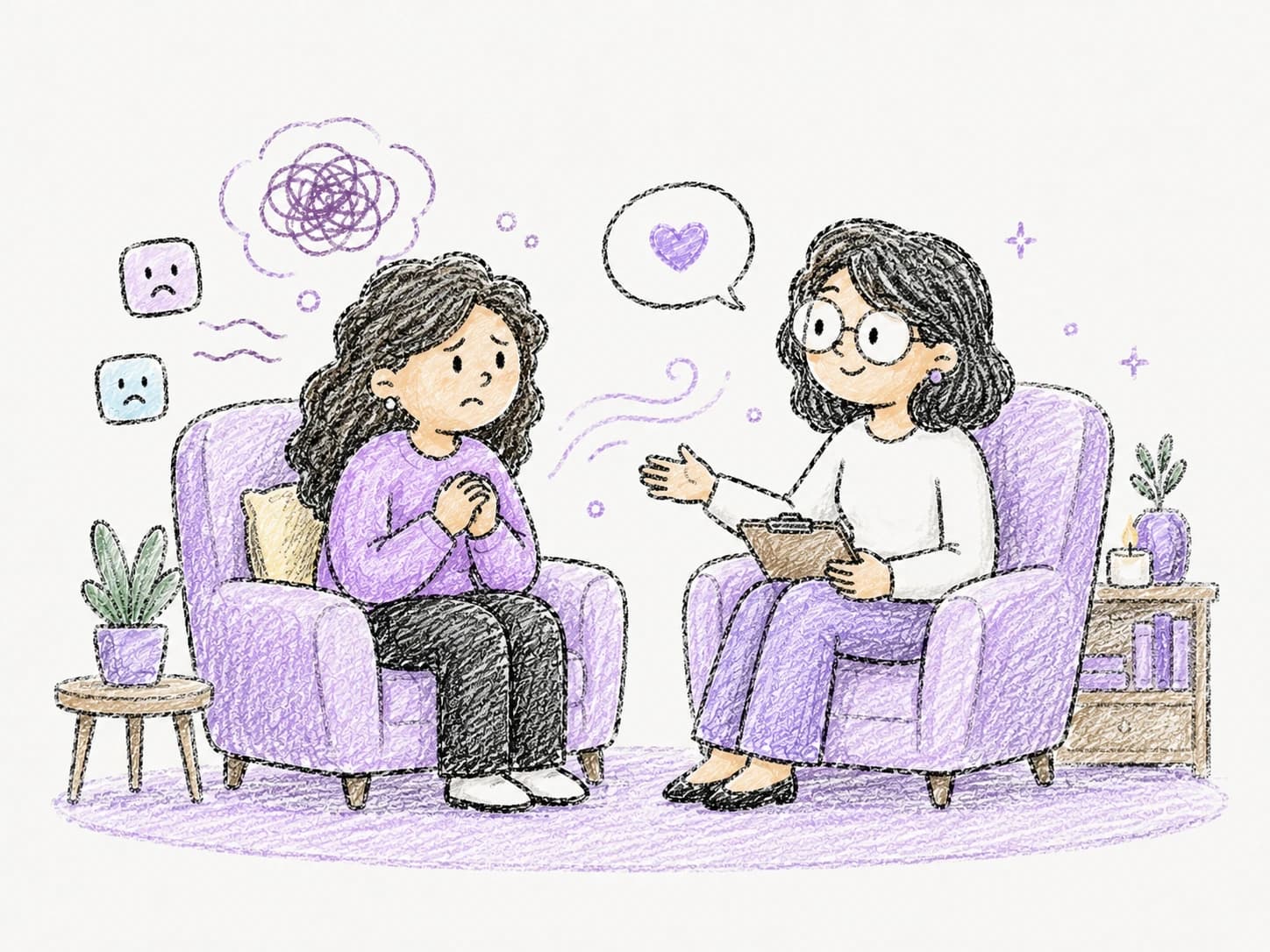
Grief or Loss Therapists in Canada
Grief is a natural response to loss, but it can be isolating and overwhelming. Therapists who specialize in grief help you process what you are carrying and find a way to live alongside your loss.
What to look for in a Grief or Loss therapist on Purple Lotus
- Specific training or experience with grief and loss
- Comfort with intense emotion and non-linear grief processes
- Familiarity with the type of loss you are experiencing
- Experience with complicated or prolonged grief if relevant
13 therapists for Grief or Loss in Canada
Browse 13 therapists specializing in Grief or Loss. Find the right counsellor or psychotherapist for your needs.

Fred Chou
I am a Registered Psychologist who works from a collaborative and person-centred approach. My therapeutic philosophy is centred on the belief that the client is the author of their life journey. From this perspective, the counsellor is a fellow sojourner whose role is to explore experiences and situations that may contribute to one feeling stuck. Often this may involve working with emotions, understanding intra/interpersonal dynamics, and exploring negative events in a manner that can be conducive to growth and learning. My approach to therapy builds on Emotion Focused Therapy (EFT) by integrating narrative and systemic models of counselling. Clinically, I have worked with youth, families, and adults in a variety of settings including the University of British Columbia Counselling Services, the Ministry of Children and Family Development, Complex Trauma Resources, the Veterans Transition Network, and through private practice. Some circumstances and challenges I have worked with include: depression, anxiety, trauma, racial identity and racism, Obsessive Compulsive Disorder, relationship issues, life transitions, and grief and loss. I have developed several mental health interventions and programs, including the Core Connectors Initiative, a mental health literacy program for youth, and the (Re)Claim and Connect counselling group for addressing anti-Asian racism. I have also served on several committees on equity and diversity and provided training on cultural considerations in clinical contexts. If you are looking for counselling, please feel free connect. My website and contact information can be found on this page.

Cordelia Mejin
Hi, I’m Cordelia and I’m honoured that you are here. I desire to provide gentle and compassionate care, empathy and a safe place as I believe that we as humans have longings to feel seen, heard, known, understood, felt, accepted, and cared for, especially in difficult moments. The one thing that remained constant throughout my life is that I have always found meaning in connecting with others on an authentic, deep, heart level and in making meaningful impact in the lives of others. A longing to lead a life in alignment with who I am at the core of my being led me to pursue counselling not just as a profession, but as a calling and passion. I love what I do and am honoured that I get to hold space for my clients and see transformation happen in their lives. It makes my heart full to know that I am making a daily difference, one person at a time. I consider it an honour to walk alongside you and to meet you where you are at – be it a time when you are navigating everyday difficulties, a time when you feel lost, a time of grief, loss and transitions, a time when hope feels out of reach, or a time when you find that you are desiring growth and change within yourself and in your relationships. Although I am experienced in my work a generalist, I have specialized training and extensive experience in the area of grief and loss. Additionally, I have special training and extensive experience in various areas of concern. My personal experience of grief and painful loss of my family member’s death led to my deep devotion and passion to people who are grieving a death and/or non-death losses. Through my own journey of integrating grief into my life story, I developed a strong desire to support others in carrying their grief, remembering their person and integrating their grief into their life story. As one who grew up in a multicultural community, I have strong cultural awareness and strive to provide culturally sensitive therapy from a place of cultural humility. I value holding space for your story to be told and acknowledged in a supportive space where your experiences are validated, honoured, processed and integrated into your life story in a way that is fitting for you. In sharing your stories and allowing them to be witnessed in the presence and safety of a therapeutic relationship, it is my hope that what may have once felt unbearable becomes less heavy and eventually more bearable. On A Personal Note As one who is nearing my mid-30s, I have navigated various challenges, including life transitions, chronic pain, endometriosis and grief of all kinds (death and non-death losses). I cherish beautiful moments that unfold in life while also seeing the value of holding space for feelings that emerge from the difficult places of life. It is from my lived experiences and my own human-ness that I draw my compassion for each person I encounter in the therapy room. I live in beautiful British Columbia with my husband whom I have been married to for almost a decade. I treasure spending quality time with my family and friends. I am an avid reader, and am most fulfilled when I am outdoors in nature. I enjoy hiking, biking, playing the piano, listening to music and visiting new places around the world. I look forward to getting to know you and to connecting with you. It is my honour to meet you. Warmly, Cordelia

Micah Jakobs
My name is Micah, and I identify as a female first-generation immigrant. s a Filipino-Canadian, I am motivated to create a safe space for other people of colour individuals to feel fully seen and heard. Concurrently over the last 16 years, I have spent 5 years working with the elderly community (specifically those with dementia and Alzheimer’s), 5 years in healthcare helping families work through grief and loss, 11 years working with adults with acquired brain injury, and 10 years working under a social service capacity with youth across Bangladesh, Africa, India, and Nepal. In my professional identity thus far, I have gained valuable insights and skills that have contributed to my therapeutic journey. As a result, I have developed a holistic and person-centered approach to therapy that integrates evidence-based, strength-based, mindfulness, and somatic-based practices. I believe this approach best equips me to meet your specific concerns and needs. To me, therapy is a space where we can explore, discover, and tackle distressing thoughts, feelings, or behaviours that may be holding you back. In our sessions, you can expect me to provide you with tangible tools and strategies to foster meaningful change, and to create opportunities to experience vulnerability in a safe space. Our work together will focus on raising awareness in the present moment so that you may accept and live a life full of clarity and authenticity.

Lexie Morgan
Are you looking for a ‘hype you up’ but call you on your shit therapist? I might just be your gal! Are you dealing with perfectionism? Going through a break up? Contemplating making a big life change? Experiencing grief, stress, overwhelm or loneliness? I prioritize authenticity in therapy, and aim to help people untangle themselves from problems that hold them back. I work with you as we navigate the peaks & valleys of life experiences. I often support, students, hospitality workers, parents, teachers, nurses, shift workers, ski patrollers, guides & 'first timers' to therapy. Life can be messy & complex. Are you looking for a ‘hype you up’ but call you on your shit therapist? I might just be your gal! Are you dealing with perfectionism? Going through a break up? Contemplating making a big life change? Experiencing grief, stress, overwhelm or loneliness? I prioritize authenticity in therapy, and aim to help people untangle themselves from problems that hold them back. I work with you as we navigate the peaks & valleys of life experiences. I often support, students, hospitality workers, parents, teachers, nurses, shift workers, ski patrollers, guides & 'first timers' to therapy. Life can be messy & complex. My office located in the Kitsilano neighbourhood of Vancouver at 4th & Arbutus. I offer virtual counselling via telehealth throughout BC. *Insurance* Counselling is covered or reimbursed by many extended benefits programs. I am registered with many major Canadian insurance providers: Canada Life | Great-West Life Green Shield Canada Manulife Medavie Blue Cross Mines & Associates SunLife AMS - UBC Student Benefits Vail Resorts EAP *Education & Registration* I hold a master's degree in counselling from City University and a bachelor's degree in Child and Youth Care from the University of Victoria. I am dual licensed with the BC Association of Clinical Counsellors (BCACC) as a Registered Clinical Counsellor (RCC) and the Canadian Counselling and Psychotherapy Association (CCPA) as a Certified Canadian Counsellor (CCC). License Numbers: RCC # 20414 CCC # 11250646 *A bit more about how I work & my background* Lexie (she/her) is a Registered Clinical Counsellor practicing on the xʷməθkʷəy̓əm (Musqueam), Səl̓ílwətaʔ (Tsleil-Waututh) and Skwxwú7mesh (Squamish) territories. Lexie’s approach to counselling is characterized by warmth, authenticity, and compassion, with a goal of fostering a relaxed environment where clients can explore their thoughts and emotions without fear of judgment. Lexie roots her work in a trauma informed, anti-oppressive, social justice lens. This may involve looking beyond the individual to understand their experiences within broader social and cultural contexts, as she joins clients on the path to self-discovery, healing, and change. Lexie has over ten years of experience working in the field of mental health. She draws on her experience providing counselling and practical supports to diverse communities, including children and families with complex medical and mental health needs, new immigrants and LGBTQQ2S+ folx. She has worked as a grief and loss counsellor at a hospice, provided crisis and suicide prevention support and developed industry specific work place mental health trainings for the hospitality and tourism sector. Montira Mental Health was born out of Lexie’s own experience as a hospitality manager at different backcountry lodges across British Columbia. As a lodge manager, Lexie observed the intersection of mental health and personal challenges within remote and isolated live/work environments which lead to high rates of burnout amongst her staff. The transient nature of tourism dependent communities, seasonal employment, high cost of living and limited access to low barrier community mental health offerings further impacted her staff. Lexie’s connection to the outdoor community is born out of years of living, working, and recreating in the Rocky, Purcell, Selkirk and Coast mountains. She is an avid backcountry skier, trail runner, and hiker who finds a deep sense of connection to herself and her community through time spent in the outdoors. To learn more, please see my website: montiramentalhealth.com

Lauren Little
Hi, I’m Lauren (she/her). Sometimes life can be hard, and we can struggle to navigate our current challenges. I know that taking the step into therapy can feel overwhelming, however, remember that you are not alone in this and you and you are capable of doing hard things. Together we can create a safe space where you feel comfortable to share, explore and begin your healing journey. I encourage you to bring all parts of yourself - the hurt, the messy, the unseen - into this process. Honouring each client’s unique story, I work closely with them to meet their specific needs and goals to ensure clients feel validated, understood, and supported. As someone who has lived experience of anxiety and divorce, I understand the importance of practical self-support strategies and the value of a non-judgmental space to discuss vulnerable issues. I believe establishing a positive, empathetic and compassionate environment is essential for fostering personal growth. I guide clients in reconnecting to themselves, rediscovering their authentic self, and living a life that feels genuinely aligned with who they are. I draw on various therapeutic modalities including Cognitive Behavioural Therapy (CBT), nervous system regulation, body practices, mindfulness, family systems, attachment and nature-based practices. I have experience supporting individuals, youth, and families in navigating various challenges including anxiety, depression, divorce/separation, grief/loss, self-esteem, relationship challenges, dating and new relationships, deepening intuition, personal growth/emotional awareness, and life transitions. At the moment, I provide online sessions using the secure video platform Jane and offer supports to individuals located in beautiful British Columbia. I have availability Monday - Fridays (day/evenings). I offer a discounted rate to students. I look forward to connecting with you and hearing your story!

Thenujaa Thirumalalagan
My approach to therapy is grounded in compassion and an understanding that many people come in feeling pulled in different directions or unsure of where they’re headed. In our work together, I aim to offer a supportive space where you can show up just as you are and explore what clarity, healing, and support might look like for you. I am a Registered Psychotherapist (Qualifying) and Master of Arts student in Counselling Psychology, providing therapy under clinical supervision. I work with individuals navigating life transitions, depression, anxiety, stress, self-esteem concerns, identity exploration, and relationship challenges. I take a collaborative approach to therapy, viewing clients as whole people rather than a set of symptoms, and value curiosity, reflection, and moving at a pace that feels right. My approach integrates Cognitive Behavioural Therapy (CBT), Narrative Therapy, and Solution-Focused Therapy. Together, we may explore patterns in thoughts and emotions, reflect on the stories you hold about yourself, and build on your existing strengths to support meaningful and lasting change. My work is especially attuned to first-generation and bicultural experiences, where transitions often carry added layers of cultural expectations, family responsibility, and identity negotiation. I support individuals who may feel caught between worlds, navigating who they are becoming while staying connected to where they’ve come from. You don’t have to sort this out alone. Growing up in an immigrant household shaped my awareness of how culture, family roles, and unspoken expectations can influence emotional well-being. These experiences deepened my sensitivity to identity, belonging, and the quiet ways people carry their struggles, and they continue to inform my commitment to culturally responsive and compassionate care. I strive to offer a space that honours the fullness of your story, without asking you to simplify any part of it. All parts of you are welcome here.

Stephanie Markowitz
I am a Registered Psychotherapist trained in a range of evidence-based modalities, which I will customize to meet your particular needs and goals. I will work with you, at your own pace, to process the difficulties you are facing and equip you with knowledge and tools for growth and healing.

Lauren Kalvari PhD, MSW, RSW
Welcome to my page! You may be living with the effects of trauma, coercive control, emotional or spiritual harm, or a long period of feeling overwhelmed, anxious, or disconnected from yourself. Perhaps relationships have felt unsafe or confusing, your sense of identity has been shaken, or daily life feels heavier than it should. You may be searching for clarity, stability, and relief from patterns that no longer feel manageable. Many people who reach out are not only looking to cope, but to understand what has happened to them, to restore a sense of dignity and self-trust, and to feel hope and meaning again. Over more than 30 years of working with anxiety, pain, and trauma, I am continually moved by the resilience people carry, even in the aftermath of profound difficulty. My work is trauma-informed and paced with care, supporting both the need for greater stability in daily life and a deeper understanding of lived experience, relationships, and a sense of self. I am open-minded, authentic, and warm. I use an integrative approach that is most suited to your personality type, current situation and specific needs. My role is to offer a steady, compassionate presence where difficult feelings and memories can be approached safely, without pressure or judgement.

Roberta McClelland
You are thinking about facing an issue that you are carrying (big or small), and changing things for the better. I'd like to be a part of that change. I'm Roberta McClelland. I'm a registered social worker with over 10 years of experience in the field. I work with female teens, post-secondary students, and adults who are coping with grief, caregiver fatigue, major and minor life transitions, relational stress, depression, anxiety, self-harming behaviors, trauma, and abuse via in-person, virtual, and phone appointments I will create a safe, collaborative space for you that is focused on your strengths, that respects your needs and your voice, and that will flex with you as you move through your change journey. And I will support you in this journey by using a variety of treatment techniques based on what fits best and feels best for you. As a counsellor I'm committed to providing a non-judgmental place where you can bring what is heavy, look at what hurts, say what you need to say, and plan for a better tomorrow. If this sounds like a good fit for what you're looking for right now, please get in touch and consider meeting with with me for a free 15 minute consult to see if we're a good match Call or Email Roberta McClelland now for a free 15 minute consultation - (226) 242-3641 Let's Connect(226) 242-3641

sarah kathleen wilson
you deserve to receive the same depth of care and support that you offer to others. as a neuroqueer, feminist therapist, i support careworkers, caregivers and community organizers who are seeking a space to feel resourced, witnessed, and held in their work. i specialize in meeting you in the place where grief, overwhelm, chronic illness, existential concerns and moral distress overlap. with a background that includes two decades of work in non-profit, this is terrain i have travelled and know well. my approach is experiential, embodied, intuitive, and grounded firmly in principles of harm reduction, anti-oppression, and disability justice. working through the lens of attachment allows me to support clients who want to explore how their current patterns of functioning may be related to early childhood experiences of abuse or emotional neglect. i also support clients with things like obsessive compulsive disorder, body-focused repetitive behaviours, fears and phobias, as well as pre-natal hypnosis. i have developed a self guided pre-natal hypnotherapy program that is suitable for women and birthing folks of any gender, with any family configuration that is suitable for any birth plan, including planned cesareans. i offer all new clients an introductory consultation so at no cost so you can ensure that it feels like the right fit before we begin working together.

Marta Bonati
Hello and welcome! I'm Marta, a Registered Psychotherapist (RP). Originally from Italy, I now call Toronto home. Having lived through the experience of building a life in a new country, I understand the complexities of cultural adjustment, identity, and belonging. I offer sessions in both English and Italian. Before becoming a therapist, I spent over a decade in Human Resources, where I witnessed how deeply our personal and professional lives intertwine. I hold a master’s degree in psychology and draw from both my clinical training and professional experience to support clients in finding balance, meaning, and self-understanding.

Julianna Servello
I work with children, teens, adults, couples, and families who may be feeling overwhelmed, stuck, disconnected, or unsure of how to move forward. My goal is to create a warm, supportive space where you can feel comfortable being yourself while working toward meaningful and lasting change. I bring a strong clinical background to my private practice, with experience working in hospital and community settings with individuals and families navigating a wide range of mental health, emotional, relational, and life challenges. My hospital experience has given me the opportunity to work with people during some of the most difficult and uncertain periods of their lives, supporting clients and families through complex circumstances, significant transitions, illness, trauma, crisis, grief, and changes in functioning. This experience has shaped the way I practice today: with compassion, clinical thoughtfulness, and an understanding that every person’s circumstances and needs are different. My clinical work includes supporting individuals experiencing anxiety, ADHD, OCD, emotional regulation difficulties, relationship and family concerns, grief, trauma, burnout, self-esteem concerns, and major life transitions. I also support clients through prenatal and postpartum challenges and the emotional impact of motor vehicle accidents and other traumatic experiences. I work with clients across the lifespan and tailor therapy to their individual goals, strengths, personality, and circumstances. OCD is a particular area of clinical interest and expertise for me. I have extensive training and experience supporting clients with OCD and related anxiety concerns, and I understand how consuming and disruptive intrusive thoughts, uncertainty, compulsions, and avoidance can become. My approach is compassionate, collaborative, and evidence-informed, with the goal of helping clients better understand their experiences and develop greater confidence in responding to difficult thoughts, feelings, and sensations. I also provide OCD-focused clinical supervision and consultation to other clinicians looking to strengthen their knowledge and confidence in this area. I also have a strong interest in ADHD and emotional regulation. For clients with ADHD, I recognize that challenges can extend far beyond attention and organization and may affect relationships, self-esteem, emotional regulation, work, school, and day-to-day functioning. Therapy can provide a space to better understand these patterns, develop strategies that are realistic for your life, and move away from shame or self-criticism toward greater self-understanding. My approach is integrative and individualized. I draw from Cognitive Behavioural Therapy (CBT), Dialectical Behaviour Therapy (DBT), Acceptance and Commitment Therapy (ACT), trauma-informed practice, narrative therapy, and strengths-based approaches. Rather than using a one-size-fits-all model, I consider what you are experiencing, what has or has not worked for you in the past, and what you hope to change. Together, we can identify practical strategies while also exploring the deeper patterns, experiences, and relationships that may be contributing to what you are experiencing. I believe therapy should be both clinically meaningful and genuinely human. You do not need to have everything figured out before coming to therapy, and you do not need to know exactly what you need. Sometimes people simply know that something is not feeling right, that they are exhausted from trying to manage everything on their own, or that they keep finding themselves caught in the same patterns. Therapy can provide an opportunity to slow down, make sense of what is happening, and develop a clearer path forward. Whether you are navigating anxiety, OCD, ADHD, grief, trauma, relationship difficulties, burnout, a major life transition, or simply feeling stuck, I aim to meet you where you are. My role is not to tell you who you should be or how you should live, but to work alongside you to better understand yourself, build on your existing strengths, and develop meaningful changes that fit your life. I welcome the opportunity to work collaboratively with clients and, when appropriate, with families and other healthcare professionals involved in their care. My hospital background has reinforced for me the value of collaboration and continuity of care, and I believe that connecting clients with the right supports can make an important difference in their overall wellbeing. Above all, I want therapy to feel like a space where you can be honest, understood, and supported without judgment. Whether you are coming to therapy for the first time or have been in therapy before, we can start wherever you are and work together from there.
What is Grief or Loss?
Grief is the emotional, cognitive, and physical response to losing something or someone significant. While it is commonly associated with the death of a loved one, grief can follow many kinds of loss, including the end of a relationship, a serious diagnosis, job loss, infertility, estrangement, or a major life transition. There is no single way grief unfolds, and the idea that it moves through fixed stages has largely given way to a more flexible understanding: grief is non-linear, shaped by your relationship to what was lost, your history, your support system, and the circumstances of the loss.
Grief therapy does not aim to take grief away or rush you through it. A therapist working in this area helps you make sense of what you are experiencing, process the feelings and meanings attached to your loss, and adapt to a life that has changed in ways you did not choose. For some people, grief resolves naturally over time with support from relationships and community. For others, it becomes prolonged, intense, or disruptive enough that professional support makes a meaningful difference.
When grief is unusually persistent, intense, or interfering significantly with daily functioning, it may be described as Prolonged Grief Disorder (PGD), a recognized condition in the DSM-5-TR. Evidence-based treatments like Complicated Grief Treatment (CGT), developed by Dr. Katherine Shear at Columbia University, are structured approaches designed specifically for this presentation. Many grief therapists draw on a range of frameworks, including narrative therapy, attachment theory, and the Dual Process Model developed by Stroebe and Schut, which describes grief as moving between confronting loss and reengaging with daily life.
Who this approach may help
Death of someone close
People grieving the death of a partner, parent, child, sibling, or close friend, including sudden death, death after long illness, or loss by suicide.
Prolonged or complicated grief
People whose grief feels stuck, intensifying rather than easing over time, or who find it very difficult to accept the reality of the loss long after it occurred.
Non-death losses
People grieving relationship endings, estrangement, infertility, miscarriage, chronic illness, disability, or any loss not recognized as grief by the people around them.
Anticipatory grief
People grieving a loss before it happens, such as the expected death of someone with a terminal illness or the gradual loss of a relationship or role.
Disenfranchised grief
People whose loss is not acknowledged socially, such as grief after a miscarriage, the death of an ex-partner, or the loss of a pet, and who may feel isolated or dismissed in their experience.
Grief alongside trauma
People whose loss was sudden, violent, or traumatic, and who are managing both grief and trauma responses at the same time.
What happens in a session?
- 1
Understand the loss and its context
Your therapist learns about the loss, your relationship to what or who was lost, the circumstances, and what has been most difficult. This builds a shared picture of what you are navigating.
- 2
Identify where you are in the grief process
Together, you explore what grief has looked and felt like so far, including what has helped, what has made it harder, and whether there are signs it has become prolonged or complicated.
- 3
Process the emotional and cognitive weight
You work through the feelings, thoughts, and meanings attached to the loss at a pace that feels manageable. This may include grief, anger, guilt, relief, or numbness, depending on your situation.
- 4
Address avoidance and re-engagement
If grief has led to withdrawing from activities, relationships, or plans for the future, your therapist may help you gradually re-engage with life, without expecting you to leave the loss behind.
- 5
Build a continuing relationship with the loss
Many grief frameworks emphasize that healing does not mean forgetting. Sessions may help you find a way to carry the loss forward, including how the person or thing that was lost remains part of your life and identity.
How it compares to other approaches
Trauma-Focused Therapy (e.g. EMDR, CPT)
Trauma-focused approaches target intrusive memories, fear responses, and hyperarousal connected to traumatic events. When a loss was sudden, violent, or shocking, trauma and grief can overlap. Some therapists address both together, while others treat trauma symptoms first before moving into grief work.
Cognitive Behavioral Therapy (CBT)
CBT helps identify and shift unhelpful thoughts and avoidance behaviours. Grief-adapted CBT can address guilt, rumination, and withdrawal. It tends to be more structured and thought-focused than some grief-specific approaches.
Acceptance and Commitment Therapy (ACT)
ACT helps people make room for painful emotions without being controlled by them, and reconnect with values even in the presence of grief. It is less focused on processing specific memories and more on building a life that holds the loss.
Emotion Focused Therapy (EFT)
EFT works with emotional processing and attachment patterns. It can be useful in grief when attachment bonds are central to the loss, but it is more commonly used in relational contexts than as a standalone grief treatment.
Narrative Therapy
Narrative therapy helps people re-author the stories they carry about themselves and their lives. In grief, it can be used to construct a meaningful account of the loss and the person or thing that was lost, rather than focusing on reducing symptoms.
Supportive Counselling
Supportive counselling provides a non-judgmental space to express feelings and feel heard. It is less structured and technique-driven than approaches like CGT or CBT. For some people, supportive care is enough; others benefit from a more targeted intervention.
How to choose a Grief or Loss therapist
Questions to ask before booking:
- 1
Ask whether they have specific experience or training in grief, including the type of loss you are dealing with. A therapist with general experience may be helpful, but someone who has worked extensively with grief will have more specific frameworks to draw on.
- 2
Ask what approach they use and how they think about the grief process. There is no single correct model, but you want a therapist who can explain their framework and how it applies to your situation.
- 3
If your grief follows a sudden, traumatic, or violent loss, ask whether they have experience with trauma alongside grief, since those two experiences often need to be addressed together.
- 4
Ask how they handle sessions if strong emotions come up. You want someone who is comfortable with intense grief reactions and will not try to redirect you away from painful feelings before you are ready.
- 5
Ask about session frequency and what a realistic course of treatment might look like. Grief therapy varies widely, from short-term focused work to longer-term support, and it helps to understand what you are entering.
- 6
Consider whether you want a therapist who shares or understands specific aspects of your experience, such as a particular cultural, religious, or spiritual context, since these can shape how grief is understood and expressed.
When this may not be the right fit
If you are experiencing acute thoughts of suicide or self-harm, crisis support should be the immediate priority. Grief therapy works best when basic safety is in place. A therapist will often help connect you to appropriate crisis resources before or alongside beginning grief work.
If your grief is recent, especially in the first weeks or months after a loss, you may not yet need formal therapy. Many people move through early grief with the support of trusted relationships, community, and time. Therapy tends to be most useful when grief is prolonged, significantly disrupting daily functioning, or when there is limited support available.
If you are also managing active substance use or a mental health condition that has become destabilized, those concerns may need to be stabilized first, or addressed in parallel, for grief therapy to be effective.
Some forms of loss, particularly those involving trauma, may be better addressed first with a trauma-focused approach before moving into grief-specific work. A skilled therapist will assess this and help you prioritize.
Related specialties
Frequently asked questions
What is grief therapy and what does it involve?
Grief therapy is a form of professional support that helps people process loss and adapt to life after it. Sessions typically involve talking through the loss, the emotions and meanings attached to it, and the challenges of moving forward. Therapists may draw on narrative, CBT, trauma-focused, or other frameworks depending on your needs.
How do I know if I need grief therapy or if grief will resolve on its own?
Grief often resolves over time with support from relationships and community. Therapy may be useful if grief feels stuck or is intensifying rather than shifting, if it is significantly disrupting daily functioning for an extended period, if you have limited support, or if the loss involved trauma. A therapist can help you assess whether focused support would make a difference.
What is the difference between grief and prolonged grief disorder?
Prolonged Grief Disorder (PGD) describes grief that is unusually persistent and impairing, typically characterized by intense yearning for the person who died, difficulty accepting the loss, and significant disruption to daily life lasting more than 12 months after bereavement. Not all ongoing grief meets this threshold, and a qualified clinician can assess whether your experience fits.
Can grief therapy help with losses other than death?
Yes. Grief therapists work with many kinds of loss including relationship endings, miscarriage, infertility, chronic illness, estrangement, job loss, and major life transitions. Some losses are not widely recognized as grief by others, which can make the experience more isolating. A grief therapist will take your loss seriously regardless of its cause.
How long does grief therapy take?
It depends on the nature of the loss and the approach used. Structured approaches like Complicated Grief Treatment typically run 16 sessions. Grief therapy more broadly may be shorter or longer depending on your goals. Some people find meaningful relief in a few months; others benefit from longer support, especially when grief is intertwined with trauma or major life disruption.
Is grief therapy available online?
Yes. Most grief therapists in Canada offer online sessions, and research supports the effectiveness of virtual therapy for grief. Online therapy may make it easier to access a therapist who specializes in your type of loss, regardless of location.
What if I feel guilty about grieving or think I should be over it by now?
These feelings are very common and often one of the things grief therapy directly addresses. There is no timeline that applies to everyone, and grief does not become invalid because time has passed or because others expect you to have moved on. A grief therapist will work with these responses, not against them.
Looking for a Grief or Loss therapist?
Browse therapists in Canada who specialize in grief or loss. Filter by location, fee, and session format to find the right fit.