
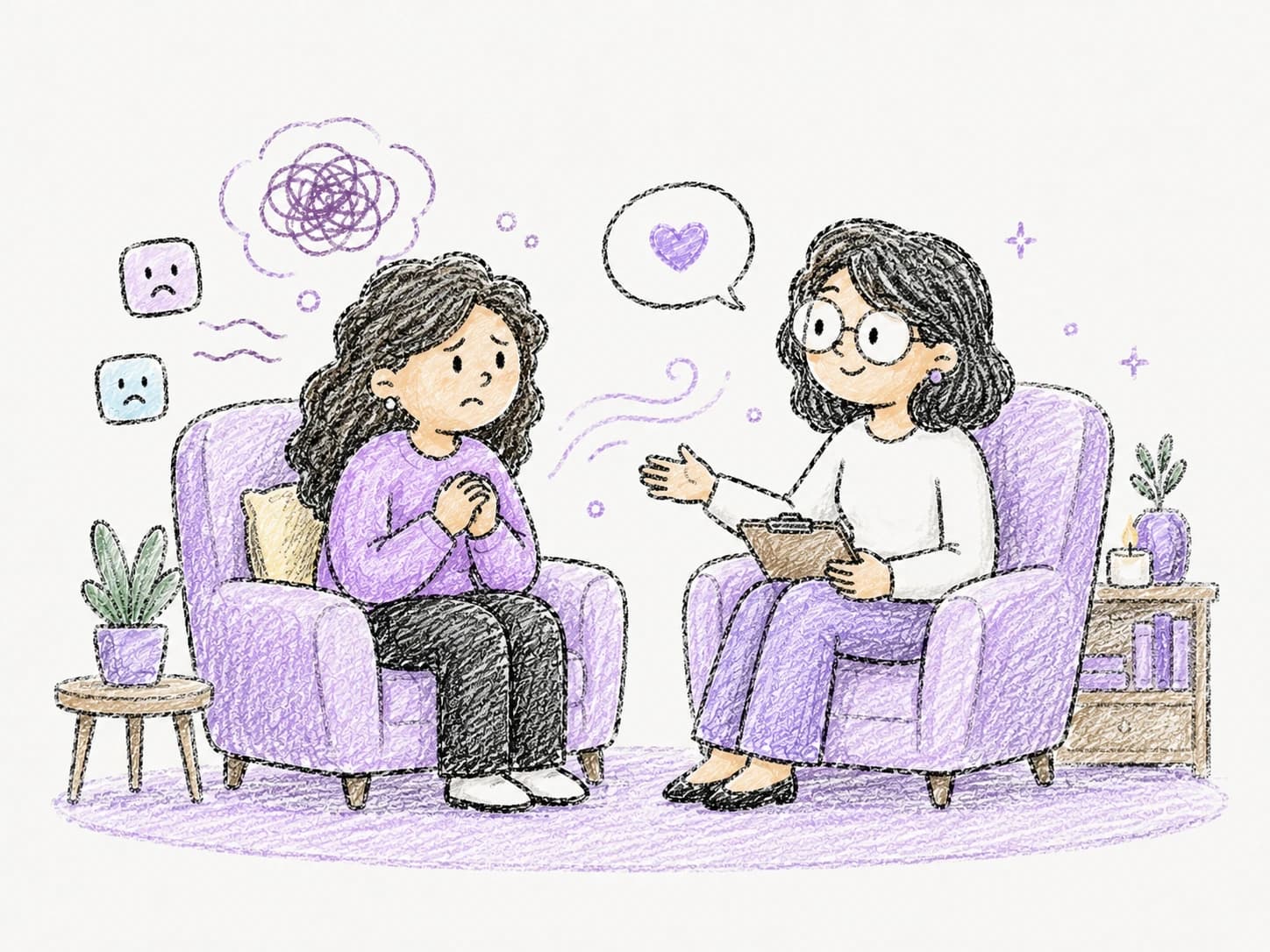
Narrative Therapy Therapists in Canada
An approach that helps people separate themselves from their problems and rewrite the stories shaping how they see themselves and their lives.
What to look for in a Narrative Therapy therapist on Purple Lotus
- Formal training in Narrative Therapy
- Experience with the population or concern you are bringing
- Curiosity about cultural and social context
- Comfort with open-ended, meaning-focused conversation
4 therapists for Narrative Therapy in Canada
Browse 4 therapists specializing in Narrative Therapy. Find the right counsellor or psychotherapist for your needs.

William Lee
Hi! I’m Will (he/him); a Registered Clinical Counsellor, Mental Performance Consultant and founder of Strive Counselling. My clinical roots began over the span of a decade in Vancouver’s Downtown Eastside, where I worked extensively with people who use drugs. A simultaneous stint working with inmates at BC Corrections has allowed me to develop not only a deeper understanding of mental health and addiction, but to also foster a greater sense of empathy and compassion for what it means to help people. I have also spent a significant portion of time working at Vancouver Community College, both as an instructor and as a counsellor, where I helped many students with culturally diverse backgrounds work through equally-diverse issues. As a proud Taiwanese-Canadian, I am passionate about fostering cultural humility in my practice, and to learn about the interplay between culture and mental health. Currently, I am a member of the Mental Health Network under the Canadian Centre for Mental Health and Sport; a nationally-led organization comprised of highly-skilled mental health professionals from across Canada who specialize in various areas sports psychology. As a Mental Performance Consultant, I have had the exciting opportunity to work with high-level athletes from various organizations, including Douglas College Athletics, The Richmond Oval’s High Performance Program, and FightStory (Founded by former ONE FC Champion Angela Lee). In our sessions, you can expect an engaged, committed, and collaborative clinician to help you reach your goals. I am keen on empowering you with the insights needed to create lasting meaningful change. I am excited to help you achieve wellness and reach your potential. When I’m not seeing clients, I enjoy an active lifestyle predominantly occupied by practicing martial arts, including Muay Thai and BJJ. I express myself creatively through carpentry, and seek tranquility through my freshwater aquariums. I am a proud father of enthusiastic girls, and husband to an unconditionally supportive wife.

Tehreem Fatimah
I am currently pursuing my Master of Arts in Counselling Psychology at Yorkville University and have several years of experience working within community mental health settings. Throughout my career, I have supported individuals facing challenges related to substance use, homelessness, depression, anxiety, burnout, stress, trauma, and systemic barriers. These experiences have strengthened my appreciation for the resilience and strength individuals demonstrate while navigating difficult life circumstances. My work has shaped a compassionate and client-centred approach that is rooted in empathy, respect, authenticity, and cultural sensitivity. I understand how trauma, chronic stress, and experiences of marginalization can significantly affect emotional and psychological well-being. Because of this, I am committed to creating a supportive, welcoming, and non-judgmental environment where clients feel safe to explore their experiences and work toward meaningful growth and healing. I take a holistic and strengths-based approach to counselling, recognizing that every person brings unique experiences, abilities, and inner resources to the therapeutic process. I believe in working collaboratively with clients, allowing them to guide their journey while supporting them in developing practical coping tools, building resilience, and fostering greater self-awareness. My goal is to help individuals enhance their emotional well-being, improve their quality of life, and create sustainable, positive change.

Clare MacMillan
Hi, I’m Clare. I’m a graduate student currently completing my Master of Arts in Counselling Psychology. Before entering the counselling realm, I earned an honours degree in Anthropology from McMaster University, where my love for understanding what shapes us as human beings really developed. I believe everyone’s story is unique and worthy of being held with care. However you choose to arrive and whatever you’re navigating, I’m here to offer a non-judgemental space where you can show up exactly as you are, without pressure to be anyone but yourself. I draw from Narrative Therapy, Acceptance and Commitment Therapy (ACT), and Cognitive Behavioural Therapy (CBT), adjusting to align with each client’s unique needs and lived experiences. I also enjoy incorporating mindfulness and whole‑person wellness when it supports the work we’re doing together. Above all, my priority is to create an environment where you feel heard, understood, and genuinely supported as we explore what matters most to you.
What is Narrative Therapy?
Narrative Therapy is a collaborative approach to therapy developed by Michael White and David Epston in Australia and New Zealand during the 1980s. It is built on the idea that people make sense of their lives through stories, and that the dominant stories we tell about ourselves can either support or undermine our wellbeing. When someone has spent years defining themselves by a difficult experience, a label, or a persistent problem, Narrative Therapy offers a way to examine that story more closely, understand where it came from, and begin to write a different one.
A central feature of this approach is externalizing the problem, which means treating the difficulty as something separate from who you are rather than as a fixed part of your identity. Instead of 'I am depressed,' the work might explore what depression asks of you, when it has less influence, and what your life looks like at those moments. This shift can reduce shame and open up new possibilities for how you respond to challenges.
Narrative Therapy draws on ideas from social science, philosophy, and community practice. It tends to be respectful of the ways that cultural, political, and social contexts shape the stories people carry. Research supports its use for depression, trauma, grief, and identity-related struggles, and it is frequently used with Indigenous communities, LGBTQ+ individuals, and others whose experiences have often been misrepresented or dismissed by dominant cultural narratives.
Who this approach may help
Depression and low self-worth
People who have absorbed a story that they are inadequate, broken, or fundamentally different from others, and who want to examine where that story came from and whether it reflects who they actually are.
Trauma and difficult life experiences
People who have had painful events define their sense of self, particularly when trauma has become the primary lens through which they understand their past and present.
Identity questions and life transitions
People navigating major changes, such as relationship breakdown, career shift, illness, or coming out, where the old story about who they are no longer fits.
Grief and loss
People who want to explore what their relationship with the person or thing they lost means to them, and how that meaning can continue to have a place in their life going forward.
Marginalized identities and cultural disconnection
People from communities whose experiences have been minimized or pathologized, including Indigenous individuals, LGBTQ+ people, and immigrants, who want a therapist to understand their stories in cultural context.
Eating disorders and body image
People struggling with the stories they hold about their bodies, their worth, and the role that controlling food has played in managing difficult feelings or social pressure.
What happens in a session?
- 1
Tell your story
The therapist listens carefully to the account you bring, paying attention to which stories about yourself seem dominant and how they have affected your choices and relationships.
- 2
Name and externalize the problem
Together, you give the problem a name and start to treat it as something that influences you rather than something you are. This creates distance that makes the problem easier to examine.
- 3
Explore the problem story
You look at where the problem story came from, what it requires of you, and whose voices or experiences may have contributed to it, including cultural, family, and social influences.
- 4
Find exceptions and alternative moments
The therapist asks about times when the problem had less influence over your life. These exceptions become the foundation for a different, more complex story about who you are.
- 5
Thicken the alternative story
You develop the alternative story with more detail, connecting it to your values, skills, and history. This may involve letters, documents, or conversations that help the new story feel real and lasting.
- 6
Witness and acknowledge change
The therapist may use practices like writing therapeutic letters, involving supportive others, or reflecting on what the emerging story means for how you want to live going forward.
How it compares to other approaches
Cognitive Behavioral Therapy (CBT)
CBT identifies unhelpful thought patterns and works to replace them with more accurate ones. Narrative Therapy does not evaluate thoughts as accurate or inaccurate but instead examines the larger stories those thoughts belong to and who authored them.
Person-Centred Therapy
Both approaches are non-pathologizing and value the client's perspective. Person-centred therapy focuses on unconditional positive regard and self-actualization. Narrative Therapy is more structured and explicitly uses techniques like externalizing and re-authoring.
Existential Therapy
Existential therapy also explores meaning and identity but tends to focus on universal human concerns like freedom, mortality, and responsibility. Narrative Therapy places greater emphasis on how social and cultural contexts shape the stories people carry about themselves.
Psychodynamic Therapy
Psychodynamic therapy explores how unconscious processes and early relationships shape current patterns. Narrative Therapy focuses less on what is unconscious and more on the visible stories and meanings a person has constructed, and how those can be rewritten.
Acceptance and Commitment Therapy (ACT)
ACT encourages defusing from unhelpful thoughts and committing to values-based action. Narrative Therapy similarly separates the person from the problem but places more emphasis on exploring where problem stories came from and building a richer alternative identity.
How to choose a Narrative Therapy therapist
Questions to ask before booking:
- 1
Ask about their training in Narrative Therapy specifically. Because it has a distinctive philosophy and set of practices, look for therapists who have completed formal training rather than those who simply find meaning-making a useful framework.
- 2
Ask how they approach externalizing conversations and re-authoring. A therapist with genuine experience in this model will be able to describe what those conversations look like in practice.
- 3
If your identity, culture, or community background is important to you, ask how they incorporate those contexts into the work. Narrative Therapy is explicitly interested in social and cultural influences, and a good practitioner will be curious about yours.
- 4
Ask how they handle pacing. Narrative Therapy can be open-ended or structured depending on your goals and situation. Clarify what a course of treatment typically looks like with them and how they know when the work is complete.
- 5
Ask whether they use therapeutic letters or other written practices. These are common in Narrative Therapy and can be powerful, but they are not required. It helps to know in advance whether that is part of their approach.
- 6
If you are working through trauma, ask how they approach safety and pacing before moving into story exploration. Trauma-informed practice matters regardless of the modality.
When this may not be the right fit
Narrative Therapy works through conversation and reflection, which requires some capacity to engage with language and abstract meaning. If you are in acute crisis, experiencing psychosis, or currently unable to engage in reflective conversation, a different level of care or stabilization-focused support may be needed first.
If you are looking for structured skill-building, such as coping strategies for panic or sleep difficulties, a more skills-based approach like CBT or DBT may be a better fit. Narrative Therapy tends to work at the level of identity and meaning rather than specific behavioral techniques.
For conditions where medication is an important part of care, such as severe depression, bipolar disorder, or psychosis, therapy works best alongside psychiatric support rather than as a standalone treatment.
If you strongly prefer a therapy with a defined protocol and measurable outcome tracking, you may find Narrative Therapy's more open and exploratory format less comfortable. Some people do better with a clearly structured approach.
Related specialties
Frequently asked questions
What is Narrative Therapy and what is it used for?
Narrative Therapy is a collaborative approach that helps people examine the stories they have built about themselves and their lives. It is used for depression, trauma, grief, identity difficulties, relationship issues, and life transitions. The approach treats the problem as separate from the person, which can reduce shame and open up new ways of responding.
What does "externalizing the problem" mean in Narrative Therapy?
Externalizing means treating the difficulty as something outside of your identity rather than a fixed part of who you are. Instead of framing yourself as an anxious person, for example, you might explore the ways anxiety shows up in your life, when it has less influence, and what you want your relationship with it to look like. This creates space to respond differently.
Is Narrative Therapy evidence-based?
Research supports Narrative Therapy for depression, trauma, grief, and eating disorders, among other concerns. The evidence base is smaller than for CBT, but a growing body of studies shows meaningful outcomes, particularly in community and culturally diverse settings. It is often used alongside other approaches.
How long does Narrative Therapy take?
The length varies depending on your goals and what you bring to the work. Some people find meaningful progress in eight to twelve sessions. Others engage in longer-term work, particularly when exploring identity, complex trauma, or longstanding patterns. Your therapist can give you a clearer sense of what to expect based on your situation.
How is Narrative Therapy different from CBT?
CBT focuses on identifying and changing unhelpful thought patterns. Narrative Therapy works at the level of the larger stories those thoughts belong to, and is more interested in where those stories came from and who authored them than in evaluating whether individual thoughts are accurate.
Can Narrative Therapy be done online?
Yes. Narrative Therapy translates well to online sessions because the work is primarily conversational and reflective. Therapeutic letters and documents, which are sometimes part of the approach, can also be shared digitally. Check therapist profiles for available formats.
Is Narrative Therapy a good fit for trauma?
Narrative Therapy can be helpful for trauma, particularly when a person's sense of self has been shaped by difficult experiences. It is used alongside trauma-informed practices, and a good therapist will attend to safety and pacing before moving into deeper story exploration. It may be combined with other trauma approaches depending on your situation.
Looking for a Narrative Therapy therapist?
Browse therapists in Canada who specialize in narrative therapy. Filter by location, fee, and session format to find the right fit.