We are more connected than ever. So why do so many of us feel alone?
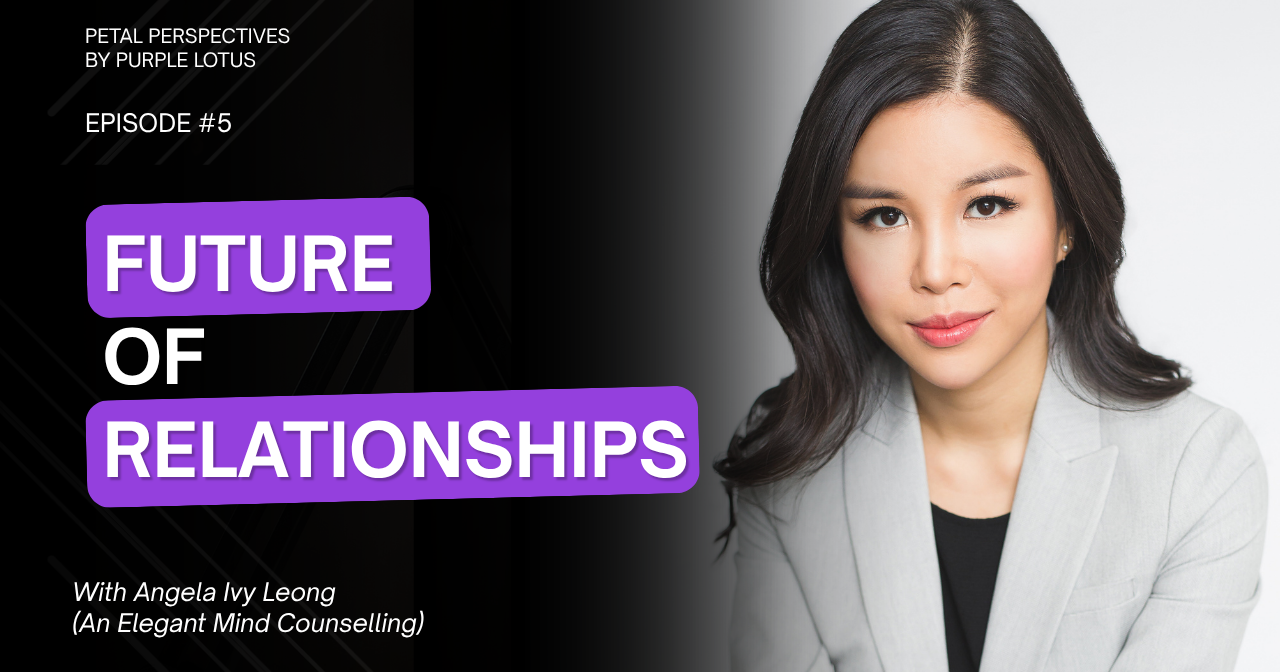
In this episode of Petal Perspectives, the Purple Lotus Mental Health Podcast, we sit down with Angela Ivy Leong, a Vancouver-based Registered Clinical Counsellor, sex and relationship therapist, psychedelic-assisted therapist, and founder of An Elegant Mind clinic.
Angela helps individuals and couples work through intimacy, attachment, and connection in a world shaped more and more by screens. She recently gave the TEDxWest Vancouver talk "How AI Companions Are Destroying Human Intimacy," and developed the KISSS Method, which brings together ketamine-assisted psychotherapy, couples work, and somatic practices.
This conversation is thoughtful, grounded in research, and full of insight for anyone trying to connect more deeply with the people in their life.
What Angela Had to Unlearn About Mental Health
Angela's first picture of mental health came from a movie: a person in a straitjacket in an institution. It took until her master's degree in counselling psychology at UBC to fully unlearn that. Everyone has mental health, and everyone has a responsibility to take care of it.
She encourages people to look at where their beliefs come from. We all inherit habits from our families, and when we build new families with partners, those habits collide. Noticing what no longer serves you is where growth starts.
Knowing a Person vs. Knowing Your Idea of Them
Once the early dating phase ends, Angela explains, our brains get lazy. That is not anyone's fault. It is how the brain saves energy. We lean on quick, pattern-based thinking and stop updating our picture of our partner, sometimes for years.
But people change, sometimes day by day. To keep really knowing someone, Angela suggests:
- Suspending assumptions, even after 20 years together
- Staying curious and asking questions
- Listening without judgment and giving them room to grow
- Reflecting back what you heard to check you understood them correctly
What Loneliness Is Trying to Tell You
At its simplest, Angela says, loneliness is the body telling us we need physical and emotional contact with other people. But it can also show up inside a relationship.
Sometimes it means parts of you are not being seen by the one person you spend most of your time with. Sometimes it means you need more variety in your connections. Therapy can help here too, by helping you see parts of yourself that the people around you might be missing.
Healing a Wound vs. Staying Closed Off
Angela traces how we relate to love back to early attachment, and how present and consistent our caregivers were. Some people are open to love until heartbreak makes them shut down. Others never let anyone close at all.
People can change, she says. Often they just are not ready until they decide something has to shift, and therapy becomes the place to start rewiring patterns that go back to childhood.
How AI Chatbots Are Changing What We Expect From Relationships
Almost anyone with internet access now has a chatbot that is available 24/7, agrees with them, and makes them feel good. Angela points to recent research suggesting that even a few weeks of regular use can lower people's satisfaction with real-life relationships, and that people tend to prefer flattering AI over AI that challenges them.
Her concern is social skill atrophy. Chatbots have no needs and no boundaries. Real relationships ask much more of us:
- Tolerating differences and opinions that are not our own
- Sitting with frustration and calming ourselves down
- Repairing after a rupture
- Negotiating boundaries and making compromises
Most importantly, a chatbot cannot co-regulate with you. That takes another nervous system: eye contact, warmth, touch. AI can offer cognitive soothing, Angela says, but soothing is not the same as co-regulation. She also raises real safety concerns for people who are vulnerable, which is why she does not see AI as a substitute for care.
Psychedelics Open a Door. They Don't Do the Work.
Angela uses ketamine-assisted therapy in her practice and is clear about its limits. Psychedelics do not teach intimacy. In a supported clinical setting, they can soften old protective patterns like withdrawing, people pleasing, or expecting abandonment, and create a window for change.
The real change comes from what happens after: the conversations, the integration, and how you choose to show up differently.
Angela's One Takeaway
AI chatbots and psychedelics have something in common. Both can help in the right context, like practising a hard conversation or doing guided therapeutic work. Both carry real risks when used alone and without support. And neither replaces genuine human connection.
Watch the Full Episode
Watch the full conversation with Angela Ivy Leong on YouTube or listen on Spotify to hear more about love, loneliness, and staying human in the age of AI.
Learn more about Angela's clinic, An Elegant Mind.
Explore more conversations and mental health resources at Purple Lotus Mental Health.
About Purple Lotus Mental Health
Purple Lotus Mental Health is a Canadian mental health platform focused on making therapy and mental wellness resources more accessible. Through therapist directories, educational content, and conversations like these, Purple Lotus aims to create more open and supportive discussions around mental health.
Looking for a therapist who specializes in relationships and intimacy?
Find a Therapist
Written by
Cher Peng
Co-Founder, Marketing & Community Lead
Cher Peng (she/they) is a community-driven builder based in Vancouver who completed her studies at the University of British Columbia. She is the co-founder of Purple Lotus, a Canadian platform improving access to mental wellness care by helping people find the right therapist quickly and intuitively. Her work sits at the intersection of product, research, and community, with experience spanning UX innovation, venture development, and nonprofit leadership. Cher is driven by a commitment to building human-centered solutions that create meaningful, real-world impact.