
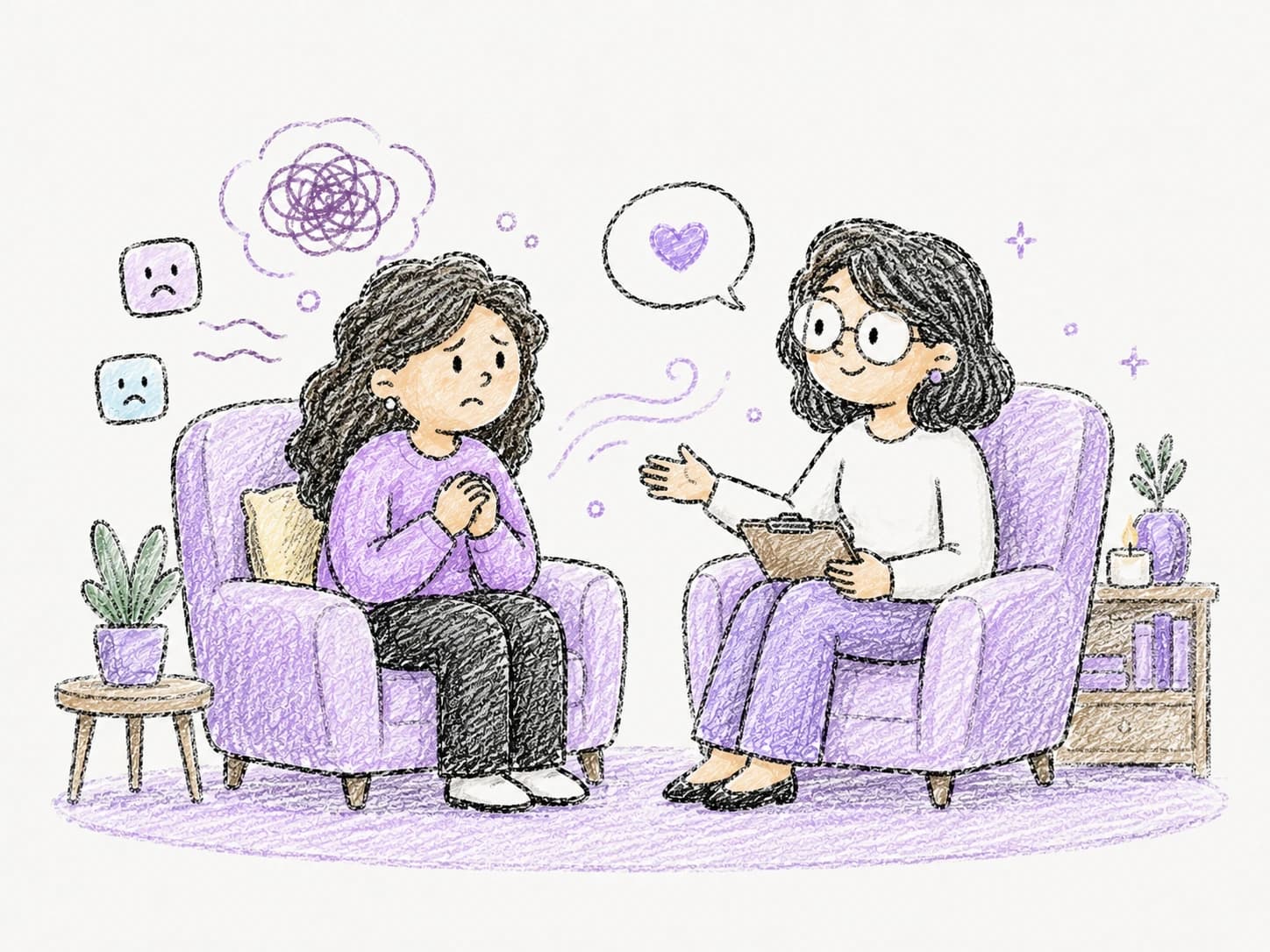
Self-Esteem Therapists in Canada
Therapy for self-esteem helps people understand where negative self-beliefs come from, challenge patterns that keep them stuck, and build a more grounded, stable sense of who they are.
What to look for in a Self-Esteem therapist on Purple Lotus
- Experience with negative self-beliefs, shame, or inner critic work
- Familiarity with CBT, Schema Therapy, ACT, or self-compassion approaches
- Comfort exploring early experiences and relational patterns when relevant
- Clear explanation of their approach and realistic expectations for progress
22 therapists for Self-Esteem in Canada
Browse 22 therapists specializing in Self-Esteem. Find the right counsellor or psychotherapist for your needs.

Christian Kleiser
Hello! My name is Christian, and I am a Registered Psychotherapist (Qualifying) at Black Onyx Counselling and Wellness. I hold a Master of Arts in Counselling Psychology from Yorkville University, and Honours degrees in both Kinesiology and Psychology, Neuroscience and Behaviour from McMaster University. My Approach to Therapy: DBT – Dialectical Behavioural Therapy (DBT) provides practical skills and techniques to support emotional regulation, distress tolerance, interpersonal skills, and mindfulness. DBT skills will help you balance acceptance and change. CBT – Cognitive Behavioural Therapy (CBT) explores the patterns in our thoughts, feelings, and behaviours to reshape how we engage with the world. A healthier outlook will help create positive and lasting change. Collaborative and Integrative - Healing requires an understanding of the challenge and an intentional approach. Together, we will integrate evidence-based interventions with your life experience to tailor our work to meet your needs and goals. Who I Work With: Individuals, Couples, and Families Adults, Children, and Older Adults Areas of Focus Neurodivergence, Time Management, and Goal Setting Emotional Dysregulation and Mindfulness Anxiety and Depression Trauma and Stress Healthy Communication and Boundary Setting Loneliness and Self-Worth Grief and Life Transitions Addictions I offer in-person sessions in London and virtual sessions across Ontario. I invite you to book a free 20-minute consultation today to explore whether working together feels like the right fit for you. I believe therapy is a journey towards healing and self-discovery, and I welcome the opportunity to help you move forward with clarity and confidence.

Rachelle Choueiri
Do you ever feel like you don’t quite belong—like you’re putting on a mask just to make it through the day? Maybe life feels heavier than it should, or quietly exhausting. I work with people who are navigating anxiety, procrastination, imposter syndrome, and a lingering sense of disconnection. Together, we’ll gently explore what may be keeping you stuck and begin creating a life that feels more authentic and more your own. With a PhD in chemistry and a background outside of mental health, I understand the pressures of high performance, the weight of expectations, and the loneliness that can come with feeling different. I work relationally, offering a calm, curious space where you can begin to reconnect with yourself. I offer a free 30-minute consultation so you can get a sense of how I work and ask any questions. You don’t need to have it all figured out — just a willingness to take one step. If something in this profile resonates with you, I invite you to reach out and begin the conversation.
What is Self-Esteem?
Low self-esteem is not a personal flaw or a fixed trait. It is usually a set of beliefs people develop over time, often shaped by early relationships, criticism, comparison, or experiences that left them feeling inadequate, unlovable, or not enough. These beliefs can operate quietly in the background, influencing how someone approaches relationships, work, conflict, and daily decisions. Therapy for self-esteem focuses on understanding where those beliefs came from and working through them at their root.
Several therapy approaches are used for this work, including Cognitive Behavioral Therapy (CBT), Schema Therapy, Acceptance and Commitment Therapy (ACT), and self-compassion-based approaches like Mindful Self-Compassion (MSC). The right fit depends on what is driving the low self-esteem. For some people, the main issue is a harsh inner critic fuelled by perfectionism. For others, it is a deep-seated belief about being unlovable, often tied to attachment or early relational experiences. A therapist working in this area will help identify the pattern and choose an approach suited to it.
Work in this area tends to be practical and reflective. You might track situations that trigger self-criticism, examine where certain beliefs originated, or practise responding to yourself differently. Progress usually involves developing a more accurate and compassionate self-view, rather than simply thinking more positively.
Who this approach may help
Persistent self-criticism or inner critic
People who experience a constant internal voice that judges, dismisses, or undermines them, especially in situations involving performance, relationships, or comparison to others.
Difficulty asserting needs or setting limits
People who consistently prioritize others, struggle to say no, or feel unworthy of having their own needs met, often linked to beliefs about being less important than others.
People-pleasing or seeking external validation
People who depend heavily on praise or approval from others to feel okay about themselves, and feel destabilized when that approval is absent or uncertain.
Shame, embarrassment, or a sense of being fundamentally flawed
People who feel a pervasive sense of inadequacy or defectiveness that is not tied to a specific event but feels like a core part of who they are.
Low self-esteem linked to anxiety or depression
People whose anxiety or depression is closely tied to negative self-beliefs, including fear of judgment, hopelessness about their own worth, or difficulty accepting good things that happen to them.
What happens in a session?
- 1
Map out the pattern
You and your therapist identify what situations tend to trigger self-criticism or self-doubt, and what that experience looks like for you, whether it shows up as shame, withdrawal, overwork, or something else.
- 2
Trace where it came from
Together, you explore the origins of these self-beliefs. Often they formed in response to specific relationships, environments, or experiences, and understanding that context is part of shifting them.
- 3
Examine the beliefs directly
You look closely at the beliefs themselves. Are they accurate? Are they applied consistently? Where did the evidence for them come from? This is not about replacing them with false positivity, but about seeing them more clearly.
- 4
Practise a different relationship with the inner critic
Depending on the approach, this might involve cognitive restructuring, self-compassion exercises, defusing from self-critical thoughts, or working with the inner critic as a part of yourself with its own logic and history.
- 5
Build new patterns over time
Change in this area tends to happen gradually. Sessions track what shifts as you practise responding differently to yourself and to situations that previously reinforced low self-esteem.
How it compares to other approaches
Cognitive Behavioral Therapy (CBT)
CBT addresses negative self-beliefs by identifying and challenging distorted thinking patterns. It is practical and structured, with homework between sessions. Self-esteem work in CBT focuses on evidence-testing and cognitive restructuring. It is effective for self-esteem tied to perfectionism or specific situations.
Schema Therapy
Schema Therapy targets deeply held beliefs, called schemas, that often originate in childhood. It is useful when low self-esteem feels core and pervasive rather than situational. It combines cognitive, behavioural, and experiential techniques and tends to be more exploratory than standard CBT.
Acceptance and Commitment Therapy (ACT)
ACT does not try to change negative beliefs directly. Instead, it helps people step back from self-critical thoughts and act in line with their values regardless of what those thoughts say. It is useful for people whose self-esteem is entangled with perfectionism or anxiety.
Mindful Self-Compassion (MSC)
MSC is a structured program developed by Kristin Neff and Christopher Germer that teaches skills for treating yourself with the same kindness you might offer a friend. It focuses less on analyzing where beliefs came from and more on building compassion as a practice.
Attachment-Based Therapy
When low self-esteem stems from early relational experiences, such as inconsistent caregiving, emotional unavailability, or criticism in close relationships, attachment-based therapy may be a better fit. It addresses self-worth through the lens of connection and relational safety.
How to choose a Self-Esteem therapist
Questions to ask before booking:
- 1
Ask what approach they use for self-esteem specifically and why. A therapist should be able to describe their method clearly, whether that is CBT, schema work, ACT, or self-compassion based, and explain why it suits your situation.
- 2
Ask whether they see self-esteem as a standalone concern or whether they typically explore what underlies it, such as early experiences, relational patterns, or linked anxiety and depression.
- 3
Ask how they handle the inner critic. Some therapists work to challenge it, others work to understand its function, and others help you step back from it. Knowing their approach helps you assess the fit.
- 4
Ask what progress looks like in their experience and how long this kind of work typically takes. Self-esteem work can be short-term for specific patterns, but deeper schema-level work often takes longer.
- 5
If shame is a significant part of your experience, ask whether they are comfortable working with shame directly. Some therapists are more comfortable in this territory than others.
- 6
Ask whether they offer any structured practices or exercises between sessions. Active work outside of the therapy hour often matters for this type of change.
When this may not be the right fit
If you are experiencing severe depression, active suicidal thoughts, or a mental health crisis, stabilization and safety planning come first. Self-esteem work is generally most effective once there is some stability in place.
If your low self-esteem is closely tied to trauma, a therapist may recommend beginning with trauma-focused work before or alongside self-esteem work, particularly if trauma symptoms are active.
Self-esteem work alone may not be sufficient if there is an underlying condition like major depression, an eating disorder, or OCD that is driving or significantly shaping negative self-beliefs. In those cases, a therapist will typically treat the primary condition as part of or before focusing specifically on self-esteem.
If you are looking for quick reassurance rather than deeper change, therapy may not meet that need. The work tends to involve sitting with discomfort, examining difficult patterns, and practising different responses, which takes time.
Related specialties
Frequently asked questions
What does therapy for self-esteem actually involve?
Therapy for self-esteem focuses on identifying and working through negative beliefs about yourself, understanding where they came from, and building a more grounded self-view. Depending on the approach, this can involve thought-challenging exercises, exploring early experiences, self-compassion practices, or working with the inner critic directly.
How long does it take to see results from self-esteem therapy?
It depends on the depth and origin of the self-esteem issues. Situational self-criticism tied to specific patterns may shift in a few months of regular sessions. More pervasive beliefs rooted in early experiences, sometimes called schemas, typically take longer to work through. A therapist can give a more specific estimate after an initial assessment.
Is low self-esteem a mental health condition?
Low self-esteem is not a diagnosis on its own, but it commonly occurs alongside conditions like depression, anxiety, and eating disorders. It can also be a primary concern that significantly affects quality of life without meeting criteria for a specific diagnosis. Therapy can address it in either case.
What is the difference between self-esteem, self-confidence, and self-compassion?
Self-esteem refers to how you value and regard yourself overall. Self-confidence is more specific to your belief in your ability to do things well. Self-compassion is about how you treat yourself when you struggle or fail. They are related but distinct, and different approaches in therapy may target one more than the others.
Can therapy for self-esteem be done online?
Yes. Many therapists offer self-esteem work through video sessions, and this format works well for talk-based approaches like CBT, ACT, and self-compassion programs. Some people find it easier to be honest about self-critical thoughts when talking from their own space. Check each therapist profile for available formats.
How is self-esteem therapy different from positive thinking or coaching?
Therapy examines why negative self-beliefs formed, how they are maintained, and what keeps them in place, rather than replacing them with positive statements. The goal is a realistic and stable self-view, not simply a more optimistic one. This tends to produce more durable change than affirmations or mindset coaching alone.
Looking for a Self-Esteem therapist?
Browse therapists in Canada who specialize in self-esteem. Filter by location, fee, and session format to find the right fit.