
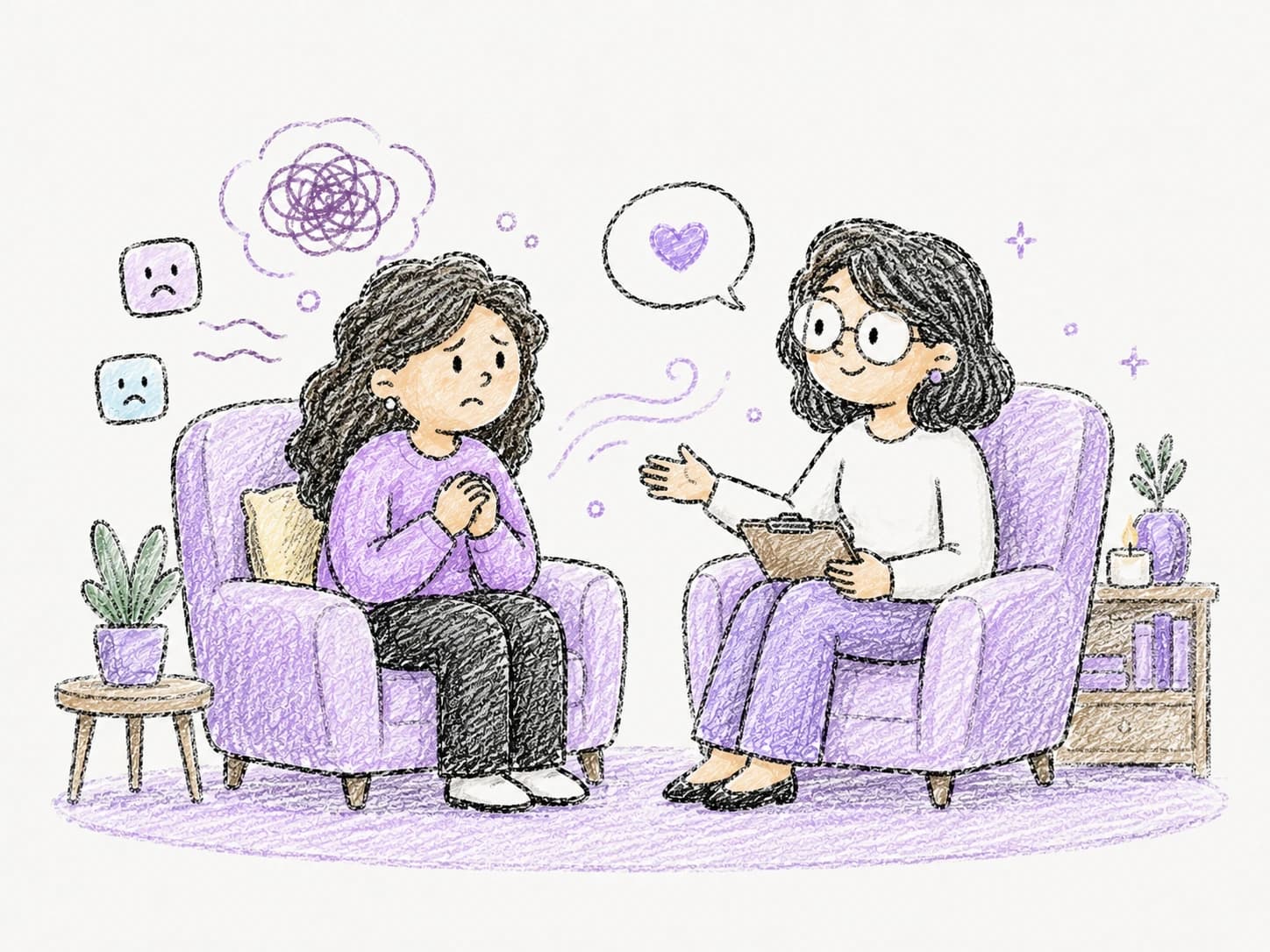
Teen Issues Therapists in Canada
Therapy for teenagers addresses the specific emotional, social, and developmental challenges of adolescence, from academic stress and identity questions to mood difficulties and family conflict.
What to look for in a Teen Issues therapist on Purple Lotus
- Training and experience specifically with adolescents, not just adults
- Familiarity with the specific concerns your teen is facing
- Approach to confidentiality and parental involvement that fits your situation
- Ability to build rapport with teenagers who may be skeptical or reluctant
2 therapists for Teen Issues in Canada
Browse 2 therapists specializing in Teen Issues. Find the right counsellor or psychotherapist for your needs.

Nita Agustin
Get to know your Burnaby LGBTQ Therapist Alo, my name is Nita Agustin, and I go by she/they pronoun. I’m your friendly neighbourhood LGBTQ therapist based in Burnaby, BC, ready to help you find yourself on this journey called life. If you’re expecting a typical, “professional” looking counsellor, I will warn you, that’s not me. I show up the way I want my clients to show up - as my whole self. I laugh loudly. I speak openly and I encourage my clients to do the same :) I’m committed to creating a space to make mycurious youth clients feel safe, heard, validated, and affirmed no matter what they bring into the room. As an LGBTQ therapist, I draw a lot on my personal experiences to guide me in my work with my youth and young adults clients. Growing up queer in Indonesia and making a big move to Burnaby, BC, in 2011, has framed a lot of how I view the world and given me valuable insight on navigating LGBTQIA2S+ issues, cross-cultural changes, life transitions, and finding yourself. When you come see me, I want you to feel at home and welcome to be yourself. I’m not here to be an authority in your life, but an ear to listen to, a shoulder to cry on, and a voice of compassion, understanding, and motivation.

Melanie Brooks
I provide individual therapy to children, adolescents, and young adults experiencing anxiety, emotional dysregulation, interpersonal challenges, and life transitions. Those who have difficulty managing stress, understanding their emotions and behaviours, may find it helpful to work through challenges and develop coping skills to navigate life experiences during therapy sessions. My approach to therapy offers a warm, collaborative, and non-judgmental approach with an emphasis on the therapeutic relationship. I strive to create a safe space working alongside children, adolescents, and families to establish goals and a plan to achieve them in hopes of creating meaningful and sustainable change!
What is Teen Issues?
Teen issues therapy refers to therapeutic support tailored to the particular pressures and developmental experiences of adolescence, roughly ages 12 to 18. Teenagers face a distinct set of challenges: shifting relationships with parents, increasing academic and social pressure, identity formation, and often their first significant experiences of anxiety, depression, or other mental health concerns. A therapist who works with teens understands this developmental context and adjusts their approach accordingly.
Adolescent therapy differs from adult therapy in several ways. Teens may be less comfortable with traditional talk therapy and benefit from more active, skills-based, or creative approaches. Confidentiality, trust, and the therapist's ability to engage authentically with a young person are especially important. Parents are sometimes involved in sessions, though the extent depends on the teen's age, the concerns being addressed, and what the teen is comfortable with.
Therapists working with teens commonly draw on Cognitive Behavioral Therapy (CBT), Dialectical Behavior Therapy (DBT), Acceptance and Commitment Therapy (ACT), and family-based approaches, often combining methods to fit the individual. Research consistently supports these modalities for adolescent anxiety, depression, and behavioral difficulties.
Who this approach may help
Academic stress and perfectionism
Teenagers managing intense pressure around grades, university applications, or performance who are experiencing burnout, procrastination, or anxiety that affects daily functioning.
Depression and low mood
Young people experiencing persistent sadness, withdrawal, low energy, or loss of interest in things they used to enjoy, sometimes connected to social difficulties or family changes.
Anxiety and social difficulties
Teens struggling with worry, panic, fear of judgment, or avoidance of situations like school, social events, or speaking in class.
Identity and self-worth
Adolescents working through questions about who they are, including gender identity, sexual orientation, cultural background, or simply figuring out their values and place in the world.
Family conflict and communication
Teenagers navigating tension with parents or siblings, adjusting to family changes like divorce or a new household, or struggling to feel understood at home.
Peer relationships and bullying
Young people dealing with friendship difficulties, social exclusion, online harassment, or the aftermath of being bullied, which can affect self-esteem and school attendance.
What happens in a session?
- 1
Building trust and understanding the situation
The first sessions focus on getting to know the teen, understanding what has been going on, and establishing enough comfort for honest conversation. The therapist does not rush this stage.
- 2
Identifying what is most difficult
Together, the therapist and teen clarify which issues are most pressing, whether that is mood, relationships, school, family, or something else. Goals are set in a way that feels relevant to the teenager.
- 3
Learning and practicing skills
Depending on the approach, the teen learns tools for managing emotions, shifting unhelpful thought patterns, tolerating distress, or communicating more effectively. These are practiced in and between sessions.
- 4
Exploring deeper patterns when needed
For some teens, especially those with longer-standing difficulties or past experiences of loss or trauma, sessions may go deeper into what is driving their current struggles.
- 5
Involving parents when appropriate
The therapist may periodically meet with parents separately or include them in sessions to support progress at home, always with attention to the teen's boundaries and comfort.
How it compares to other approaches
Family Therapy
Family therapy brings parents and other family members into sessions as active participants. Teen therapy keeps the adolescent as the primary client, even when parents have occasional involvement. If family dynamics are the core concern, a family therapy approach may be more appropriate.
Child Therapy (under 12)
Child therapy often uses play, art, or other non-verbal methods suited to younger children. Teen therapy uses more direct conversation and skill-building, recognizing adolescents' greater capacity for abstract thinking and self-reflection.
Dialectical Behavior Therapy (DBT)
DBT is a specific structured therapy originally developed for adults with emotional dysregulation and adapted for teens. A teen issues therapist may use DBT skills as one tool among many, while a DBT specialist runs a more formal protocol often including a skills group.
Cognitive Behavioral Therapy (CBT)
CBT is a specific evidence-based method focused on identifying and changing unhelpful thoughts and behaviors. Teen therapy is a broader category that may include CBT but is not defined by it. Some therapists specialize in CBT for teens specifically.
School Counseling
School counselors provide support within a school setting, often focused on academic and social concerns. They typically do not provide ongoing clinical therapy. A private or clinic-based teen therapist offers more depth, more sessions, and greater confidentiality.
How to choose a Teen Issues therapist
Questions to ask before booking:
- 1
Ask directly how they engage with teenagers and what approaches they use. A good fit requires more than clinical training, the therapist should be someone your teen can actually talk to.
- 2
Ask whether they typically involve parents and how. The answer should feel balanced, protecting the teen's need for confidentiality while keeping parents appropriately informed.
- 3
Ask what experience they have with the specific concerns your teen is facing, such as anxiety, academic pressure, identity questions, or family conflict, rather than general adolescent work.
- 4
Ask what a typical course of therapy looks like and how they will know if the approach is working. Vague answers here are a caution sign.
- 5
If your teen is at all resistant to therapy, ask how they work with teens who are skeptical or reluctant. This is common, and the therapist should have a thoughtful answer.
- 6
Ask whether they offer online sessions, which may make it easier for a busy teenager to attend consistently.
When this may not be the right fit
If a teenager is in acute crisis, experiencing suicidal thoughts, self-harm, or severe mental health symptoms, a higher level of care such as a crisis line, emergency services, or an intensive outpatient program may be needed before or alongside regular therapy.
Teen therapy is most effective when the teen has some degree of willingness to engage. Forcing a very resistant teenager into therapy often produces limited results. A therapist can sometimes help a reluctant teen find reasons to participate, but genuine motivation matters.
If the primary difficulty is within the family system rather than with the teenager individually, family therapy may address the root of the problem more directly than teen therapy alone.
For concerns with a strong medical component, such as eating disorders, substance use, or suspected neurological issues, therapy works best alongside appropriate medical assessment and coordination.
Related specialties
Frequently asked questions
What is teen issues therapy?
Teen issues therapy is therapeutic support designed for adolescents, typically ages 12 to 18. It addresses emotional, social, academic, and behavioral concerns specific to this stage of development. Therapists who work with teens adapt their approach to suit adolescent communication styles, developmental needs, and the particular pressures teenagers face.
What kinds of problems can teen therapy help with?
Teen therapy may help with anxiety, depression, academic stress, low self-esteem, peer difficulties, family conflict, identity questions, grief, trauma, and behavioral concerns. It is also used when a teenager seems withdrawn, irritable, or is struggling in ways that are hard to name but clearly affecting daily life.
How long does therapy for teenagers usually take?
Duration varies depending on what is being addressed. Some concerns may resolve in eight to twelve sessions. Others, particularly those involving longer-standing patterns or past trauma, may take several months or longer. A therapist should be able to give you a rough sense of what to expect after a few sessions.
Should parents be involved in teen therapy?
It depends on the teen's age, the concerns involved, and what the teenager is comfortable with. Many therapists meet with parents occasionally for updates while keeping session content confidential. Younger teens or those with more complex family dynamics may benefit from more parental involvement. The teen's trust in the process is usually the priority.
Can teen therapy be done online?
Yes. Many therapists offer online sessions for teenagers. This can work well for teens with busy schedules, social anxiety, or who live in areas with limited local options. It is worth confirming with the therapist what platform they use and how they handle privacy during sessions.
What if my teenager does not want to go to therapy?
Resistance is common. Some teens come around once they have met the therapist and felt that sessions are actually useful. It can help to let the teen have input in choosing the therapist and to frame therapy as an option rather than a punishment. Some therapists specialize in engaging reluctant adolescents.
Looking for a Teen Issues therapist?
Browse therapists in Canada who specialize in teen issues. Filter by location, fee, and session format to find the right fit.