
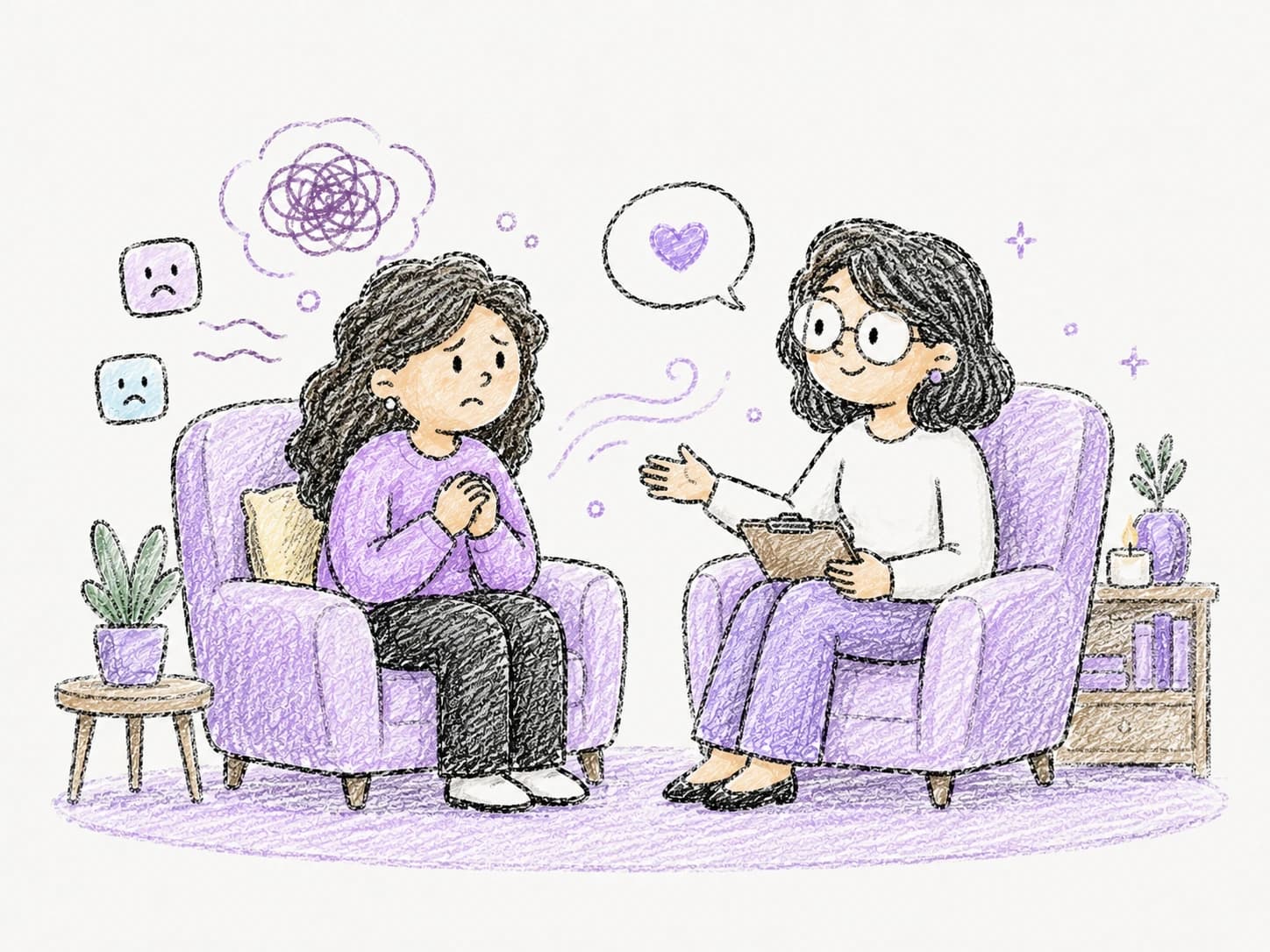
DBT Therapists in Canada
A structured, evidence-based therapy that teaches practical skills for managing intense emotions, tolerating distress, improving relationships, and reducing self-destructive behaviour.
What to look for in a DBT therapist on Purple Lotus
- Formal DBT training beyond introductory workshops
- Experience with your specific concern (BPD, self-harm, eating disorders, etc.)
- Clear description of what format they offer (comprehensive vs. DBT-informed)
- Comfort with the structured, skills-focused nature of the approach
31 therapists for DBT in Canada
Browse 31 therapists offering DBT. Find the right counsellor or psychotherapist for your needs.

Micah Jakobs
My name is Micah, and I identify as a female first-generation immigrant. s a Filipino-Canadian, I am motivated to create a safe space for other people of colour individuals to feel fully seen and heard. Concurrently over the last 16 years, I have spent 5 years working with the elderly community (specifically those with dementia and Alzheimer’s), 5 years in healthcare helping families work through grief and loss, 11 years working with adults with acquired brain injury, and 10 years working under a social service capacity with youth across Bangladesh, Africa, India, and Nepal. In my professional identity thus far, I have gained valuable insights and skills that have contributed to my therapeutic journey. As a result, I have developed a holistic and person-centered approach to therapy that integrates evidence-based, strength-based, mindfulness, and somatic-based practices. I believe this approach best equips me to meet your specific concerns and needs. To me, therapy is a space where we can explore, discover, and tackle distressing thoughts, feelings, or behaviours that may be holding you back. In our sessions, you can expect me to provide you with tangible tools and strategies to foster meaningful change, and to create opportunities to experience vulnerability in a safe space. Our work together will focus on raising awareness in the present moment so that you may accept and live a life full of clarity and authenticity.

Mila Loskutova
Hi! My name is Mila Loskutova and I'm a registered clinical counsellor. I am a queer, immigrant settler woman. I am passionate about supporting folks healing from trauma, anxiety, depression, stress, relationship issues and OCD. I use a mix of gentle talk therapy that helps individuals dive deeper into self-exploration and more structured approaches for specific concerns, such as Cognitive Behavioural Therapy (CBT), Dialectical Behavioural Therapy (DBT), Eye Movement Desensitization and Reprocessing (EMDR) and Exposure and Response Prevention (ERP). I am mindful and curious about how our identities and the systems we live in shape the way we move through the world. My approach is humanistic, anti-oppressive and sometimes irreverent. I enjoy helping people create and deepen meaning in their lives. I am available online and in person at my office at 315, 2083 Alma Street, Vancouver.

Alana Sheridan
I found early on that my passion in life is to help others work through life's struggles. That, combined with my natural ability to connect in a real way with others, led me to the counselling field over nineteen years ago. I have my Masters of Arts in Counselling and have experience working with individuals, couples, children and teens. During my years as a counsellor, I have helped individuals work through anxiety, depression, low self worth, work stress, grief and loss, to name a few. I have helped couples navigate through issues both to help stay within and working on the relationship, as well as how to amicably separate when the couple feels that is in their best interest. I have many years experience working with families involved with foster care and the protective services forum, and specifically have experience working with parents on achieving a positive, working family. Wondering if counselling is the right next step? Life can be difficult. Let's work through this together.

Maitri Gupta
Starting therapy is daunting. Existing in this world is not easy! There is much uncertainty and hurt. I congratulate you for taking the initial steps to find the right fit for you. I believe that everyone has the right to healing and community. We heal in community. The work I do with my clients in essence is relational. The work you will do in therapy is a radical act of self-advocacy in a world that often demands from us productivity and perfectionism. As a social justice activist, yogi, and post-modernist my approach to healing work is holistic. I aspire to go beyond the medical model and do not conform to what the norm demands from us. As your therapist, I engage with you curiously to go deeper, exploring many aspects as you unpack the layers of your narratives. Healing can only begin when we separate who we are from our problems. Coming from a bi-cultural background, I believe the narratives we have to speak to our individualistic and collective experience of events. It is vital to look within and around the communities to which we belong. I can provide services in Hindi, Punjabi, and English. My goal as a therapist is to facilitate mindful exploration of your trauma in a safe, collaborative, and open space. I want to hear your stories. Revisiting painful, challenging, and stressful stories can be a complex process. You are not alone! We work at your pace to restore your agency so that you can reclaim the narratives that serve your interpersonal growth and well-being. Through a trauma-informed lens, together, we can unpack: Anxiety and Low Moods Addictions Abuse Sexuality Social Anxiety Self-esteem and self-worth Burnout Challenges around social justice advocacy and activism Fear and hopelessness Body Image Self-Care Chronic Illness Ableism Navigating bi-cultural reality and expectations Relationships Perfectionism ADHD Feelings of isolation My approach is multi-faceted, and I will be combining traditional talk therapy with somatic psychology practices. I believe movement is essential for our healing and self-regulation. With virtual sessions, I want us to acknowledge that we are present with each other in our whole bodies and not just our floating heads. Therefore, I invite you to get in touch with your senses and body through practices such as tapping exercises or body scans. I will also lean on my mindfulness philosophy to help guide a process through which you can access inner wisdom, be present in the here and now, to release your traumas, and narratives which no longer serve you. My mental health work background is grounded in traditional Vedic-Yoga practices, Buddhist psychology, and Western psychology. Over the last decade, I have strived to do collective healing work through my activism and mental health aid for community members. I am committed to supporting you on your healing journey with great compassion. At this time, I can only see clients that are currently residing in Canada. I wish to express gratitude, and acknowledgment that I currently live, work and play in the ancestral, traditional and unceded territory of the xʷməθkwəy̓əm (Musqueam), Skwxwú7mesh (Squamish), and Tsleil-waututh Nations.

Lexie Morgan
Are you looking for a ‘hype you up’ but call you on your shit therapist? I might just be your gal! Are you dealing with perfectionism? Going through a break up? Contemplating making a big life change? Experiencing grief, stress, overwhelm or loneliness? I prioritize authenticity in therapy, and aim to help people untangle themselves from problems that hold them back. I work with you as we navigate the peaks & valleys of life experiences. I often support, students, hospitality workers, parents, teachers, nurses, shift workers, ski patrollers, guides & 'first timers' to therapy. Life can be messy & complex. Are you looking for a ‘hype you up’ but call you on your shit therapist? I might just be your gal! Are you dealing with perfectionism? Going through a break up? Contemplating making a big life change? Experiencing grief, stress, overwhelm or loneliness? I prioritize authenticity in therapy, and aim to help people untangle themselves from problems that hold them back. I work with you as we navigate the peaks & valleys of life experiences. I often support, students, hospitality workers, parents, teachers, nurses, shift workers, ski patrollers, guides & 'first timers' to therapy. Life can be messy & complex. My office located in the Kitsilano neighbourhood of Vancouver at 4th & Arbutus. I offer virtual counselling via telehealth throughout BC. *Insurance* Counselling is covered or reimbursed by many extended benefits programs. I am registered with many major Canadian insurance providers: Canada Life | Great-West Life Green Shield Canada Manulife Medavie Blue Cross Mines & Associates SunLife AMS - UBC Student Benefits Vail Resorts EAP *Education & Registration* I hold a master's degree in counselling from City University and a bachelor's degree in Child and Youth Care from the University of Victoria. I am dual licensed with the BC Association of Clinical Counsellors (BCACC) as a Registered Clinical Counsellor (RCC) and the Canadian Counselling and Psychotherapy Association (CCPA) as a Certified Canadian Counsellor (CCC). License Numbers: RCC # 20414 CCC # 11250646 *A bit more about how I work & my background* Lexie (she/her) is a Registered Clinical Counsellor practicing on the xʷməθkʷəy̓əm (Musqueam), Səl̓ílwətaʔ (Tsleil-Waututh) and Skwxwú7mesh (Squamish) territories. Lexie’s approach to counselling is characterized by warmth, authenticity, and compassion, with a goal of fostering a relaxed environment where clients can explore their thoughts and emotions without fear of judgment. Lexie roots her work in a trauma informed, anti-oppressive, social justice lens. This may involve looking beyond the individual to understand their experiences within broader social and cultural contexts, as she joins clients on the path to self-discovery, healing, and change. Lexie has over ten years of experience working in the field of mental health. She draws on her experience providing counselling and practical supports to diverse communities, including children and families with complex medical and mental health needs, new immigrants and LGBTQQ2S+ folx. She has worked as a grief and loss counsellor at a hospice, provided crisis and suicide prevention support and developed industry specific work place mental health trainings for the hospitality and tourism sector. Montira Mental Health was born out of Lexie’s own experience as a hospitality manager at different backcountry lodges across British Columbia. As a lodge manager, Lexie observed the intersection of mental health and personal challenges within remote and isolated live/work environments which lead to high rates of burnout amongst her staff. The transient nature of tourism dependent communities, seasonal employment, high cost of living and limited access to low barrier community mental health offerings further impacted her staff. Lexie’s connection to the outdoor community is born out of years of living, working, and recreating in the Rocky, Purcell, Selkirk and Coast mountains. She is an avid backcountry skier, trail runner, and hiker who finds a deep sense of connection to herself and her community through time spent in the outdoors. To learn more, please see my website: montiramentalhealth.com

Nicole Grant
I work with children, teens and adults seeking support for anxiety, depression, trauma and life changes. I am trained in CBT, DBT and EMDR.

Amy Kobelt
My journey to becoming a counsellor started with my own appointment in a counselling office. I remember feeling nervous about the process, but eventually felt inspired by my own healing journey to support others in the same way that counselling has helped me heal and grow. I am passionate about self-growth and discovery, and I love supporting you to better understand your past, make connections and build skills for a better and stronger future. I work from a trauma informed and attachment model and I strongly believe that part of the healing process that happens in counselling is through the therapeutic relationship. I work collaboratively with you to meet your goals in counselling, and I am truly honoured every time someone chooses to invite me into that journey – I know it is not easy! I welcome working with diverse clients of all ages, cultures, genders, sexual orientations and abilities and I currently work with clients ages 12 and up. I specialize in relational and childhood trauma, eating disorders, relationship concerns and anxiety. I am trained in EMDR, OEI and Lifespan Integration Therapies - all of these therapies are designed to help you process traumatic events or negative self beliefs and bring you healing from your past. Trauma disconnects us from ourselves and our bodies and so part of our work will be to help you become more connected to yourself, your feelings and your body. If you have any questions about this please reach out for a consultation call - I would love to chat with you to see if I'm the right fit for you.

Tina Camara
Hi! My name is Tina and I use a holistic approach combined with evidence and strength-based practices in my practice. I hope to empower you to shine forward into the life you want. My training and experience has focused on individuals who have experienced trauma - from childhood trauma to single-incident events. I have also worked a lot with clients with anxiety, depression and ADHD. My approach blends holistic healing with clinical expertise. I integrate proven therapeutic tools to help clients navigate trauma, anxiety, and depression. These evidence-based therapies, such as Cognitive Behavioural Therapy, Mindfulness Based Therapy, Person-Centered Therapy, enable clients to work through past wounds, reframe negative thoughts, and build coping skills that support lasting change. Along with evidence - based practices, I also use mindfulness, meditation and somatic approaches to help clients ground their energy, listen to their bodies and cultivate self-awareness in the present moment. I believe that healing isn’t just about addressing symptoms, it’s about treating the root cause of negative behaviours and lowered sense of self so one can step into a more empowered self. I strive to create a safe and non-judgmental space for you to explore your thoughts, feelings and behaviors to help empower you towards making intentional changes. Come in, let’s take the first step in identifying what it is you would like to see different in your life and we can collaboratively formulate a plan to take you from where you are to where you want to be.

Fred Chou
I am a Registered Psychologist who works from a collaborative and person-centred approach. My therapeutic philosophy is centred on the belief that the client is the author of their life journey. From this perspective, the counsellor is a fellow sojourner whose role is to explore experiences and situations that may contribute to one feeling stuck. Often this may involve working with emotions, understanding intra/interpersonal dynamics, and exploring negative events in a manner that can be conducive to growth and learning. My approach to therapy builds on Emotion Focused Therapy (EFT) by integrating narrative and systemic models of counselling. Clinically, I have worked with youth, families, and adults in a variety of settings including the University of British Columbia Counselling Services, the Ministry of Children and Family Development, Complex Trauma Resources, the Veterans Transition Network, and through private practice. Some circumstances and challenges I have worked with include: depression, anxiety, trauma, racial identity and racism, Obsessive Compulsive Disorder, relationship issues, life transitions, and grief and loss. I have developed several mental health interventions and programs, including the Core Connectors Initiative, a mental health literacy program for youth, and the (Re)Claim and Connect counselling group for addressing anti-Asian racism. I have also served on several committees on equity and diversity and provided training on cultural considerations in clinical contexts. If you are looking for counselling, please feel free connect. My website and contact information can be found on this page.

Ellen Lu
It takes courage to heal and create change within yourself. By being here, you have already taken a significant step towards transforming your life. As your counsellor, I am committed to working alongside you in collaborative exploration to cultivate your natural intuition and strengths, empowering you to feel embodied in your true self. My therapeutic approach is rooted in cultural humility, compassion, and curiosity. As a proud Taiwanese-Canadian woman and second-generation immigrant, I bring a deep understanding of the cultural and intergenerational challenges that many bicultural individuals face. This perspective allows me to help clients expand their cultural narratives and harness their unique strengths and insights to foster growth and resilience. With over a decade of experience as a strength coach, Olympic weightlifting coach, and Registered Kinesiologist, I possess an understanding of the intricate connection between physical and mental health. My passion lies in supporting youth and teen athletes, helping them navigate issues such as performance anxiety, perfectionism, and belonging. Additionally, I am dedicated to supporting adults who are facing challenges related to anxiety, depression, trauma, imposterism, and cultural identity. In our sessions, you can expect a warm, empathetic, and grounded clinician who understands the importance of giving voice to your experiences. I hold space for you to show up as you are and firmly believe in your internal wisdom and capacity for growth. Through our work together, I aim to help you cultivate a more compassionate and accepting relationship with yourself, embracing all parts of you. When I’m not seeing clients, I enjoy lifting weights and spending time with my family and friends over a good meal. I love to reconnect with myself through nature walks with my dog, listening to music, and karaoke!

Paula Ghelman
Do you struggle with anxiety that affects your relationships, work, or school? Do you feel exhausted, unmotivated, and overwhelmed by everything you need to do, and don't feel good enough? Do you wonder if you'll ever feel like you used to? We often put our needs last, justifying this by telling ourselves we have too much to accomplish first. Not addressing your depression, anxiety, or past trauma can lead to isolation, ruin your self-esteem, and make day-to-day life harder than it needs to be. However, there are ways to navigate these personal burdens and make life hopeful again, and you don't have to do it alone. I believe in a trauma-focused, strength-based approach and utilizing evidence-based practice to help you learn how to manage stress, anxiety, depression, and heal from trauma. By creating a safe space where you are not only heard but truly understood, you can start your transformative path towards a more fulfilling life. Providing individual online psychotherapy and an individualized DBT skills program, you will learn how to change negative self-talk, manage emotions, navigate relationships. Getting started is often the hardest part, and therapy help you create a holistic toolkit to enjoy happier, more fulfilling relationships, prioritize yourself, and feel lighter overall. Book a free consultation to take the first step towards a brighter, hopeful future.

Nita Agustin
Get to know your Burnaby LGBTQ Therapist Alo, my name is Nita Agustin, and I go by she/they pronoun. I’m your friendly neighbourhood LGBTQ therapist based in Burnaby, BC, ready to help you find yourself on this journey called life. If you’re expecting a typical, “professional” looking counsellor, I will warn you, that’s not me. I show up the way I want my clients to show up - as my whole self. I laugh loudly. I speak openly and I encourage my clients to do the same :) I’m committed to creating a space to make mycurious youth clients feel safe, heard, validated, and affirmed no matter what they bring into the room. As an LGBTQ therapist, I draw a lot on my personal experiences to guide me in my work with my youth and young adults clients. Growing up queer in Indonesia and making a big move to Burnaby, BC, in 2011, has framed a lot of how I view the world and given me valuable insight on navigating LGBTQIA2S+ issues, cross-cultural changes, life transitions, and finding yourself. When you come see me, I want you to feel at home and welcome to be yourself. I’m not here to be an authority in your life, but an ear to listen to, a shoulder to cry on, and a voice of compassion, understanding, and motivation.

Maddie Skidmore
Hi! I'm Maddie, I'm a Registered Social Worker providing in person and virtual services in the lower mainland. I specialize in supporting women who are seeking to reach their goals, overcome obstacles, and create healthier relationships with themselves and others. I believe that every woman has a unique story and possesses the strength, knowledge, and resilience to achieve positive change. My approach to therapy is grounded in trust, compassion, and connection, and I strive to create a safe, non-judgmental space where women can explore their experiences and emotions. My work is holistic and integrative, drawing from evidence-based therapies such as Cognitive Behavioural Therapy, Dialectical Behavioural Therapy, and Narrative Therapy, as well as mindfulness techniques to strengthen the connection between mind, body, and spirit. I cater my approach to the needs and goals of each client, and I am committed to developing long-lasting relationships with each person I work with. Whether you are new to therapy or seeking a fresh perspective, I am dedicated to supporting women in their journey towards healing, growth, and self-discovery.

Jackie Dodd
Hello! I'm glad you're here. I am a Registered Clinical Counsellor (#11949) with the BC Association of Clinical Counsellors, and a Canadian Certified Counsellor (#11249171) and am able to support clients who reside in within Canada. My aim in any therapy session is to support you in a way that you find helpful, while holding a safe enough space to challenge beliefs and behaviours you deem unhelpful. I have varied work experience in the field of mental health, including several years working alongside individuals who live with the lasting impacts of trauma, substance use, mental health diagnoses, poverty, and homelessness. I am Canadian born and Indian, and part of my work is rooted in my lived experience existing between cultures to support clients who face similar struggles. My Masters of Counselling Psychology degree is supplemented by additional postgraduate training in cognitive behaviour therapy, mindful self-compassion, anti-oppressive psychotherapy, narrative therapy, dialectical behaviour therapy, and strengths-based listening. I incorporate an intersectional feminist lens in my work, and am continually learning to be a more effective ally to multiple communities (including Black, Indigenous, people with racialized identities, and LGBTQ2SIA+). Outside of Counselling work, I enjoy spending time with friends, animals, and my niece and nephews. I see clients in person or virtually at my Vancouver office on Monday evenings and Fridays, and offer virtual only sessions on Thursday evenings. If you would like to know more about how we could work together or know more about what the counselling process could look like in general, I invite you to book a free 20-minute consultation session (virtual or over the phone). My hope is that I can offer support that is helpful to you! Areas of Practice: - Depression - Anxiety - Stress Management -Identity and Cultural Concerns - Mental Health Diagnoses - Difficult Life Transitions - Grief and Loss - Trauma - Substance use Approaches Used: - Strengths based listening - CBT - Mindful Self-Compassion - Anti-Oppression Psychotherapy - Narrative Therapy - Dialectical Behavioural Therapy -Intersectional Feminist Lens The land I work, live and play on is the unceded territory of the Coast Salish peoples, including the territories of the Səl̓ílwətaʔ/Selilwitulh (Tsleil-Waututh), the xʷməθkwəy̓əm (Musqueam), the Skwxwú7mesh (Squamish) and the Stó:lō Nations.

Christy Liu
Whether you’re struggling with stress, relationship issues, trauma, or burnout, therapy is a space where you can feel heard, validated, and empowered to make meaningful changes. My approach to therapy involves exploring all parts of your life and uncovering the hidden emotions and meanings. I believe therapy is a reflection of real life, where the challenges, patterns, and growth we experience in session often reflect our everyday experiences. Whether you’re struggling with stress, relationship issues, trauma, or burnout, therapy is a space where you can feel heard, validated, and empowered to make meaningful changes. My approach to therapy involves exploring all parts of your life and uncovering the hidden emotions and meanings. I believe therapy is a reflection of real life, where the challenges, patterns, and growth we experience in session often reflect our everyday experiences. I take an integrative approach, meaning I tailor therapy to your unique needs. Though I use a variety of therapeutic modalities, the most meaningful work happens when we co-create a personalized approach. That often means taking pieces from different methods and using your strengths to form a puzzle that fits your unique life story. You are the expert in your own life, and my role is to guide and support you. Let’s explore how we can work together toward meaningful discovery and growth! If you feel we are a good match, feel free to connect for a free 15-minute consult where we can discuss your goals and ways I can support!

Thenujaa Thirumalalagan
My approach to therapy is grounded in compassion and an understanding that many people come in feeling pulled in different directions or unsure of where they’re headed. In our work together, I aim to offer a supportive space where you can show up just as you are and explore what clarity, healing, and support might look like for you. I am a Registered Psychotherapist (Qualifying) and Master of Arts student in Counselling Psychology, providing therapy under clinical supervision. I work with individuals navigating life transitions, depression, anxiety, stress, self-esteem concerns, identity exploration, and relationship challenges. I take a collaborative approach to therapy, viewing clients as whole people rather than a set of symptoms, and value curiosity, reflection, and moving at a pace that feels right. My approach integrates Cognitive Behavioural Therapy (CBT), Narrative Therapy, and Solution-Focused Therapy. Together, we may explore patterns in thoughts and emotions, reflect on the stories you hold about yourself, and build on your existing strengths to support meaningful and lasting change. My work is especially attuned to first-generation and bicultural experiences, where transitions often carry added layers of cultural expectations, family responsibility, and identity negotiation. I support individuals who may feel caught between worlds, navigating who they are becoming while staying connected to where they’ve come from. You don’t have to sort this out alone. Growing up in an immigrant household shaped my awareness of how culture, family roles, and unspoken expectations can influence emotional well-being. These experiences deepened my sensitivity to identity, belonging, and the quiet ways people carry their struggles, and they continue to inform my commitment to culturally responsive and compassionate care. I strive to offer a space that honours the fullness of your story, without asking you to simplify any part of it. All parts of you are welcome here.

Diana Ben
Hi, I’m Diana! As a first‑generation African Canadian, I understand the complexity of navigating cultural identity, family expectations, people‑pleasing, autonomy, and the stigma surrounding mental health. Many clients come to therapy feeling overwhelmed by unprocessed trauma, anxiety, and the pressure to hold everything together. They often feel alone in their experiences, struggle with confidence, and second‑guess their decisions and experiences. My goal is to offer a non-judgmental, compassionate, culturally sensitive space where you feel heard, respected, and supported. I help you understand the roots of your thoughts, emotions, and patterns so you can shift them with intention. My work focuses on identity, self‑awareness, and healing from trauma and anxiety in a space that feels grounding and supportive. My approach blends insight, compassion, and practical tools to help you create real, sustainable change! Therapy with me is about understanding yourself more deeply so you can move through life with clarity and confidence. I believe insight is a powerful tool for healing; it helps us break old cycles and create new possibilities by moving beyond the feeling of “I don’t know why.” If you’re ready to explore your inner world with support, I’m here to help!

Natalie McMullen
Top Specialities: trauma, anxiety, attachment issues I believe our life events shape us into who we are today. We weren’t BORN with an inner critic, perfectionism, or people-pleasing tendencies! Something happened in our lives that taught us those behaviours. Maybe we learned that it’s less painful to avoid confrontation than to risk rejection or failure. Maybe we learned that to ensure safety, we must be hypervigilant, constantly looking out for threats. Those behaviours likely helped you survive at one time, but now, they might be causing chronic anxiety, difficulties in your relationships, and low self-esteem. I will help you understand your emotions and unlearn beliefs and coping behaviours that are no longer serving you. We’ll learn how your past and present experiences are contributing to the issues you want to let go of, and carve a path forward. Therapy can help you process your experiences and develop coping skills to manage your reactions and emotions. I have experience helping with anxiety/stress/burnout, trauma, relationship/attachment issues, self-esteem, depression, emotion regulation, and borderline personality disorder. I’m especially passionate about treating developmental/attachment trauma to improve self-esteem, foster safety and security, and move towards secure attachment patterns. My Approach/Style As a therapist, I have a friendly, authentic, and warm demeanour. I believe a strong connection with your therapist is of crucial importance, so I take extra care to ensure I’m understanding your needs and perspective. (This doesn’t mean I’ll never challenge you!). I’m also happy to share appropriate information about my own life if helpful and relevant. I believe everyone has inner wisdom and resilience. I respect your autonomy, so I will always support you in coming to your own conclusions and finding your own solutions. But I also don’t shy away from sharing different insights and perspectives, or giving guidance and advice if needed. Types of Therapy After spending some time getting to know you, I’ll apply the therapy techniques that best suit your concerns. I use techniques informed by schema therapy, inner child work, IFS, ACT, CBT, DBT, EFT, mindfulness, and attachment theory. I am also trained in EMDR (eye movement desensitization and reprocessing) therapy, which is an evidence-based and WHO-recommended treatment for trauma and PTSD. If you’d like to learn more, please reach out for a free consultation! *Please note, I am located in Toronto, and my working hours are as follows: Tuesday and Wednesday: 11am-7pm Eastern Time Thursday: 1pm-7pm Eastern time Friday: 10am-5pm Eastern Time
What is DBT?
Dialectical Behaviour Therapy (DBT) is a structured, evidence-based treatment originally developed by psychologist Marsha Linehan in the late 1980s for people experiencing severe emotional dysregulation and chronic suicidal ideation. It has since been studied and adapted for a wide range of concerns, including eating disorders, substance use, depression, post-traumatic stress, and self-harm. The word "dialectical" refers to the core balance the therapy tries to achieve: accepting yourself as you are right now while also working to change the behaviours that are causing harm.
DBT is organized around four skill areas. Mindfulness builds awareness of thoughts, emotions, and sensations without reacting impulsively. Distress tolerance helps you get through crisis moments without making things worse. Emotion regulation teaches you to understand and reduce the intensity of difficult feelings. Interpersonal effectiveness gives you tools for communicating clearly, maintaining self-respect, and navigating conflict in close relationships. These are not abstract concepts but practical, teachable skills that become stronger with repeated practice.
Standard DBT typically involves individual therapy alongside a structured skills training group. Individual sessions apply skills to real situations from your week, while the group focuses on teaching and practising the core modules. Research has consistently supported DBT for borderline personality disorder, self-harm, and suicidal behaviour, and evidence is strong for bulimia nervosa, binge eating disorder, and substance use. Many therapists also offer DBT-informed therapy, which draws on the skills and principles without the full programme structure.
Who this approach may help
Intense or rapidly shifting emotions
People who experience emotions as overwhelming, all-consuming, or hard to recover from, and who want concrete tools to reduce that intensity and respond more effectively.
Self-harm or thoughts of suicide
People who use self-harm to cope with emotional pain, or who experience recurring thoughts of suicide and want structured support to develop safer alternatives.
Borderline personality disorder
People diagnosed with BPD, or who identify with patterns like fear of abandonment, unstable relationships, and identity uncertainty. DBT was designed specifically for this presentation and has strong research support.
Eating disorders
People struggling with binge eating, purging, or restrictive behaviours that are connected to emotional dysregulation and difficulty tolerating distress.
Substance use with emotional roots
People using substances to manage emotional pain or escape difficult feelings, where building emotion regulation and distress tolerance skills may reduce reliance on that coping pattern.
Relationship difficulties tied to emotional reactivity
People who notice that intense emotions or impulsive reactions are damaging close relationships, and who want to build interpersonal skills alongside emotional awareness.
What happens in a session?
- 1
Track your week with a diary card
Between sessions you record emotions, urges, and skills use on a diary card. Your therapist reviews this at the start of each individual session to identify what to focus on.
- 2
Work through specific situations
Together you examine moments from your week where things went well or broke down, applying DBT skills to understand what happened and what you might do differently.
- 3
Learn skills in a structured module
In a skills training group or individual skills sessions, you learn the four DBT modules: mindfulness, distress tolerance, emotion regulation, and interpersonal effectiveness.
- 4
Practise between sessions
Skills are assigned as homework so you can practise in real situations. Over time, what requires deliberate effort starts to become more automatic.
- 5
Access support during crises
Standard DBT includes phone coaching outside of sessions, so you can reach your therapist briefly when you need help applying a skill during a difficult moment.
How it compares to other approaches
Cognitive Behavioural Therapy (CBT)
DBT grew out of CBT and shares its structured, skills-based approach. The key addition is the emphasis on acceptance, dialectical thinking, and the four skills modules. CBT focuses more on changing unhelpful thoughts; DBT balances change with validation and explicitly targets emotional dysregulation.
DBT-informed therapy
Standard DBT is a comprehensive programme with individual therapy, a skills group, phone coaching, and a therapist consultation team. DBT-informed therapy uses the same skills and principles in a less intensive format. It may be appropriate when the full programme is not available, not needed, or not covered.
Acceptance and Commitment Therapy (ACT)
Both approaches use acceptance and mindfulness. ACT focuses on clarifying personal values and building psychological flexibility. DBT is more skills-focused and structured, with a stronger emphasis on crisis management, self-harm, and interpersonal skills.
Schema Therapy
Schema therapy also addresses deep emotional patterns and is used for personality-related presentations. It focuses on identifying and healing early maladaptive schemas. DBT is more present-focused and skills-based, with less emphasis on the origin of patterns and more on what to do about them now.
Mentalization-Based Treatment (MBT)
MBT is another evidence-based approach for borderline personality disorder. It focuses on improving the ability to understand your own and others mental states. DBT focuses more on direct skill-building and behaviour change rather than mentalizing capacity.
How to choose a DBT therapist
Questions to ask before booking:
- 1
Ask whether they offer comprehensive DBT (with a skills group component and phone coaching) or a DBT-informed approach. Knowing which format they use helps you understand what the treatment will actually involve and whether it matches what you are looking for.
- 2
Ask about their training background. DBT has a specific training pathway. Therapists with formal DBT training through recognized programmes have typically completed supervised practice beyond just reading about the approach.
- 3
Ask how they use diary cards. In standard DBT, diary cards are a central tool for individual sessions. If a therapist is unfamiliar with them or does not use them, they may be working in a looser DBT-informed style.
- 4
Ask about their experience with the specific concern you are bringing. DBT was developed for borderline personality disorder and self-harm, but may be offered for eating disorders, substance use, or other presentations. Ask directly how much experience they have with your situation.
- 5
Ask what a typical course of treatment looks like and how progress is tracked. Standard DBT often runs six months to a year. If you are looking for something shorter-term, ask whether a skills-focused format would be appropriate.
- 6
If phone coaching between sessions matters to you, ask whether that is part of their model. Not all therapists offering DBT-informed work include between-session contact.
When this may not be the right fit
Standard DBT is a demanding programme. If you are in acute psychiatric crisis, an inpatient stay or crisis stabilization may need to come before outpatient therapy. Your therapist or a crisis line can help assess the right level of care.
If you are primarily looking for insight-oriented or exploratory therapy rather than structured skill-building, another approach may feel like a better fit. DBT involves homework, diary cards, and repeated skill practice, which suits some people and not others.
DBT targets emotional dysregulation and the behaviours that result from it. If emotional regulation is not a significant part of what you are dealing with, a different modality focused on your specific concern may be more appropriate.
The group component in standard DBT requires some ability to participate in a structured group setting. If group settings feel unmanageable right now, ask whether individual DBT skills training is available and appropriate for your situation.
Related specialties
Frequently asked questions
What is Dialectical Behaviour Therapy used for?
DBT is most commonly used for borderline personality disorder, self-harm, and chronic suicidal ideation. It is also supported by research for eating disorders such as binge eating and bulimia, substance use, and depression with significant emotional dysregulation. The skills-based format makes it adaptable to a range of presentations where intense emotions are a central concern.
How is DBT different from CBT?
DBT was developed from CBT and shares its structured, evidence-based approach. The main differences are the emphasis on acceptance alongside change, the use of mindfulness as a core skill, and the explicit skills training format organized into four modules. CBT focuses more on changing unhelpful thoughts; DBT also targets emotional intensity and self-destructive behaviour patterns.
What are the four DBT skills modules?
The four modules are mindfulness (awareness without reactivity), distress tolerance (getting through crises without making things worse), emotion regulation (understanding and reducing emotional intensity), and interpersonal effectiveness (communicating clearly and maintaining relationships). Each module contains specific skills taught and practised over the course of treatment.
How long does DBT take?
Standard comprehensive DBT typically runs six months to a year, with weekly individual sessions and a weekly skills group. DBT-informed therapy can be shorter depending on your goals and presenting concerns. Your therapist can give you a clearer timeline once they understand what you are working on and what format of DBT fits your situation.
What is the difference between standard DBT and DBT-informed therapy?
Standard DBT is a comprehensive programme including individual therapy, a structured skills training group, phone coaching for crises, and a therapist consultation team. DBT-informed therapy draws on the same skills and principles but in a less intensive format, typically without the group or between-session coaching. Both can be valuable depending on the severity of the concern and what is available.
Is DBT effective for borderline personality disorder?
DBT has one of the strongest evidence bases of any treatment for BPD. Randomized controlled trials have shown it reduces self-harm, hospitalizations, and treatment dropout, while improving quality of life and emotional functioning. It was specifically designed for this population and remains a first-line recommendation in most clinical guidelines.
Can I do DBT online?
Yes. Many therapists offer individual DBT sessions online, and some skills training groups are also available virtually. The structured, skills-based format translates well to video sessions. Check each therapist profile for available formats, and ask specifically whether the group component is offered online if that is important to your care.
How do I find a DBT therapist in Canada?
Browse therapist profiles and filter by DBT as a modality. Look for therapists who describe formal DBT training, specify what format they offer, and have experience with the concern you are bringing. Reading their profile carefully will give you a sense of whether their approach matches what you are looking for before reaching out.
Looking for a DBT therapist?
Browse therapists in Canada who specialize in dbt. Filter by location, fee, and session format to find the right fit.