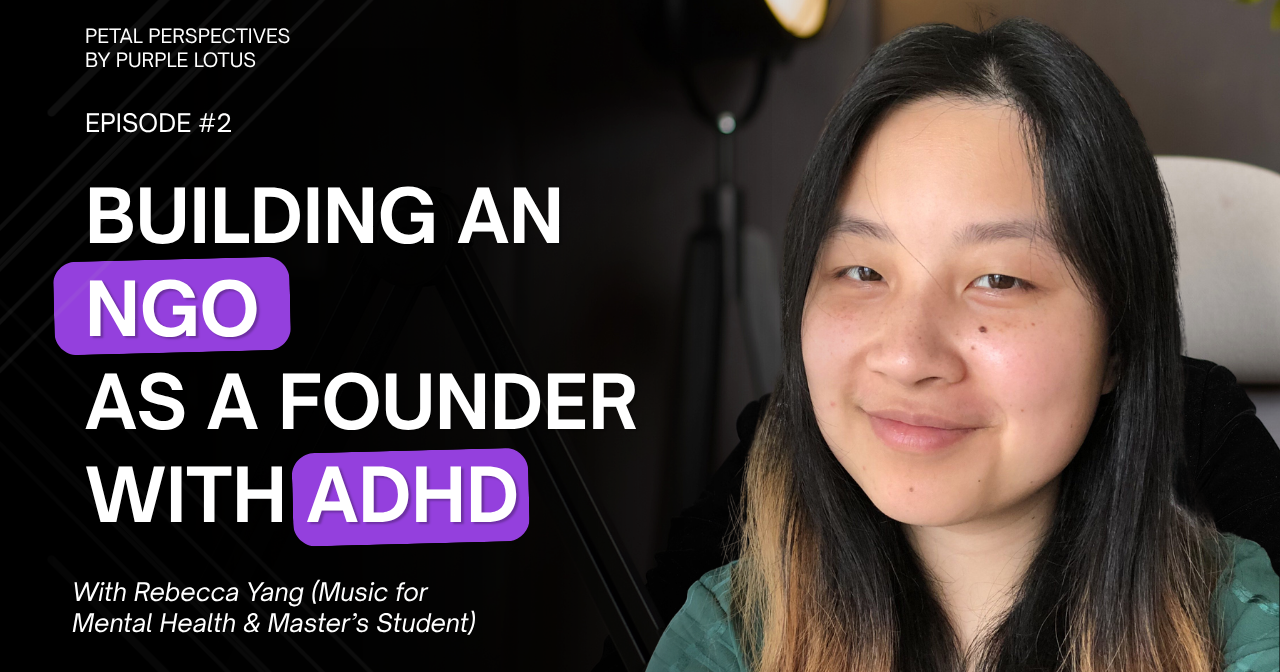
What does it look like to navigate ADHD while pursuing graduate school, running a mental health non-profit, and balancing the pressure to constantly achieve?
In this episode of the Purple Lotus Mental Health Podcast, we sit down with Rebecca Yang, founder of Music for Mental Health, to talk about neurodiversity, advocacy, burnout, and the realities of balancing ambition with wellbeing.
Rebecca shares her lived experience with ADHD while completing her Master's degree at McMaster University and reflects on the emotional challenges that often come with being a high-achieving student navigating neurodiversity.
This conversation is honest, relatable, and deeply important for students, young adults, and anyone trying to manage expectations in a productivity-driven world.
Understanding ADHD Beyond the Stereotypes
When many people think of ADHD, they picture someone who is hyperactive, distracted, or unable to focus. But ADHD is often far more nuanced than common stereotypes suggest.
For many individuals, ADHD can involve:
- Difficulty regulating attention rather than a complete lack of attention
- Emotional overwhelm and burnout
- Executive functioning challenges
- Perfectionism and anxiety around productivity
- Cycles of hyperfocus followed by exhaustion
- Struggles with self-esteem from years of feeling “behind”
Rebecca discusses how ADHD affected her academic experience and daily routines, especially while balancing multiple responsibilities at once.
One of the most important themes in the conversation is how neurodivergent individuals are often expected to function within systems that were not designed with them in mind. This can lead to chronic stress, guilt, and internal pressure to constantly “keep up.”
The Pressure to Always Be Productive
For students and young adults, there is often an unspoken expectation to excel academically, maintain social relationships, build a career, and stay productive at all times.
Rebecca speaks openly about the emotional toll of trying to meet these expectations while managing ADHD.
Burnout is increasingly common among university students, especially those balancing leadership roles, advocacy work, and academic pressure. Neurodivergent students may face additional challenges related to time management, emotional regulation, and masking symptoms to appear “put together.”
The conversation highlights an important reminder: productivity should not come at the expense of mental health.
Building Music for Mental Health
Alongside graduate school, Rebecca founded Music for Mental Health, a non-profit organization focused on raising awareness and creating conversations around mental wellbeing through music and community initiatives.
Starting a non-profit while managing school responsibilities is not easy. Rebecca discusses the realities behind advocacy work, including:
- Managing expectations from others
- Balancing passion with personal wellbeing
- Navigating burnout
- Learning boundaries
- Building sustainable systems instead of overworking
Many people only see the finished outcome of advocacy work or leadership roles, but conversations like this help reveal the emotional and mental effort behind them.
Why Conversations About Neurodiversity Matter
Open discussions about ADHD and neurodiversity help reduce stigma and create space for people to better understand themselves and others.
For many students and young adults, hearing lived experiences can be validating. It reminds people that struggling with focus, burnout, or emotional overwhelm does not mean they are lazy or incapable.
Rebecca’s story also reflects something many neurodivergent individuals experience: the tension between ambition and sustainability. You can care deeply about your goals while still needing rest, support, and accommodations.
Advice for Students and Young Adults Navigating ADHD
Throughout the episode, Rebecca shares reflections that may resonate with students navigating neurodiversity:
- You do not need to constantly prove your worth through productivity
- Burnout is not a sign of failure
- Asking for support is important
- Sustainable routines matter more than perfection
- It is okay to work differently from others
Mental health conversations become more meaningful when they move beyond clinical definitions and focus on lived experiences. That is what makes this episode so impactful.
Watch the Full Episode
Watch the full conversation with Rebecca Yang on YouTube and Spotify to hear more about ADHD, advocacy, graduate school, burnout, and building a mental health non-profit.
Explore more conversations and mental health resources at Purple Lotus Mental Health.
About Purple Lotus Mental Health
Purple Lotus Mental Health is a Canadian mental health platform focused on making therapy and mental wellness resources more accessible. Through therapist directories, educational content, and conversations like these, Purple Lotus aims to create more open and supportive discussions around mental health.
Have ADHD? Talk to a therapist who gets it on Purple Lotus
Find a Therapist
Written by
Cher Peng
Co-Founder, Marketing & Community Lead
Cher Peng (she/they) is a community-driven builder based in Vancouver who completed her studies at the University of British Columbia. She is the co-founder of Purple Lotus, a Canadian platform improving access to mental wellness care by helping people find the right therapist quickly and intuitively. Her work sits at the intersection of product, research, and community, with experience spanning UX innovation, venture development, and nonprofit leadership. Cher is driven by a commitment to building human-centered solutions that create meaningful, real-world impact.