
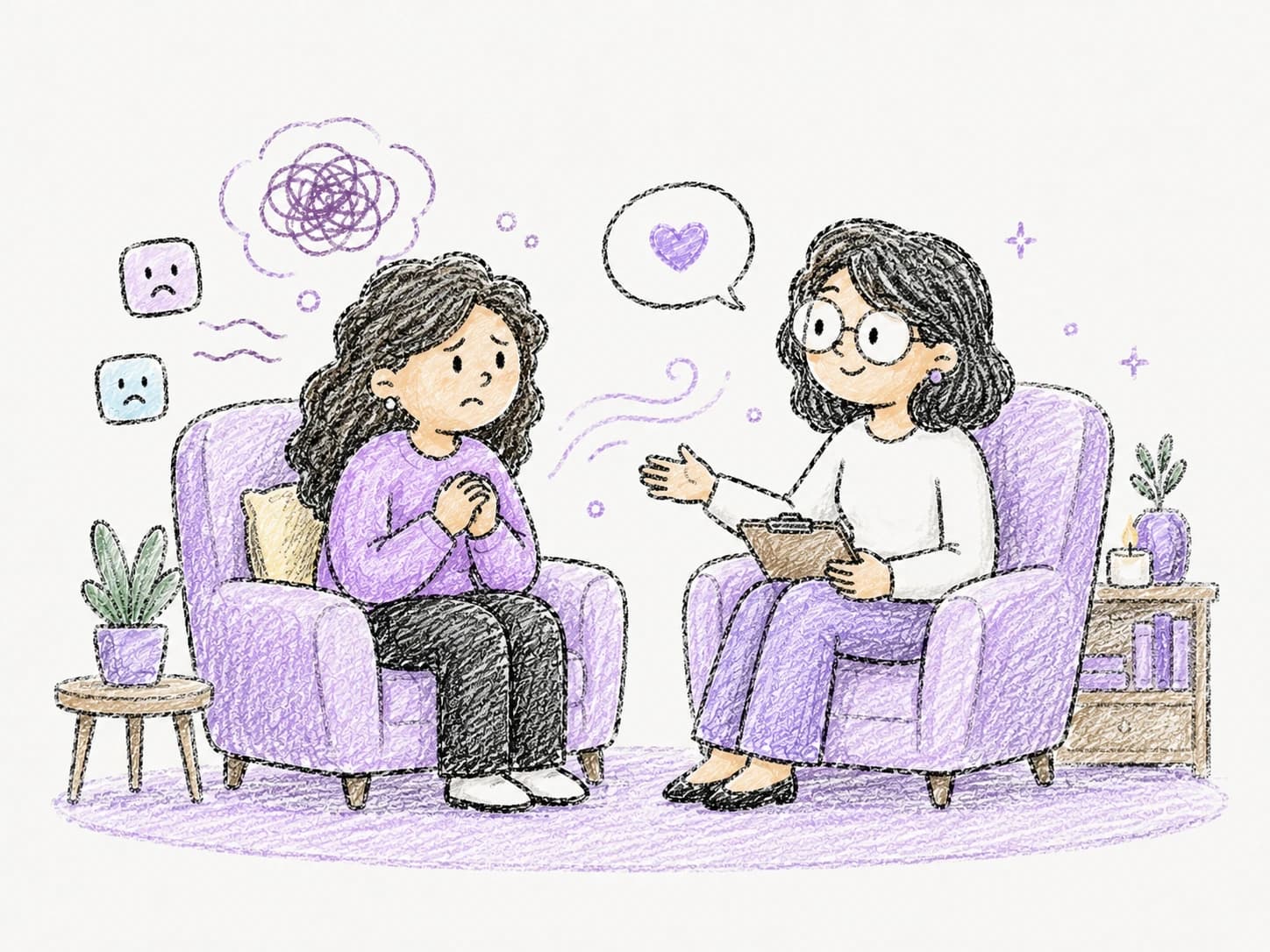
Anxiety Therapists in Canada
Anxiety affects how you think, feel, and move through everyday life. Therapy can help you understand what is driving it, reduce its hold, and build practical tools that work in real situations.
What to look for in an Anxiety therapist on Purple Lotus
- Experience treating anxiety disorders (generalized anxiety, panic, social anxiety)
- Use of evidence-based approaches like CBT or exposure therapy
- Ability to teach practical coping strategies you can use daily
- A calm, structured approach that helps you feel grounded
72 therapists for Anxiety in Canada
Browse 72 therapists specializing in Anxiety. Find the right counsellor or psychotherapist for your needs.

Christine Peddle
Hello : ) Are you intellectualizing your pain? Since 2016 I've been practicing therapy to help you uncover now defunct, but once life saving defense mechanisms. I dedicate myself to providing safe, understanding, and nonjudgmental care that reconnects you to you. I have countless trauma trainings, plus DBT, CBT, DDP, EFFT, Psychodrama for Traumatic Stress, and exposure to Gestalt Therapy. I participate in psychoanalysis and am a true believer in the healing relational aspect of therapy. I know the importance of an intersectional approach to personal growth and I seek to help you discover your wholeness versus the elusive permanent wellness.

Tehreem Fatimah
I am currently pursuing my Master of Arts in Counselling Psychology at Yorkville University and have several years of experience working within community mental health settings. Throughout my career, I have supported individuals facing challenges related to substance use, homelessness, depression, anxiety, burnout, stress, trauma, and systemic barriers. These experiences have strengthened my appreciation for the resilience and strength individuals demonstrate while navigating difficult life circumstances. My work has shaped a compassionate and client-centred approach that is rooted in empathy, respect, authenticity, and cultural sensitivity. I understand how trauma, chronic stress, and experiences of marginalization can significantly affect emotional and psychological well-being. Because of this, I am committed to creating a supportive, welcoming, and non-judgmental environment where clients feel safe to explore their experiences and work toward meaningful growth and healing. I take a holistic and strengths-based approach to counselling, recognizing that every person brings unique experiences, abilities, and inner resources to the therapeutic process. I believe in working collaboratively with clients, allowing them to guide their journey while supporting them in developing practical coping tools, building resilience, and fostering greater self-awareness. My goal is to help individuals enhance their emotional well-being, improve their quality of life, and create sustainable, positive change.

Clare MacMillan
Hi, I’m Clare. I’m a graduate student currently completing my Master of Arts in Counselling Psychology. Before entering the counselling realm, I earned an honours degree in Anthropology from McMaster University, where my love for understanding what shapes us as human beings really developed. I believe everyone’s story is unique and worthy of being held with care. However you choose to arrive and whatever you’re navigating, I’m here to offer a non-judgemental space where you can show up exactly as you are, without pressure to be anyone but yourself. I draw from Narrative Therapy, Acceptance and Commitment Therapy (ACT), and Cognitive Behavioural Therapy (CBT), adjusting to align with each client’s unique needs and lived experiences. I also enjoy incorporating mindfulness and whole‑person wellness when it supports the work we’re doing together. Above all, my priority is to create an environment where you feel heard, understood, and genuinely supported as we explore what matters most to you.

Vivian Chu
I offer a supportive and reflective space for individuals who are navigating the everyday challenges and complexities of life. Whether you are experiencing stress, anxiety, depression, burnout, relationship concerns, or simply looking for a place to pause and reconnect with yourself, I am here to help. My goal is to provide a calm and compassionate space where you can feel heard and supported as you make sense of what you are going through. My approach is grounded in empathy, curiosity, and respect for your lived experience. We can explore your thoughts and emotions to better understand what might be keeping you feeling stuck. I work with people from all walks of life who are seeking clarity, growth, and emotional well-being.

Elika Yamauchi
Hello! My name is Elika (Eh-lee-ka) and I am a neurodivergent, cisgender, second generation Okinawan immigrant settler occupying the stolen traditional territories of the xʷməθkʷəy̓əm, Sḵwx̱wú7mesh, and səlilwətaɬ Nations. I am a Pre-licensed Associate Cousnellor leaning into over 15 years of experience working in community-based programs and social services. I have had the privilege of working alongside individuals of all ages, identities, and diverse family/caregiver structures such as young folks living in the foster care system. I bring a deep passion for welcoming and exploring the unique story of each person, nurturing their strengths, interests, and capacities while creating a supportive space to work through life’s challenges. Together, we’ll explore how your past experiences, your environment, and the different parts of who you are shape the person you are becoming today. Through developing a meaningful and trusting connection to ground our work together, I strive to support your vision of health and well-being with warmth, openness, empathy, and kind care. I believe in exploring and (re)discovering your inner resources, and nurturing your authenticity in a way that is meaningful to you.

Fiona Smith
I support clients navigating anxiety, life transitions, grief and loss, relational difficulties, burnout, and perfectionism. I work with clients to develop a more compassionate understanding of themselves and their experiences, reconnect with their strengths, and move toward a life that reflects their authentic self and values. I offer low-cost sessions for individuals through the Full Circle Program at Design Your Life Centre as a student therapist working under the supervision of Dr. Stacy Thomas. This program is for individuals who would not otherwise be able to afford therapy. My approach is rooted in humanistic and person-centred principles, drawing on Acceptance and Commitment Therapy (ACT), Solution-Focused Brief Therapy, and Motivational Interviewing. I bring a warm, nonjudgmental, and grounded presence to my work. I am committed to creating a space where you feel safe enough to explore difficult experiences and emotions and to supporting you, with patience and genuine belief in your capacity to change, as you work toward the life you want to lead.

Monika Mehan
In my journey as, first, a therapy client, and then a psychotherapist, one of the most striking things I've learned has been that we tend to hold deep knowledge about what we actually want, need, and feel. That the signals our bodies and brains deliver to us aren't random. The anger that we might try to push down can actually tell us where a boundary of ours - one we might not have even recognized for ourselves yet - is being crossed. The tiredness or pain in our bodies might be telling us to slow down, to pay attention to an important part of ourselves, an important feeling, that we've tried to ignore out of fear. When we have a hard time getting moving on a project, it isn't a character flaw - it's giving us important information about a need we have, perhaps around relaxing our own expectations for ourselves, or getting more clarity around what we're trying to do. It makes sense that we don't always listen to these inner signals of ours, for so many reasons. In today's world, many of us are busy just trying to survive, and might feel like turning inward is unhelpful or a waste of time. We might fear that we'll discover a part of ourselves that's asking for a change that we don't yet feel ready to implement in our lives. We might have learned throughout our lives that our feelings are too big or threatening to handle, so ignoring them becomes the default. I believe, however, that if we're able to receive support in slowing down and listening to that inner voice, we can start to truly move toward an easier, more aligned, more fulfilling life, with more fulfilling connections - with others and with ourselves. I love to support folks moving through this type of work. I often work with clients who might be feeling stuck, unhappy, isolated, or overwhelmed. I also see many clients who are neurodiverse, and hold lived experience with AuDHD myself. I love working with creative people, people who have self-identified as "people pleasers," anyone experiencing relationship difficulties or life transitions - whatever it is you're going through currently, and whoever you are, I'd love to chat about it! I am a graduate of the Toronto Institute of Relational Psychotherapy and am trained as a relational therapist, which means that I think about the rules we learn implicitly in our lives about relationships - who were we taught that we need to be in order to stay in connection with others? These often-invisible-to-us rules deeply impact how we relate to those around us, but also how we relate to ourselves, and to what degree we're able to listen to that aforementioned inner voice. If we learned our needs were too big and the people around us needed them to be smaller - we'll ignore anything inside of us that's trying to alert us to a need we have. If we learned we had to constantly fight for ourselves, we might have a harder time listening to an inner voice of ours that's asking for some softness. I would love to support you in letting all of the complex pieces of yourself have space to share and room to shine. If my profile resonates with you, please don't hesitate to reach out - I would love to hear from you, and to have the chance to chat about how we can work together! :)

Rachelle Choueiri
Do you ever feel like you don’t quite belong—like you’re putting on a mask just to make it through the day? Maybe life feels heavier than it should, or quietly exhausting. I work with people who are navigating anxiety, procrastination, imposter syndrome, and a lingering sense of disconnection. Together, we’ll gently explore what may be keeping you stuck and begin creating a life that feels more authentic and more your own. With a PhD in chemistry and a background outside of mental health, I understand the pressures of high performance, the weight of expectations, and the loneliness that can come with feeling different. I work relationally, offering a calm, curious space where you can begin to reconnect with yourself. I offer a free 30-minute consultation so you can get a sense of how I work and ask any questions. You don’t need to have it all figured out — just a willingness to take one step. If something in this profile resonates with you, I invite you to reach out and begin the conversation.

Godfrey Benjamin
Life gets hard. So many responsibilities, it's hard to put ourselves first and we can stumble. We can feel isolated, overwhelmed, a sense of dread and anxiety with each passing day. This can lead to depressive feelings, loss of self confidence, addictions, self harm, and even suicidal thoughts. You're not alone if you're feeling this way. It can be especially hard to understand what is happening inside, if we had challenges in our past. I use an integrative person-centred approach so that together, we can work together to untangle the past, connect fully with yourself today, and build tools for the brighter future that you are hoping for. There may be many goals on your journey to well-being. In collaborating together, you will have a safe place to name your feelings for what they are: yours. I offer a trauma-informed, anti-oppressive lens to understanding, processing, and healing the roots of negative thoughts, feelings and experiences that may have been holding you back. Stepping into healing is an amazing act of courage. Working together, we can explore what is most meaningful for you today, as we navigate your journey towards mental health and well-being.

Marta Bonati
Hello and welcome! I'm Marta, a Registered Psychotherapist (RP). Originally from Italy, I now call Toronto home. Having lived through the experience of building a life in a new country, I understand the complexities of cultural adjustment, identity, and belonging. I offer sessions in both English and Italian. Before becoming a therapist, I spent over a decade in Human Resources, where I witnessed how deeply our personal and professional lives intertwine. I hold a master’s degree in psychology and draw from both my clinical training and professional experience to support clients in finding balance, meaning, and self-understanding.

Hastee Vasavada
Hello and welcome. My name is Hastee and I am currently pursuing my master’s in counselling psychology at Yorkville University. I achieved my bachelor’s in psychology and literature from York University. I am a South Asian immigrant to Canada and am well-versed in dealing with acculturation issues such as anxiety and depression. Moving to Canada as a pre-teen helped open my eyes to a wider world and shaped how I approach and view the world around me with acceptance and kindness. This also guides how I approach therapy and how I build our therapeutic relationship. I welcome clients with open arms who are dealing with issues such as adverse trauma and addiction. I am also experienced in providing perinatal and postpartum care for individuals. Moreover, I possess advanced training in treating couples. There are many modalities that we study in this field, and they all have their own strengths that are supported by detailed research. I foremost believe in taking an integrative, human-centred, and trauma-focused approach. Moreover, I believe every human has the capacity for incredible resilience and growth, and that comes from unconditional acceptance of oneself, as we are. When I am not working, you will find me spending some quality time with my boys (my husband and 2 dogs), exploring new nature trails (even in the winter, yes!), and always reading something. Ask me what I’m reading for suggestions or interest. Starting therapy can feel overwhelming, so please reach out with questions. I look forward to supporting you on this journey.

Julianna Servello
I work with children, teens, adults, couples, and families who may be feeling overwhelmed, stuck, disconnected, or unsure of how to move forward. My goal is to create a warm, supportive space where you can feel comfortable being yourself while working toward meaningful and lasting change. I bring a strong clinical background to my private practice, with experience working in hospital and community settings with individuals and families navigating a wide range of mental health, emotional, relational, and life challenges. My hospital experience has given me the opportunity to work with people during some of the most difficult and uncertain periods of their lives, supporting clients and families through complex circumstances, significant transitions, illness, trauma, crisis, grief, and changes in functioning. This experience has shaped the way I practice today: with compassion, clinical thoughtfulness, and an understanding that every person’s circumstances and needs are different. My clinical work includes supporting individuals experiencing anxiety, ADHD, OCD, emotional regulation difficulties, relationship and family concerns, grief, trauma, burnout, self-esteem concerns, and major life transitions. I also support clients through prenatal and postpartum challenges and the emotional impact of motor vehicle accidents and other traumatic experiences. I work with clients across the lifespan and tailor therapy to their individual goals, strengths, personality, and circumstances. OCD is a particular area of clinical interest and expertise for me. I have extensive training and experience supporting clients with OCD and related anxiety concerns, and I understand how consuming and disruptive intrusive thoughts, uncertainty, compulsions, and avoidance can become. My approach is compassionate, collaborative, and evidence-informed, with the goal of helping clients better understand their experiences and develop greater confidence in responding to difficult thoughts, feelings, and sensations. I also provide OCD-focused clinical supervision and consultation to other clinicians looking to strengthen their knowledge and confidence in this area. I also have a strong interest in ADHD and emotional regulation. For clients with ADHD, I recognize that challenges can extend far beyond attention and organization and may affect relationships, self-esteem, emotional regulation, work, school, and day-to-day functioning. Therapy can provide a space to better understand these patterns, develop strategies that are realistic for your life, and move away from shame or self-criticism toward greater self-understanding. My approach is integrative and individualized. I draw from Cognitive Behavioural Therapy (CBT), Dialectical Behaviour Therapy (DBT), Acceptance and Commitment Therapy (ACT), trauma-informed practice, narrative therapy, and strengths-based approaches. Rather than using a one-size-fits-all model, I consider what you are experiencing, what has or has not worked for you in the past, and what you hope to change. Together, we can identify practical strategies while also exploring the deeper patterns, experiences, and relationships that may be contributing to what you are experiencing. I believe therapy should be both clinically meaningful and genuinely human. You do not need to have everything figured out before coming to therapy, and you do not need to know exactly what you need. Sometimes people simply know that something is not feeling right, that they are exhausted from trying to manage everything on their own, or that they keep finding themselves caught in the same patterns. Therapy can provide an opportunity to slow down, make sense of what is happening, and develop a clearer path forward. Whether you are navigating anxiety, OCD, ADHD, grief, trauma, relationship difficulties, burnout, a major life transition, or simply feeling stuck, I aim to meet you where you are. My role is not to tell you who you should be or how you should live, but to work alongside you to better understand yourself, build on your existing strengths, and develop meaningful changes that fit your life. I welcome the opportunity to work collaboratively with clients and, when appropriate, with families and other healthcare professionals involved in their care. My hospital background has reinforced for me the value of collaboration and continuity of care, and I believe that connecting clients with the right supports can make an important difference in their overall wellbeing. Above all, I want therapy to feel like a space where you can be honest, understood, and supported without judgment. Whether you are coming to therapy for the first time or have been in therapy before, we can start wherever you are and work together from there.
What is Anxiety?
Anxiety isn't always loud or visible. It can feel like a steady undercurrent in your day, a mind that won't quite switch off, a body that stays on edge even when nothing is happening. You might overthink small decisions, replay conversations, or feel a constant sense of urgency without a clear reason. Over time, this can affect sleep, focus, relationships, and how present you feel in your own life. If you're looking for help with anxiety or exploring therapy, it often begins with recognizing how much of your energy is going into managing these patterns.
Working with a therapist can help you understand what's driving your anxiety and give you tools to manage it. Some people come to therapy with a specific diagnosis like generalized anxiety disorder, social anxiety, or panic disorder. Others simply know that worry and tension are getting in the way, even if they've never had a formal assessment. Both are valid starting points.
Therapy for anxiety often involves identifying what triggers your anxious patterns, building practical regulation skills, and gradually reducing the avoidance behaviors that keep anxiety going. The pace and approach depend on the therapist and what is most relevant to your situation.
Who this approach may help
Persistent worry across many areas
People who find themselves anxious about work, health, relationships, or finances all at once, often feeling unable to turn off the worry even when circumstances are stable.
Social anxiety and fear of judgment
People who feel intense self-consciousness in social situations, avoid speaking up, or spend significant time after interactions replaying what was said.
Panic attacks or physical anxiety symptoms
People who experience sudden surges of intense fear accompanied by physical sensations like a racing heart, shortness of breath, dizziness, or a feeling of unreality.
Anxiety connected to health or the body
People who frequently worry about their physical health, catastrophize symptoms, or feel preoccupied with the possibility of becoming seriously ill.
Anxiety linked to transitions, burnout, or sustained stress
People whose anxiety has increased during a major life change such as a career shift, relationship ending, loss, or a prolonged period of pressure at work or home.
What happens in a session?
- 1
Map your anxiety patterns
The therapist asks about what triggers your anxiety, how it shows up in your thoughts, body, and behavior, and what situations tend to make it better or worse.
- 2
Understand the cycle
Together you identify the patterns that maintain anxiety, including avoidance, reassurance-seeking, and overestimating threat, and begin to see how those patterns keep it going.
- 3
Build regulation tools
You learn practical techniques to manage anxiety symptoms in real situations, such as grounding exercises, breathing approaches, or ways to interrupt anxious thought spirals.
- 4
Work through avoidance
The therapist helps you gradually approach situations or thoughts that anxiety has pushed you to avoid, in a structured and manageable way that builds confidence over time.
- 5
Consolidate and maintain progress
As anxiety decreases, sessions shift toward recognizing triggers early, applying skills independently, and building resilience for future stressors.
How it compares to other approaches
Cognitive Behavioral Therapy (CBT)
CBT is one of the most widely used approaches for anxiety. It focuses on identifying unhelpful thought patterns and changing behaviors that maintain anxiety. Most structured anxiety therapy draws on CBT principles.
Acceptance and Commitment Therapy (ACT)
Rather than challenging anxious thoughts directly, ACT focuses on accepting difficult thoughts and feelings while committing to actions aligned with your values. Some people find this more useful when anxiety is tied to identity or meaning.
Psychodynamic Therapy
Psychodynamic therapy explores how early relationships and past experiences contribute to current anxiety. It tends to be less structured and longer-term than CBT, and may suit people whose anxiety has deep roots in personal history.
Dialectical Behavior Therapy (DBT)
DBT was developed for emotional dysregulation, but its distress tolerance and mindfulness skills are sometimes used for anxiety. It may be a good fit when anxiety is part of a broader pattern of intense, difficult-to-manage emotions.
EMDR
EMDR is primarily a trauma-focused therapy but is sometimes used for anxiety when panic, phobias, or anxious responses are linked to specific distressing experiences. It is more specialized and not a first-line treatment for general anxiety.
How to choose an Anxiety therapist
Questions to ask before booking:
- 1
Ask about their experience with your specific type of anxiety. General anxiety, panic disorder, social anxiety, and health anxiety can all be addressed through therapy, but an experienced therapist will explain how their approach applies to your particular pattern.
- 2
Ask what approach or modality they use and how it typically works for anxiety. If they use CBT, ask what that looks like in practice. If they use something different, ask how it addresses the patterns you are describing.
- 3
Ask how long therapy tends to take for someone in a similar situation. Some anxiety concerns respond well to shorter-term work of eight to sixteen sessions, while others benefit from longer support.
- 4
Ask what progress looks like and how you will know it is working. A good therapist can describe what changes tend to happen over the course of treatment, even if timelines vary.
- 5
Ask whether they assign work between sessions. Many anxiety approaches include exercises, tracking, or gradual exposure tasks you practice outside of sessions. Knowing this in advance helps set expectations.
- 6
If your anxiety is accompanied by other concerns like depression, trauma, or substance use, ask how they work with multiple presenting issues at once or whether they recommend addressing one area first.
When this may not be the right fit
If your anxiety is accompanied by significant depression, thoughts of self-harm, or difficulty functioning day to day, a higher level of support may be appropriate before or alongside outpatient therapy. Speak with your physician or a mental health professional about the right level of care.
Some physical conditions can produce symptoms that resemble anxiety, including thyroid issues, heart conditions, and hormonal changes. If your physical symptoms are prominent and you have not had a recent medical check-up, it is worth discussing them with a doctor.
When anxiety is closely tied to past trauma, a trauma-focused approach like EMDR or trauma-informed therapy may be more effective than general anxiety treatment. A good therapist will be able to identify this and adjust accordingly.
If substance use has become a way of managing anxiety, it can be difficult to address the anxiety directly until that is also being supported. Many therapists can work with both, but some prefer to address one before the other.
Related specialties
Frequently asked questions
What type of therapist is best for anxiety?
Many licensed counsellors, psychotherapists, psychologists, and social workers support anxiety. The best fit is usually someone with experience treating your specific anxiety concerns and an approach that matches how you like to work.
How long does anxiety therapy take?
Some people notice useful changes within a few sessions, especially when therapy is skills-focused. Others work longer term when anxiety is connected to trauma, relationships, burnout, or longstanding patterns.
Can online therapy help with anxiety?
Yes. Online therapy can be effective for many anxiety concerns, especially when sessions include practical tools, reflection, and exercises you can use in daily situations.
What is the difference between generalized anxiety and panic disorder?
Generalized anxiety involves persistent worry across many areas of life. Panic disorder involves sudden, intense episodes of fear often accompanied by physical symptoms like a racing heart or shortness of breath. Both are treatable with therapy.
Do I need a diagnosis before starting anxiety therapy?
No. You do not need a formal diagnosis to start therapy. Many people seek support for anxiety symptoms without ever receiving a clinical label, and a good therapist will work with your experience rather than requiring a diagnosis first.
What is exposure therapy and is it used for anxiety?
Exposure therapy is a structured technique where you gradually face feared situations or thoughts in a controlled, manageable way. It is commonly used within CBT for anxiety disorders, particularly panic disorder, social anxiety, and specific phobias. A therapist guides the pace to keep it manageable.
Can anxiety be treated without medication?
Many people manage anxiety effectively through therapy alone, particularly with structured approaches like CBT or ACT. Others benefit from a combination of therapy and medication. Whether medication is right for you is a conversation to have with your physician or psychiatrist based on the severity and type of anxiety you are experiencing.
Looking for an Anxiety therapist?
Browse therapists in Canada who specialize in anxiety. Filter by location, fee, and session format to find the right fit.