
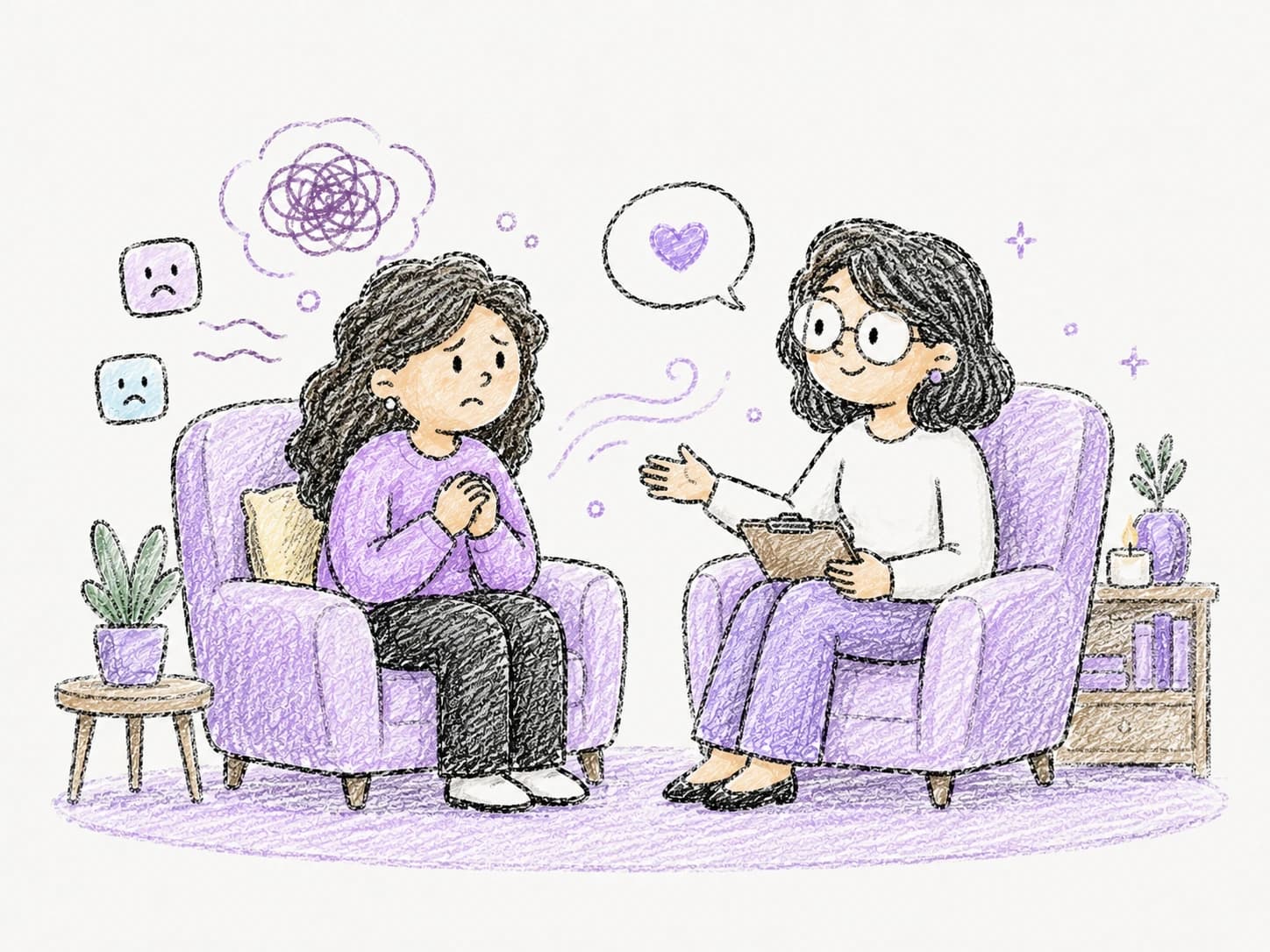
CBT Therapists in Canada
A structured, evidence-based approach that helps people identify unhelpful thought patterns and change the behaviours that keep those patterns in place.
What to look for in a CBT therapist on Purple Lotus
- Formal training in CBT or a specific CBT-based approach
- Experience with your specific concern (e.g. anxiety, OCD, depression, insomnia)
- Clear structure with measurable goals and progress tracking
- Comfortable explaining how they adapt CBT to individual needs
36 therapists for CBT in Canada
Browse 36 therapists offering CBT. Find the right counsellor or psychotherapist for your needs.

Chris Ho
If you find yourself navigating through the complexities of life, know that seeking counselling is a courageous and empowering choice. People seek counselling for a myriad of reasons, each journey as unique as the individual taking the first step. You might be facing the pressure of anxiety, the shadows of depression, or the echoes of past traumas. Life's challenges can be multifaceted, stemming from personal relationships, work-related stress, existential questioning, or unforeseen transitions. As a couple, you may be experiencing the severance of disconnection, rupture of infidelity, or the growing pains of change. I combine a tapestry of approaches to support you on your transformative journey. Mindfulness techniques provide a grounding anchor to the present, while Adlerian therapy delves into understanding the influence of your past on your current self. For couples therapy, I incorporate the Gottman method and Emotionally Focused Therapy to rebuild your foundations. Culturally sensitive and trauma-informed, my practice is a safe haven for individuals of all backgrounds and identities. No matter what brings you to therapy, we can cultivate resilience, uncover your inner wisdom, and empower you to live authentically and aligned with your values. With warmth, I am looking forward to connecting with you.

Tina Camara
Hi! My name is Tina and I use a holistic approach combined with evidence and strength-based practices in my practice. I hope to empower you to shine forward into the life you want. My training and experience has focused on individuals who have experienced trauma - from childhood trauma to single-incident events. I have also worked a lot with clients with anxiety, depression and ADHD. My approach blends holistic healing with clinical expertise. I integrate proven therapeutic tools to help clients navigate trauma, anxiety, and depression. These evidence-based therapies, such as Cognitive Behavioural Therapy, Mindfulness Based Therapy, Person-Centered Therapy, enable clients to work through past wounds, reframe negative thoughts, and build coping skills that support lasting change. Along with evidence - based practices, I also use mindfulness, meditation and somatic approaches to help clients ground their energy, listen to their bodies and cultivate self-awareness in the present moment. I believe that healing isn’t just about addressing symptoms, it’s about treating the root cause of negative behaviours and lowered sense of self so one can step into a more empowered self. I strive to create a safe and non-judgmental space for you to explore your thoughts, feelings and behaviors to help empower you towards making intentional changes. Come in, let’s take the first step in identifying what it is you would like to see different in your life and we can collaboratively formulate a plan to take you from where you are to where you want to be.

Fred Chou
I am a Registered Psychologist who works from a collaborative and person-centred approach. My therapeutic philosophy is centred on the belief that the client is the author of their life journey. From this perspective, the counsellor is a fellow sojourner whose role is to explore experiences and situations that may contribute to one feeling stuck. Often this may involve working with emotions, understanding intra/interpersonal dynamics, and exploring negative events in a manner that can be conducive to growth and learning. My approach to therapy builds on Emotion Focused Therapy (EFT) by integrating narrative and systemic models of counselling. Clinically, I have worked with youth, families, and adults in a variety of settings including the University of British Columbia Counselling Services, the Ministry of Children and Family Development, Complex Trauma Resources, the Veterans Transition Network, and through private practice. Some circumstances and challenges I have worked with include: depression, anxiety, trauma, racial identity and racism, Obsessive Compulsive Disorder, relationship issues, life transitions, and grief and loss. I have developed several mental health interventions and programs, including the Core Connectors Initiative, a mental health literacy program for youth, and the (Re)Claim and Connect counselling group for addressing anti-Asian racism. I have also served on several committees on equity and diversity and provided training on cultural considerations in clinical contexts. If you are looking for counselling, please feel free connect. My website and contact information can be found on this page.

Julie Chang
Julie has Master’s Degrees in Clinical Psychology and Clinical Counselling and is currently finishing her doctorate’s degree in clinical psychology. In addition to professional training and experiences in psychotherapy and treatment, clinical counselling, behavioural intervention, and neuropsychological assessments, Julie also has a background in psychological research at the doctoral level and uses the empirical insights gained from previous studies to supplement her current clinical practice, making her unique as a practitioner of both clinical-scientist and scientist-practitioner models. Julie has worked with BC Society for Male Survivors of Sexual Abuse (BCSMSSA), Family Services of Greater Vancouver (FSGV), Chimo Community Services, and local medical clinics and healthcare centres. She has provided individual and couple/family therapy, treatments, and assessments to individuals for disorders and issues including depressive disorders, anxiety disorders, feeding and eating disorders, trauma- and stressor-related disorders, neurocognitive disorders, affect management, self-regulation, stress management, sexual/physical abuse and violence, crisis intervention and stabilization, couple/marital/parenting conflicts, academic/work stress, identity crisis/exploration, self-introspective needs, loneliness, and relationship difficulties. She identifies as a cisgender female who is open to clients belonging to the LGBTQIA2S+ communities. Julie applies an integrated theoretical framework informed by trauma theory, understanding of behavioral and neuropsychology, and multicultural sensitivity to her eclectic therapeutic approach. As an advocate of positive psychology who understands that mental health is more than the absence of illness, she focuses on building success and helping clients flourish rather than merely reducing distress. Her clinical repertoire includes Cognitive-Behavioral Therapy (CBT), CASE Approach for Risk/Suicide Assessment, Emotionally-Focused Therapy (EFT), Eye Movement Desensitization & Reprocessing (EMDR), Motivational Interviewing, Somatic Experiencing/Body Awareness Therapy, Mindfulness-Based Cognitive Therapy (MBCT), and Clinical Hypnosis. Owning to her mixed ethnic heritage, she is a native speaker of English, Mandarin, and Hokkien, and has conversational-level skills in Japanese and Cantonese.

Gabriel Roy-Wright
I grew up in Saskatchewan but was called to the mountains and relocated to the Canadian Rockies at the age of eighteen. Since then I have lived abroad, on the coast, and now call Rossland, BC my permanent home. My upbringing instilled in me a strong desire to contribute meaningfully to my community and society. I am at my best when I am able to help others. My drive to contribute coupled with an interest in human decision-making led me to counselling. On my journey to becoming a counsellor I completed a number of experiences that sharpened my ability to understand, listen, and empathize with others: getting an undergraduate degree in psychology, working as a research assistant, volunteering to teach underserved youth snowboarding, working on a crisis line, and lastly, as a support worker– integrating adults with autism into their community in Trail, BC. I completed my practicum at Child and Youth Mental Health services (CYMH) under the guidance and supervision of Sean Larsen. It was under Sean’s expert guidance that I found my passion for helping children and youth. My time at CYMH assisted me in understanding how I can help families struggling with interpersonal and mental health concerns. As my practice has grown, I realized the distress many parents were experiencing in their romantic relationships. I took Gottman Method Couples Therapy training to provide couples counselling to our community and help struggling couples create better communication and understanding. I honour confidentiality, openness, connection, and engagement.

Micah Jakobs
My name is Micah, and I identify as a female first-generation immigrant. s a Filipino-Canadian, I am motivated to create a safe space for other people of colour individuals to feel fully seen and heard. Concurrently over the last 16 years, I have spent 5 years working with the elderly community (specifically those with dementia and Alzheimer’s), 5 years in healthcare helping families work through grief and loss, 11 years working with adults with acquired brain injury, and 10 years working under a social service capacity with youth across Bangladesh, Africa, India, and Nepal. In my professional identity thus far, I have gained valuable insights and skills that have contributed to my therapeutic journey. As a result, I have developed a holistic and person-centered approach to therapy that integrates evidence-based, strength-based, mindfulness, and somatic-based practices. I believe this approach best equips me to meet your specific concerns and needs. To me, therapy is a space where we can explore, discover, and tackle distressing thoughts, feelings, or behaviours that may be holding you back. In our sessions, you can expect me to provide you with tangible tools and strategies to foster meaningful change, and to create opportunities to experience vulnerability in a safe space. Our work together will focus on raising awareness in the present moment so that you may accept and live a life full of clarity and authenticity.

Alana Sheridan
I found early on that my passion in life is to help others work through life's struggles. That, combined with my natural ability to connect in a real way with others, led me to the counselling field over nineteen years ago. I have my Masters of Arts in Counselling and have experience working with individuals, couples, children and teens. During my years as a counsellor, I have helped individuals work through anxiety, depression, low self worth, work stress, grief and loss, to name a few. I have helped couples navigate through issues both to help stay within and working on the relationship, as well as how to amicably separate when the couple feels that is in their best interest. I have many years experience working with families involved with foster care and the protective services forum, and specifically have experience working with parents on achieving a positive, working family. Wondering if counselling is the right next step? Life can be difficult. Let's work through this together.

Hayley Barlow
Do you have anxiety, depression or low self esteem issues that are interfering with your ability to live a life that feels authentic to you? Have you gone through a traumatic event that is leaving deep imprints on both your mind and body? Are you experiencing thoughts or behaviors that leave you feeling disconnected from yourself or your relationships with others? If any of the above resonates with you, please know that you have the ability to reclaim your power, rewrite the narrative of your life, and live a life that feels inherently meaningful. It is so hard to be human sometimes, I get it. Fortunately, you don't have to go through any of these challenges alone. My name is Hayley and I am a counsellor who works with both teens and young adults experiencing a wide range of issues. I offer a warm, validating and nonjudgmental environment that helps individuals explore their thoughts, feelings and behaviors that are creating imbalance or emotional uncertainty in their lives. I am a firm believer that there is nothing to be "fixed", because there is nothing inherently wrong with you. You have simply been responding to what has happened to you in life. And you have the capacity to not only heal, but rediscover the relationship you have with yourself and others. I am simply here to walk alongside you as you embark on your journey towards healing and transformation. During our sessions, I take a holistic approach that incorporates various evidence-based therapeutic modalities that ultimately focus on the mind-body connection. I often use principles and interventions from both CBT and somatic therapy to help individuals overcome their challenges, realign with the lost parts of themselves, and learn to cope with difficult thoughts or emotions. If you are ready to begin your journey towards healing and are interested in setting up a complimentary 15 minute consultation, please feel free to contact me. I would love to help you get there.

Nish Laszczuk
Are you a highly motivated individual in all aspects of your life, but always feel yourself falling short? Do you find that your pursuit of success often comes at the cost of your own well-being and fulfillment? Do you just want to reconnect with your inner self and body and gain more trust in who you are? I'm here to offer you a safe space to practice letting go—a space where you can navigate the complexities of your demanding life without sacrificing your mental and emotional well-being. My name is Nish and I'm so happy that you're here. I'm a registered social worker with 10 years experience, and I'm here to help you get through high stress, anxiety, self-doubt and burnout. I specialize in helping high-stress professionals struggling with burnout and work-life balance. Using CBT, EFT, and Somatic Attachment Therapy, I provide tools to manage stress, set boundaries, and reconnect with yourself. Together, we’ll work on building resilience and finding balance, so you can thrive both personally and professionally. I have an office in Yaletown and work evenings.

Paula Ghelman
Do you struggle with anxiety that affects your relationships, work, or school? Do you feel exhausted, unmotivated, and overwhelmed by everything you need to do, and don't feel good enough? Do you wonder if you'll ever feel like you used to? We often put our needs last, justifying this by telling ourselves we have too much to accomplish first. Not addressing your depression, anxiety, or past trauma can lead to isolation, ruin your self-esteem, and make day-to-day life harder than it needs to be. However, there are ways to navigate these personal burdens and make life hopeful again, and you don't have to do it alone. I believe in a trauma-focused, strength-based approach and utilizing evidence-based practice to help you learn how to manage stress, anxiety, depression, and heal from trauma. By creating a safe space where you are not only heard but truly understood, you can start your transformative path towards a more fulfilling life. Providing individual online psychotherapy and an individualized DBT skills program, you will learn how to change negative self-talk, manage emotions, navigate relationships. Getting started is often the hardest part, and therapy help you create a holistic toolkit to enjoy happier, more fulfilling relationships, prioritize yourself, and feel lighter overall. Book a free consultation to take the first step towards a brighter, hopeful future.

Lauren Little
Hi, I’m Lauren (she/her). Sometimes life can be hard, and we can struggle to navigate our current challenges. I know that taking the step into therapy can feel overwhelming, however, remember that you are not alone in this and you and you are capable of doing hard things. Together we can create a safe space where you feel comfortable to share, explore and begin your healing journey. I encourage you to bring all parts of yourself - the hurt, the messy, the unseen - into this process. Honouring each client’s unique story, I work closely with them to meet their specific needs and goals to ensure clients feel validated, understood, and supported. As someone who has lived experience of anxiety and divorce, I understand the importance of practical self-support strategies and the value of a non-judgmental space to discuss vulnerable issues. I believe establishing a positive, empathetic and compassionate environment is essential for fostering personal growth. I guide clients in reconnecting to themselves, rediscovering their authentic self, and living a life that feels genuinely aligned with who they are. I draw on various therapeutic modalities including Cognitive Behavioural Therapy (CBT), nervous system regulation, body practices, mindfulness, family systems, attachment and nature-based practices. I have experience supporting individuals, youth, and families in navigating various challenges including anxiety, depression, divorce/separation, grief/loss, self-esteem, relationship challenges, dating and new relationships, deepening intuition, personal growth/emotional awareness, and life transitions. At the moment, I provide online sessions using the secure video platform Jane and offer supports to individuals located in beautiful British Columbia. I have availability Monday - Fridays (day/evenings). I offer a discounted rate to students. I look forward to connecting with you and hearing your story!

Maddie Skidmore
Hi! I'm Maddie, I'm a Registered Social Worker providing in person and virtual services in the lower mainland. I specialize in supporting women who are seeking to reach their goals, overcome obstacles, and create healthier relationships with themselves and others. I believe that every woman has a unique story and possesses the strength, knowledge, and resilience to achieve positive change. My approach to therapy is grounded in trust, compassion, and connection, and I strive to create a safe, non-judgmental space where women can explore their experiences and emotions. My work is holistic and integrative, drawing from evidence-based therapies such as Cognitive Behavioural Therapy, Dialectical Behavioural Therapy, and Narrative Therapy, as well as mindfulness techniques to strengthen the connection between mind, body, and spirit. I cater my approach to the needs and goals of each client, and I am committed to developing long-lasting relationships with each person I work with. Whether you are new to therapy or seeking a fresh perspective, I am dedicated to supporting women in their journey towards healing, growth, and self-discovery.

Jackie Dodd
Hello! I'm glad you're here. I am a Registered Clinical Counsellor (#11949) with the BC Association of Clinical Counsellors, and a Canadian Certified Counsellor (#11249171) and am able to support clients who reside in within Canada. My aim in any therapy session is to support you in a way that you find helpful, while holding a safe enough space to challenge beliefs and behaviours you deem unhelpful. I have varied work experience in the field of mental health, including several years working alongside individuals who live with the lasting impacts of trauma, substance use, mental health diagnoses, poverty, and homelessness. I am Canadian born and Indian, and part of my work is rooted in my lived experience existing between cultures to support clients who face similar struggles. My Masters of Counselling Psychology degree is supplemented by additional postgraduate training in cognitive behaviour therapy, mindful self-compassion, anti-oppressive psychotherapy, narrative therapy, dialectical behaviour therapy, and strengths-based listening. I incorporate an intersectional feminist lens in my work, and am continually learning to be a more effective ally to multiple communities (including Black, Indigenous, people with racialized identities, and LGBTQ2SIA+). Outside of Counselling work, I enjoy spending time with friends, animals, and my niece and nephews. I see clients in person or virtually at my Vancouver office on Monday evenings and Fridays, and offer virtual only sessions on Thursday evenings. If you would like to know more about how we could work together or know more about what the counselling process could look like in general, I invite you to book a free 20-minute consultation session (virtual or over the phone). My hope is that I can offer support that is helpful to you! Areas of Practice: - Depression - Anxiety - Stress Management -Identity and Cultural Concerns - Mental Health Diagnoses - Difficult Life Transitions - Grief and Loss - Trauma - Substance use Approaches Used: - Strengths based listening - CBT - Mindful Self-Compassion - Anti-Oppression Psychotherapy - Narrative Therapy - Dialectical Behavioural Therapy -Intersectional Feminist Lens The land I work, live and play on is the unceded territory of the Coast Salish peoples, including the territories of the Səl̓ílwətaʔ/Selilwitulh (Tsleil-Waututh), the xʷməθkwəy̓əm (Musqueam), the Skwxwú7mesh (Squamish) and the Stó:lō Nations.

Mila Loskutova
Hi! My name is Mila Loskutova and I'm a registered clinical counsellor. I am a queer, immigrant settler woman. I am passionate about supporting folks healing from trauma, anxiety, depression, stress, relationship issues and OCD. I use a mix of gentle talk therapy that helps individuals dive deeper into self-exploration and more structured approaches for specific concerns, such as Cognitive Behavioural Therapy (CBT), Dialectical Behavioural Therapy (DBT), Eye Movement Desensitization and Reprocessing (EMDR) and Exposure and Response Prevention (ERP). I am mindful and curious about how our identities and the systems we live in shape the way we move through the world. My approach is humanistic, anti-oppressive and sometimes irreverent. I enjoy helping people create and deepen meaning in their lives. I am available online and in person at my office at 315, 2083 Alma Street, Vancouver.
What is CBT?
Cognitive Behavioural Therapy (CBT) is one of the most researched forms of psychotherapy available. It is based on the idea that thoughts, feelings, and behaviours are interconnected, and that changing the way you interpret situations can shift how you feel and what you do. CBT was developed by psychiatrist Aaron Beck in the 1960s, initially for depression, and has since been adapted for a wide range of mental health concerns. It is structured and goal-oriented, which means sessions have clear direction and progress can be tracked over time.
A core part of CBT is learning to notice thought patterns that feel automatic but are distorted in some way. These might include assuming the worst outcome, discounting positive experiences, or holding yourself to rigid standards. A therapist helps you examine whether these thoughts are accurate, and practise thinking in ways that are more balanced and realistic. Behavioural work often runs alongside this, helping you gradually re-engage with situations you have been avoiding or change habits that are maintaining distress.
CBT is typically short-term, running anywhere from eight to twenty sessions depending on the concern being addressed. Sessions often include some work between appointments, such as thought records, behavioural experiments, or brief practices. This active structure tends to suit people who want practical tools and a clear sense of what they are working on. Several variations of CBT have been developed over the years, including Dialectical Behaviour Therapy (DBT), Acceptance and Commitment Therapy (ACT), and Mindfulness-Based Cognitive Therapy (MBCT), each adapted for specific populations or concerns.
Who this approach may help
Anxiety and worry
People dealing with generalized anxiety, panic attacks, social anxiety, or specific phobias may find CBT useful for identifying and challenging the thought patterns that drive anxious responses and for gradually reducing avoidance behaviours.
Depression
CBT is one of the most studied approaches for depression. It helps people recognize negative thinking patterns, re-engage with activities that have been abandoned, and build more balanced ways of viewing themselves and their circumstances.
OCD and intrusive thoughts
Structured CBT techniques, particularly Exposure and Response Prevention (ERP), are a core treatment for OCD. This approach helps people reduce the compulsive responses that maintain obsessive cycles.
PTSD and trauma responses
Trauma-focused CBT is used to help people process traumatic experiences by revisiting avoided memories in a structured, supported way and addressing the beliefs about themselves and the world that can develop after trauma.
Insomnia and sleep difficulties
CBT for Insomnia (CBT-I) targets the thoughts and behaviours that disrupt sleep, including unhelpful beliefs about sleep and habits that keep the problem going. It is considered a first-line treatment for chronic insomnia.
Low self-esteem and perfectionism
People who struggle with harsh self-criticism, perfectionism, or a persistent sense of inadequacy may find CBT useful for examining where those standards came from and how they affect daily functioning.
What happens in a session?
- 1
Assess your concerns and set goals
The therapist asks about the specific difficulties you are experiencing, how they affect your daily life, and what you would like to be different. You agree on goals for the work together.
- 2
Learn the cognitive model
You are introduced to the connection between thoughts, feelings, and behaviours. This gives you a shared framework for understanding why certain situations trigger particular reactions.
- 3
Identify unhelpful thought patterns
Using structured exercises, you begin to notice automatic thoughts that occur in difficult situations and examine whether they are accurate or distorted in a predictable way.
- 4
Challenge and reframe thoughts
You practise evaluating the evidence for and against those thoughts and developing more balanced alternatives. This is usually done both in session and through brief practice between appointments.
- 5
Work on behaviour change
Alongside thought work, you may engage in behavioural strategies such as gradually facing avoided situations, breaking unhelpful patterns, or scheduling activities that improve mood.
- 6
Review progress and consolidate skills
Toward the end of treatment, you review what has shifted, identify remaining areas to work on, and build a plan for maintaining progress after sessions end.
How it compares to other approaches
Dialectical Behaviour Therapy (DBT)
DBT was developed from CBT and shares its cognitive and behavioural roots. It adds a stronger focus on emotional regulation, distress tolerance, and interpersonal effectiveness. DBT is typically used for people with intense emotional experiences or patterns of self-harm, and is usually delivered over a longer period with group and individual components.
Acceptance and Commitment Therapy (ACT)
ACT is considered a newer generation of CBT. Rather than challenging unhelpful thoughts directly, ACT encourages acceptance of difficult internal experiences and a focus on values-based action. Some people find the acceptance-oriented approach more natural than thought challenging.
Psychodynamic Therapy
Psychodynamic therapy explores how early experiences, unconscious patterns, and relational dynamics shape current difficulties. CBT focuses more on present-day thoughts and behaviours rather than their origins. Psychodynamic therapy tends to be longer-term and less structured.
Mindfulness-Based Cognitive Therapy (MBCT)
MBCT combines CBT principles with mindfulness practices. It is specifically designed to reduce the risk of depression relapse by helping people relate differently to low moods and self-critical thoughts rather than engaging with their content.
Schema Therapy
Schema Therapy extends CBT to address long-standing patterns rooted in early life experiences. It is typically used when standard CBT has not fully addressed deep-seated beliefs or when difficulties in relationships and identity are central concerns.
Emotion Focused Therapy (EFT)
EFT focuses on accessing, deepening, and transforming emotional experience directly. CBT works more through structured cognitive and behavioural techniques. Some people respond better to the emotion-focused approach, particularly when feelings are difficult to access or express.
How to choose a CBT therapist
Questions to ask before booking:
- 1
Ask about their training in CBT specifically. Because CBT is a broad term, ask whether they have completed formal training in the approach or a specific variant, such as CBT for OCD, trauma-focused CBT, or CBT-I for insomnia.
- 2
Ask how they structure sessions and what a typical course of treatment looks like. CBT tends to be relatively structured and goal-directed, so a clear answer about format and length is a reasonable expectation.
- 3
Ask whether they assign work between sessions and what that generally involves. CBT often includes brief practice outside appointments, and it helps to know upfront whether that suits how you prefer to work.
- 4
Ask about their experience with your specific concern. CBT varies considerably by condition, and a therapist with experience treating what you are dealing with will be better positioned to tailor the approach.
- 5
Ask how they will know whether therapy is helping and what happens if progress stalls. A good CBT therapist will track outcomes and be willing to adjust the approach if it is not working.
- 6
If you have tried CBT before and found it unhelpful, ask how their approach differs or whether they integrate other methods. Not all CBT delivery is the same, and some people do better with a different variant or a more integrated approach.
When this may not be the right fit
CBT involves active engagement between sessions, including thought records and behavioural experiments. If you are in crisis, experiencing significant instability, or managing acute symptoms that make it hard to focus on structured work, a therapist may suggest stabilization or a different approach first.
Some people find the structured, problem-focused nature of CBT less suited to what they are looking for. If you prefer open-ended exploration of your inner life, past experiences, or relational patterns, a more exploratory approach such as psychodynamic therapy may feel like a better fit.
CBT works primarily at the level of identifiable thoughts and behaviours. If your difficulties are more rooted in long-standing interpersonal patterns, attachment concerns, or early experiences, a therapist may recommend Schema Therapy or a longer-term approach alongside or instead of standard CBT.
For conditions involving intense emotional dysregulation or recurrent self-harm, standard CBT may need to be complemented by or replaced with DBT, which is specifically designed for those presentations. A therapist can help assess which approach fits your situation.
Related specialties
Frequently asked questions
What is Cognitive Behavioural Therapy used for?
CBT is used for a wide range of concerns including anxiety disorders, depression, OCD, PTSD, insomnia, eating disorders, and low self-esteem. It is one of the most thoroughly researched approaches in psychotherapy and has a strong evidence base across many conditions. A therapist can help determine whether it is a good fit for your specific situation.
How long does CBT take?
CBT is typically short-term. Most courses run between eight and twenty sessions, though this varies depending on the concern being addressed and how complex it is. Some structured programs, such as CBT for insomnia or a specific phobia, may be completed in fewer sessions. A therapist will give you an estimate based on your goals at the start of treatment.
Does CBT involve homework?
Yes, most CBT approaches include brief practice between sessions. This might involve keeping a thought record, gradually facing a situation you have been avoiding, or tracking a specific behaviour. The between-session work is usually a core part of how CBT achieves change, though therapists adapt the amount based on what is manageable.
How is CBT different from other therapy approaches?
CBT is more structured and skills-focused than many other approaches. It targets present-day thoughts and behaviours rather than exploring their historical roots in depth. Sessions have a clear agenda and progress is tracked. This makes it different from more open-ended approaches like psychodynamic therapy, though many therapists combine elements from multiple methods.
Is CBT effective?
CBT has a substantial evidence base and is considered a first-line treatment for conditions including anxiety disorders, depression, OCD, PTSD, and insomnia. Research consistently shows it to be effective across a wide range of concerns. That said, not every approach works for every person, and a therapist may adjust the method or suggest alternatives if progress is limited.
Can I do CBT online?
Yes. CBT is well-suited to online delivery because it relies on structured conversation, exercises, and worksheets rather than techniques that require physical presence. Many therapists offer virtual sessions. Some research suggests online CBT is comparably effective to in-person for a number of conditions. Check individual therapist profiles to see which formats they offer.
Looking for a CBT therapist?
Browse therapists in Canada who specialize in cbt. Filter by location, fee, and session format to find the right fit.