
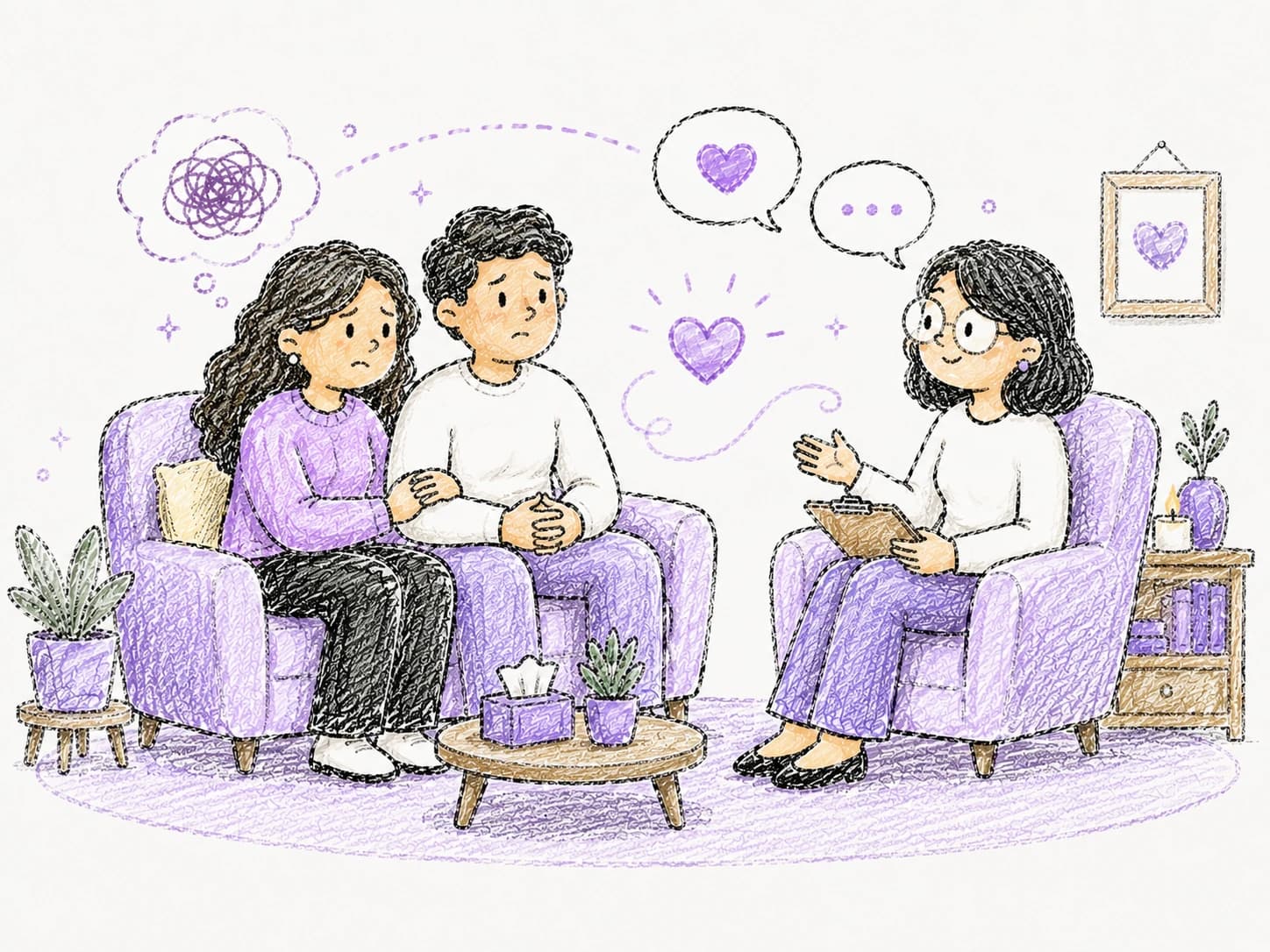
Couples Counseling Therapists in Canada
Therapy for partners who want to understand their patterns, repair conflict, rebuild trust, or make clearer decisions about the future of their relationship.
What to look for in a Couples Counseling therapist on Purple Lotus
- Specific training in couples therapy, not only individual counselling
- Experience with your main concern, such as conflict, infidelity, intimacy, or premarital work
- A balanced style that supports both partners while naming patterns clearly
- A clear structure for sessions, goals, and what progress should look like
11 therapists for Couples Counseling in Canada
Browse 11 therapists specializing in Couples Counseling. Find the right counsellor or psychotherapist for your needs.

Gabriel Roy-Wright
I grew up in Saskatchewan but was called to the mountains and relocated to the Canadian Rockies at the age of eighteen. Since then I have lived abroad, on the coast, and now call Rossland, BC my permanent home. My upbringing instilled in me a strong desire to contribute meaningfully to my community and society. I am at my best when I am able to help others. My drive to contribute coupled with an interest in human decision-making led me to counselling. On my journey to becoming a counsellor I completed a number of experiences that sharpened my ability to understand, listen, and empathize with others: getting an undergraduate degree in psychology, working as a research assistant, volunteering to teach underserved youth snowboarding, working on a crisis line, and lastly, as a support worker– integrating adults with autism into their community in Trail, BC. I completed my practicum at Child and Youth Mental Health services (CYMH) under the guidance and supervision of Sean Larsen. It was under Sean’s expert guidance that I found my passion for helping children and youth. My time at CYMH assisted me in understanding how I can help families struggling with interpersonal and mental health concerns. As my practice has grown, I realized the distress many parents were experiencing in their romantic relationships. I took Gottman Method Couples Therapy training to provide couples counselling to our community and help struggling couples create better communication and understanding. I honour confidentiality, openness, connection, and engagement.

Chris Ho
If you find yourself navigating through the complexities of life, know that seeking counselling is a courageous and empowering choice. People seek counselling for a myriad of reasons, each journey as unique as the individual taking the first step. You might be facing the pressure of anxiety, the shadows of depression, or the echoes of past traumas. Life's challenges can be multifaceted, stemming from personal relationships, work-related stress, existential questioning, or unforeseen transitions. As a couple, you may be experiencing the severance of disconnection, rupture of infidelity, or the growing pains of change. I combine a tapestry of approaches to support you on your transformative journey. Mindfulness techniques provide a grounding anchor to the present, while Adlerian therapy delves into understanding the influence of your past on your current self. For couples therapy, I incorporate the Gottman method and Emotionally Focused Therapy to rebuild your foundations. Culturally sensitive and trauma-informed, my practice is a safe haven for individuals of all backgrounds and identities. No matter what brings you to therapy, we can cultivate resilience, uncover your inner wisdom, and empower you to live authentically and aligned with your values. With warmth, I am looking forward to connecting with you.

Ashley Greensmyth
The people who come to work with me are looking for a therapist who not gets it, but can also help them figure out how to move forward in life. I often hear things like, "I can't seem to stop worrying," "I feel overwhelmed," and "things seem fine on the outside, but really I'm just holding it together." If this resonates with you, you might benefit from counselling sessions with me. Working with me in therapy often feels like finally making sense of a long-unsolved puzzle—you begin to understand not only what you’re feeling, but why. Understanding how we view ourselves and the world on a deeper level can help with personal transformation. For example, some patterns that we have to undo in our own behaviour can come from secondhand experiences like ancestral trauma and relationship patterns. Gaining this level of self-awareness can create a comfortable space to challenge anxieties and your ideas about being a worthwhile person. Clients often come to therapy feeling anxious, overextended, or stuck in patterns that leave them feeling overwhelmed, empty, or exhausted, and they leave with a deeper sense of clarity, confidence, and self-worth. Through our work together, you’ll learn practical tools tailored to your real life, and shift any long-held beliefs keeping you stuck, so that you can begin to show up in your relationships with more ease and authenticity. My practice is gender, body, ability, sexuality, and race inclusive. I reside and provide services on the unceded ancestral territories of the hən̓q̓əmin̓əm̓ speaking people and Sḵwx̱wú7mesh first nations peoples that was not surrendered. I offer direct billing to many insurance providers and I am registered with ICBC and FNHA. You belong.

Alana Sheridan
I found early on that my passion in life is to help others work through life's struggles. That, combined with my natural ability to connect in a real way with others, led me to the counselling field over nineteen years ago. I have my Masters of Arts in Counselling and have experience working with individuals, couples, children and teens. During my years as a counsellor, I have helped individuals work through anxiety, depression, low self worth, work stress, grief and loss, to name a few. I have helped couples navigate through issues both to help stay within and working on the relationship, as well as how to amicably separate when the couple feels that is in their best interest. I have many years experience working with families involved with foster care and the protective services forum, and specifically have experience working with parents on achieving a positive, working family. Wondering if counselling is the right next step? Life can be difficult. Let's work through this together.

Christy Liu
Whether you’re struggling with stress, relationship issues, trauma, or burnout, therapy is a space where you can feel heard, validated, and empowered to make meaningful changes. My approach to therapy involves exploring all parts of your life and uncovering the hidden emotions and meanings. I believe therapy is a reflection of real life, where the challenges, patterns, and growth we experience in session often reflect our everyday experiences. Whether you’re struggling with stress, relationship issues, trauma, or burnout, therapy is a space where you can feel heard, validated, and empowered to make meaningful changes. My approach to therapy involves exploring all parts of your life and uncovering the hidden emotions and meanings. I believe therapy is a reflection of real life, where the challenges, patterns, and growth we experience in session often reflect our everyday experiences. I take an integrative approach, meaning I tailor therapy to your unique needs. Though I use a variety of therapeutic modalities, the most meaningful work happens when we co-create a personalized approach. That often means taking pieces from different methods and using your strengths to form a puzzle that fits your unique life story. You are the expert in your own life, and my role is to guide and support you. Let’s explore how we can work together toward meaningful discovery and growth! If you feel we are a good match, feel free to connect for a free 15-minute consult where we can discuss your goals and ways I can support!

Ramona Saeedi
If you landed on this page, you took the first step. As humans we have the capacity to adapt and discover more meaning & joy in life as we face and overcome obstacles in life. To me, happiness is the process of solving problems and developing more adaptive ways of being. I am excited to help you overcome challenges and achieve your wellness goals. Hi, my name is Ramona and welcome to my page! As a therapist, I take you seriously. Not just what you say, but what you’re bringing with you. My clients often tell me they feel genuinely understood, because I notice the weight you’re carrying, the patterns you’ve been sitting with, and the parts of your story that actually matter. I’m curious about who you are in the context of everything that shaped you: your culture, your relationships, your upbringing. I connect those threads with what’s happening with you now. I see individuals and couples across a wide range of experiences: mood disorders like depression and anxiety, identity work, ADHD, grief, and trauma. I’m equally comfortable supporting someone navigating a single difficult season or working through patterns that have persisted for years. I have particular experience with adolescents and young adults, as well as adults in midlife transitions. Whether you’re coming in with a specific crisis or just a sense that something needs to shift, I meet you where you are. Over my 10+ years as a therapist, I’ve developed an integrative approach. I draw on CBT, DBT, Solution-Focused therapy, Narrative therapy, and EFT for couples. For trauma, I use EMDR, inner child work, and attachment-based approaches. I trained in nervous system work and trauma-informed yoga in Indonesia. I understand how trauma lives in the body, not just the mind. More than the techniques, what ties them together is that I believe you already have the answers within you. My job is to create the conditions where those answers surface. Real trust and empathy. The safety to explore. The space to discover what change actually looks like for you. I’m a member of the College of Registered Psychotherapists of Ontario (CRPO) and specialize in relational therapy. I work from a multicultural, anti-oppressive perspective, which means I’m attuned to the systems and contexts that shape your experience. With me, you get access to therapy from the comfort of your space!

Francois Perron
Welcome, I'm passionate about helping individuals navigate life's challenges and cultivate a deeper sense of well-being. Change is daunting when you are alone at the start of a journey. My approach is rooted in creating a safe, compassionate, and nonjudgmental space where you can explore your inner strengths, overcome obstacles, and foster lasting change. Having a someone working with you as you go through change can make it a lot more manageable. My therapeutic style is best described as empathetic, genuine, safe and collaborative. I am trained to help you overcome your current challenges and emerge more resilient. Working together, we will develop strategies for you to meet your own personal goals. You are more than a label or a set of symptoms. You are unique and my approach is developed to be adjusted based on your personal needs. My practice draws from various therapeutic approaches. I guide clients in embracing their emotions, clarifying their core values, and taking meaningful steps toward a life rich in purpose and fulfillment. I also help individuals and couples develop secure emotional bonds, strengthen their relationships, and nurture healthier ways of connecting with themselves and others. Whether you're seeking support for trauma, anxiety, relationship struggles, or personal growth, I tailor my therapeutic approach to meet your unique needs. Together, we'll embark on a journey of healing, self-discovery, and empowerment. Your mental health matters—let's take the first step toward a brighter and more fulfilling future I used to work as an C-suite executive in the corporate world and have decided to orient my future to helping others on their journey.

Kyla Lipsman
Taking the first step toward therapy can be challenging and overwhelming. My goal is to provide a safe and supportive space where you can feel comfortable sharing any challenges you may be facing. Whether its anxiety, depression, relationship issues, or managing school and career stress – we can work together to empower you to modify those thoughts and behaviours that are no longer serving you. I work from a strengths-based perspective, guided by cognitive behavioural, attachment based and mindfulness based therapeutic approaches. I also offer couples therapy for partners who want to strengthen their connection, improve communication, and navigate challenges with greater understanding and care.

Roger Chapman
As a therapist, I encourage clients to live in accordance with their values and promote authenticity. I believe that many of the challenges you face in life represent a disconnect between what you see as right, or what is really important to you, and the way that you live those beliefs out. In daily life, this disconnect may be experienced as social anxiety, as you fear what others think of you. At school or in the workplace, this can look like dissatisfaction with your job or studies. In relationships, this can look like resentment or insecurity towards your partner. I’m offering affordable in-person and virtual sessions for individuals and couples. I draw from CBT, narrative therapy, and solution-focused brief therapy to identify thought patterns holding you back, to restructure how you see your past in a fairer light, and to begin addressing any trauma that has shaped the harmful thoughts you may be experiencing. In couples’ therapy, I draw from many of the same approaches, as well as the Gottman method, to equip you with exercises and coping strategies aimed at improving your relationship.

phil di loreto
Welcome. Wherever you are right now is a good place to start. You might be carrying something you've held on to on your own for a long time, or you and your partner might keep arriving at the same hard conversation. Either way, I'm glad you're here. As a therapist with queer-lived experience and a heartfelt desire to see people thrive, not just survive, I look forward to meeting you wherever you are in this moment. I'm a Registered Clinical Counsellor (RCC) offering individual and relationship therapy, in person in East Vancouver and virtually across BC and Ontario. My practice is split evenly between the two. I'm a gay cisgender man, and I come to this work with lived experience as part of a marginalized community. My work is queer-affirming, and I welcome people in all relationship structures, including polyamorous and open relationships. You won't need to explain or justify who you are or how you love before we get to what brought you in. In individual therapy, people often come to me when anxiety or self-doubt is taking up too much room, or when a change in their life has left them unsure of who they are now. I draw on Internal Family Systems, Acceptance and Commitment Therapy, and an attachment-based approach. Together we get curious about the different parts of you, including the ones that are critical or afraid, and about how your early relationships shaped the way you relate to yourself and to others today. Over time, most clients find they can meet themselves with more compassion and make choices that reflect what matters to them. Many people come to me because of work. Before training as a counsellor, I spent fifteen years inside the corporate world, in tech and human resources, so the context is already in the room. I know what a reorganization costs and what it is like to sit in a performance review that isn't going the way you hoped. I see burnout as what happens when the demands on you keep outpacing what you have to give, often in a workplace that makes it hard to say so. In our sessions, we work on the conversations you've been avoiding and on who you are when the job that has defined you stops fitting. Along the way, we reconnect you with your sense of agency, so your decisions line up with the person you want to be. In couples therapy, I use Emotionally Focused Therapy and the Gottman Method. We slow down the moments where you miss each other and look at what each of you is feeling and needing underneath. From there, we build ways of talking and listening that bring you closer. Some couples come to strengthen something that is already good. Others come at a turning point, such as opening their relationship or rebuilding trust. I think of myself as a fellow traveller. I walk alongside you while you find your way, and I treat you as the expert on your own life. I bring training, structure, and an outside view. As an RCC, my sessions are covered by many extended health plans. If you'd like to find out whether we're a good fit, you can book a free 20-minute consultation.
What is Couples Counseling?
Couples therapy gives partners a structured place to talk about the patterns that are difficult to change on their own. Many couples start therapy after repeated conflict, emotional distance, a breach of trust, or a major life transition that has put pressure on the relationship. Others come before things feel urgent because they want to communicate better, prepare for marriage, navigate parenting, or understand why the same conversations keep ending in frustration.
A couples therapist does more than referee arguments. Effective therapy helps both partners slow down the cycle they get caught in, identify the emotions and needs underneath the surface conflict, and practice different ways of responding to each other. The work often includes communication skills, conflict repair, emotional reconnection, and practical agreements around recurring stressors like money, family, sex, parenting, or household responsibilities.
Couples therapy can be helpful whether you are trying to strengthen the relationship, recover from a rupture, or decide whether staying together is possible. The therapist does not decide the outcome for you. Instead, they help create a clearer process for understanding what each partner needs, what has been damaged, what can realistically change, and what steps would support a healthier relationship dynamic.
Who this approach may help
Recurring conflict
Couples who keep having the same argument, escalate quickly, shut down, or feel unable to resolve disagreements without blame, withdrawal, or resentment building over time.
Emotional distance or disconnection
Partners who feel more like roommates than a couple, have stopped sharing openly, or sense that affection, warmth, and curiosity have faded from the relationship.
Affairs, betrayal, or broken trust
Couples working through infidelity, secrecy, repeated boundary violations, or other breaches of trust who need a structured process for accountability, repair, and decision-making.
Life transitions and family stress
Couples under pressure from parenting, fertility challenges, blended families, illness, relocation, financial stress, caregiving, or other changes that have shifted the relationship.
Premarital or commitment conversations
Partners who want to clarify expectations around communication, finances, family, sex, values, and long-term plans before marriage or another major commitment.
What happens in a session?
- 1
Understand the relationship history
Early sessions usually explore how the relationship began, what has changed, what each partner hopes for, and what patterns are causing the most distress now.
- 2
Map the conflict cycle
The therapist helps identify the repeated interaction pattern, such as pursuing and withdrawing, escalating and defending, or avoiding hard topics until resentment builds.
- 3
Build safer communication
You practice slowing conversations down, listening for the meaning underneath complaints, naming needs more clearly, and repairing moments when discussions become heated or distant.
- 4
Work on specific concerns
Sessions may focus on trust repair, intimacy, parenting, family boundaries, money, division of labour, conflict around sex, or other concrete areas affecting the relationship.
- 5
Consolidate new patterns
As progress builds, therapy shifts toward practicing new ways of connecting outside sessions, tracking what still gets difficult, and making decisions about next steps.
How it compares to other approaches
Emotionally Focused Therapy (EFT)
EFT is one of the most common evidence-based couples therapy approaches. It focuses on the attachment needs underneath conflict and helps partners create a more secure emotional bond. Many couples therapists use EFT fully or draw on its principles.
Gottman Method Couples Therapy
The Gottman Method is structured and skills-focused, using assessment tools and interventions around friendship, conflict management, shared meaning, and repair. It may appeal to couples who want concrete exercises and a clear framework.
Discernment Counselling
Discernment counselling is designed for couples where one or both partners are unsure whether to continue the relationship. It is shorter-term and focuses on clarity and decision-making rather than immediate relationship repair.
Sex Therapy
Sex therapy focuses specifically on sexual concerns, desire differences, pain, performance anxiety, intimacy, or sexual communication. Some couples therapists also provide sex therapy, but specialized training is useful when sex is the main concern.
Individual Therapy
Individual therapy focuses on one person's experience, history, and patterns. Couples therapy treats the relationship as the client, meaning the therapist attends to both partners and the cycle between them.
How to choose a Couples Counseling therapist
Questions to ask before booking:
- 1
Ask what couples therapy training they have completed. Working with two people in the room requires specific skills, so it helps to know whether they use approaches like EFT, Gottman Method, Imago, or another relational model.
- 2
Ask how they stay balanced when partners have different perspectives. A good couples therapist will not simply take sides, but they should also be able to name harmful patterns clearly when they arise.
- 3
Ask whether they have experience with the concern bringing you in, such as infidelity, high-conflict communication, premarital work, sexual concerns, parenting stress, or separation decisions.
- 4
Ask what the first few sessions look like. Many couples therapists begin with a joint session, relationship history, individual check-ins, and a shared treatment plan.
- 5
Ask how they handle conflict in session. If conversations escalate easily, you want a therapist who can slow the process down and create enough structure for both partners to participate.
- 6
If there has been betrayal, emotional abuse, coercive control, or safety concerns, ask directly how they assess whether couples therapy is appropriate and what safeguards they use.
When this may not be the right fit
Couples therapy is not appropriate when there is ongoing violence, coercive control, intimidation, or fear of retaliation. In those situations, individual support and safety planning should come first.
If one partner is actively using therapy to monitor, pressure, or control the other, joint sessions can become unsafe or unproductive. A therapist may recommend individual work or specialized support instead.
When one partner has already fully decided to leave and does not want to explore repair, discernment counselling or separation support may be a better fit than standard couples therapy.
If untreated substance use, active crisis, severe mental health symptoms, or unmanaged trauma are dominating the relationship, additional individual or medical support may be needed before couples work can be effective.
Related specialties
Frequently asked questions
What happens in couples therapy?
Couples therapy usually begins with understanding the relationship history, current concerns, and what each partner wants to change. Sessions then focus on the interaction patterns keeping you stuck, communication, emotional repair, and specific issues like trust, intimacy, parenting, or finances. The therapist helps structure conversations so both partners can participate more constructively.
When should a couple start therapy?
Couples often start therapy when conflict repeats, communication breaks down, emotional distance grows, or trust has been damaged. You do not need to wait until the relationship feels close to ending. Therapy can also be useful preventively, especially before marriage, parenting transitions, blended family changes, or other major commitments.
Can couples therapy help after cheating or betrayal?
Yes, couples therapy can help after infidelity or betrayal when both partners are willing to engage honestly. The work usually involves accountability, transparency, understanding what happened, processing hurt, and deciding whether repair is possible. It can be difficult work, and progress depends on safety, honesty, and sustained effort from both partners.
What if my partner does not want couples therapy?
Couples therapy works best when both partners are willing to participate, even if one is hesitant. If your partner refuses, individual therapy can still help you understand your patterns, clarify boundaries, and decide how to approach the relationship. Some couples begin after one partner has first explored concerns individually.
How long does couples therapy take?
The length of couples therapy depends on the concerns involved and how entrenched the patterns are. Some couples use a short course of sessions to address a specific issue. Others work for several months or longer when rebuilding trust, changing longstanding dynamics, or navigating complex family stress.
Can online couples therapy work?
Yes. Online couples therapy can work well when both partners have privacy, a stable connection, and enough space to participate without interruption. It is especially useful for busy schedules or long-distance couples. High-conflict situations may require extra structure, and some couples prefer in-person sessions for that reason.
Looking for a Couples Counseling therapist?
Browse therapists in Canada who specialize in couples counseling. Filter by location, fee, and session format to find the right fit.